US Troop Surge in Gulf: Invasion of Iran Unlikely, Ex-Officer Says
A former British Army officer assesses the recent U.S. troop deployment to the Gulf, stating that 10,000 soldiers are insufficient for a ground invasion of Iran. Justin Crump highlights the increasing risks for U.S. forces and the potential for a prolonged, unstable conflict.

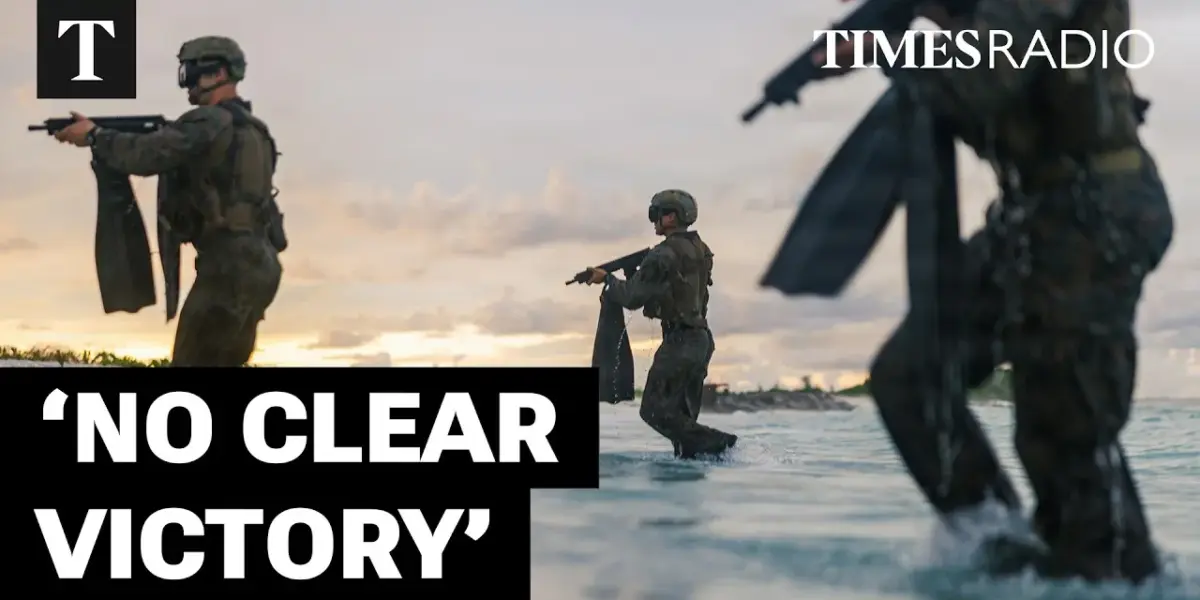
US Deploys 10,000 Troops to Gulf Amid Iran Tensions
The United States has significantly increased its military presence in the Gulf region, deploying approximately 10,000 airborne and marine troops. This move comes amid heightened tensions with Iran and follows recent aerial strikes. American Central Command released images of U.S. Marines training for amphibious assaults on Diego Garcia, a remote island in the Indian Ocean. Over 2,000 Marines have arrived in the Gulf aboard the USS Tripoli, supported by naval vessels, fighter jets, and helicopters. This deployment has fueled speculation about potential U.S. objectives, including seizing Iranian oil facilities, a possibility previously suggested by former President Donald Trump.
Expert Analysis: Limited Ground Force Options
Justin Crump, a former British Army officer and chief executive of global intelligence consultancy Cyoline, offered a critical assessment of the troop deployment. He noted that while the numbers may sound impressive, a force of 10,000 troops is insufficient for a large-scale ground invasion of Iran. “10,000 troops can nudge something. But really, it’s you. They’re certainly not there for a massive ground invasion of Iran or to take the country over,” Crump stated.
Crump explained that the Pentagon’s role is to provide the Commander-in-Chief with options to achieve stated objectives. The current aerial campaign, while operationally successful in terms of minimizing U.S. aircraft losses, has not brought the conflict closer to a strategic conclusion. The introduction of ground troops, Crump suggested, is aimed at increasing pressure on Iran. This pressure could either push Iran towards unconditional surrender, as previously discussed by Trump, or encourage a diplomatic settlement. However, he warned of a third, potentially more likely scenario: a prolonged conflict where neither a decisive military victory nor a diplomatic resolution is achieved.
Iran’s Defensive Capabilities and Escalating Risks
The effectiveness of Iran’s defensive actions is also a key consideration. Reports indicate that several U.S. bases in the Gulf have become less secure due to Iranian drone strikes, raising questions about Iran’s ability to target and disrupt U.S. operations. Crump acknowledged that while U.S. bases might not be entirely uninhabitable, the threat of Iranian missile and drone attacks makes operating in the region increasingly risky.
“The argument here is that the US, especially with the movement towards ground intervention in some way in some place in the region, is having to take more and more risk,” Crump observed. He highlighted that the mounting costs in terms of lives, equipment, and materials pose a significant problem for any U.S. administration, particularly Donald Trump, who is reportedly keen to conclude the conflict quickly and achieve a decisive victory.
The Strategic Implications of Continued Conflict
Crump expressed concern about the long-term consequences of the current conflict. He believes that the actions taken have put the U.S. on a more dangerous path with Iran, resulting in a more distrustful, angry, and potentially less risk-averse Iran. “It’s a hurt Iran. It’s a more distrustful Iran. It’s a more angry Iran. It’s Iran that has less to lose than it did when it was entering negotiations earlier this year,” he stated.
The former officer suggested that the current situation could lead to a scenario where, following a U.S. victory, there would be significant challenges in coexisting with Iran in the region. This outcome, he fears, does not help in achieving a peaceful resolution or de-escalation. Crump concluded that achieving a peaceful outcome would require extraordinary behind-the-scenes diplomatic work, for which he sees little evidence.
Uncertain Path Forward
The contradictory messages surrounding the U.S. strategy in the region may stem from the lack of a clear exit strategy. As the conflict potentially drags on, the risks for the United States increase. Public sentiment in the U.S. is likely to resist seeing American casualties returning from Iran, adding another layer of complexity to the decision-making process. The situation remains fluid, with the ultimate trajectory of U.S.-Iran relations and the regional stability hanging in the balance.
Source: US Can’t Invade Iran With 10,000 Troops, Says Former Army Officer (YouTube)

Related Articles

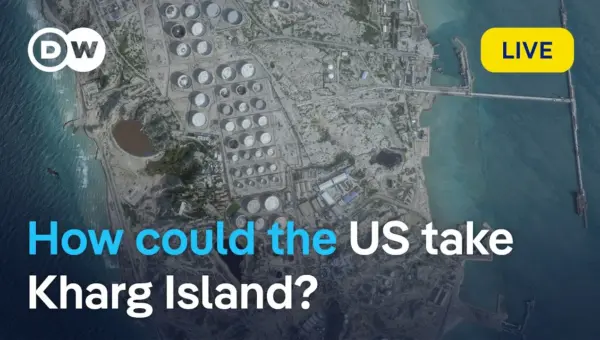
Trump Considers Seizing Iran Oil Hub Amidst Israel-Lebanon Escalation
Amidst escalating regional tensions, former President Donald Trump is reportedly considering the seizure of Iran's primary oil export hub, Kharg Island. This potential move coincides with Israel's increased military operations in Lebanon, raising fears of a wider conflict.


Gulf Allies Back US in Iran Standoff as Europe Falters
Key Gulf allies and Israel are strongly supporting US actions against Iran, contrasting with the hesitant stance of European nations. The US claims military success, but concerns remain about long-term strategic outcomes and the potential for rebuilding Iranian capabilities. The conflict also carries significant economic and geopolitical implications, signaling potential shifts in global alliances and messaging to major powers like China.


Iran Conflict Threatens Global Chip Supply Chain
Recent attacks in the Middle East are disrupting the supply of helium, a key component in manufacturing semiconductors. This shortage, combined with rising energy costs, threatens the global chip supply chain, impacting everything from smartphones to AI technology.