US Torpedoes Iranian Ship in First Since WWII Amid Escalating Conflict
The U.S. military has sunk an Iranian Navy ship using a torpedo, marking the first such combat engagement since World War II. The strike comes amid escalating U.S. and Israeli attacks on Iran, with Tehran vowing retaliation. The conflict's widening scope is impacting regional stability, global markets, and causing a significant humanitarian crisis.


US Torpedoes Iranian Ship in First Since WWII Amid Escalating Conflict
In a dramatic escalation of the ongoing conflict, the United States military has sunk an Iranian Navy ship in the Indian Ocean using a torpedo – the first such attack by the U.S. on a naval vessel in combat since World War II. The strike, revealed through new video footage, comes as the U.S. and Israel intensify their aerial bombardments across Iran, targeting key infrastructure and military assets. Iran has vowed retaliation, and the war is now widening into NATO territory with Iran targeting Turkey, as the death toll mounts across the Middle East.
US Accelerates Strikes, Iran Vows Retaliation
The U.S. military confirmed it has struck or sunk approximately 20 Iranian vessels since the conflict began, with the recent torpedo attack on an Iranian destroyer in the Indian Ocean marking a significant escalation. Pentagon officials, including Secretary of Defense Pete Hegseth, expressed confidence in the progress of the operation, stating that U.S. and Israeli forces are nearing complete control of Iranian airspace. This dominance, Hegseth noted, allows for continuous strikes, delivering “death and destruction all day long.”
Iran’s Red Crescent Society reports nearly 1,000 people have been killed by the combined U.S. and Israeli strikes. In response, Iran continues to launch escalating drone and missile attacks across the Persian Gulf. American citizens in the region remain on high alert, with urgent efforts to evacuate.
Naval Power Plays and Expanding Scope
The U.S. military has identified Iran’s navy as a primary target in the ongoing operation. Beyond the 20 vessels sunk or disabled, including one submarine, the recent torpedo strike on an Iranian destroyer was captured on video from the periscope of a U.S. submarine. While the Pentagon has not officially identified the ship, it reportedly resembles the Iranian vessel IRIS Dena, which the Sri Lankan Coast Guard responded to a distress call from. The Coast Guard reported finding 80 bodies and rescuing 32 crew members from the Dena, located approximately 25 miles off Sri Lanka’s southern coast. Iran’s Foreign Minister condemned the sinking as an “atrocity at sea.”
The sinking of the Dena, situated thousands of miles from Iran, underscores the expanding scope of what was initially described as a focused military operation. This widening reach is partly attributed to the nature of Iran’s counter-strikes across the region. U.S. officials maintain their focus is on degrading Iran’s ability to resist, which includes targeting air defenses and missile launch sites in addition to naval assets.
Americans Stranded Amidst Evacuation Challenges
Thousands of American citizens remain stranded in the Middle East as the conflict unfolds. While the U.S. government claims to have evacuated over 10,000 Americans, many report mixed messages and a lack of concrete assistance. In Israel, a trickle of Americans has been leaving by land, undertaking lengthy and expensive journeys to the Egyptian border to cross into Taba and then proceed to regional airports. Many express frustration with the perceived lack of preparation and support from the U.S. government.
Shifting Strategies and Political Undercurrents
Defense Secretary Pete Hegseth stated that the U.S. is “just getting started” with the operation. Pentagon briefings have indicated a shifting strategy as the conflict nears its one-week mark. While initial expectations suggested a four-to-five-week operation, officials are now hedging, hinting that it could take longer, with Secretary Hegseth suggesting it could extend to eight weeks. The U.S. and Israel claim to dominate the skies over Iran, with total air superiority in sight. Reports suggest a transition from high-end “standoff weapons” to more readily available and cheaper munitions as the campaign moves further inland.
In Washington, lawmakers have failed to pass legislation limiting President Trump’s war powers. The Republican-controlled Senate rejected a war powers resolution aimed at restricting the President’s ability to conduct further military action against Iran without congressional consultation. The vote largely followed party lines, with most Democrats voting to block the President’s authority and only one Republican, Rand Paul of Kentucky, joining them. This outcome effectively signals the Senate’s endorsement of the President’s ongoing war efforts.
The White House maintains that President Trump’s decision to launch the operation was based on intelligence assessments that Iran was poised to strike U.S. assets in the region. Press Secretary Karoline Leavitt stated the President had a “feeling, again, based on fact, that Iran was going to strike the United States.” This justification is crucial for addressing potential legal questions surrounding a war of aggression without a congressional declaration or authorization of the use of force. Axios has also reported that a meeting between Israeli Prime Minister Netanyahu and President Trump, where Netanyahu allegedly presented a “rare opportunity” to assassinate Supreme Leader Khamenei, may have influenced the timing of the operation.
Human Cost and Humanitarian Concerns
The human cost of the escalating conflict is becoming increasingly apparent. In Lebanon, UNICEF reported that at least seven children were killed and over 38 injured in the past 24 hours alone. Nearly 60,000 people, including 18,000 children, have been displaced in Lebanon, adding to tens of thousands already uprooted. Over 12,000 families have sought refuge in more than 300 shelters across the country, many of which are now at full capacity.
Ricardo Perez, UNICEF Deputy Spokesperson, highlighted the devastating impact on children, who are losing access to school, healthcare, and clean water, while living in fear and uncertainty. UNICEF is responding by deploying mobile health teams and providing psychosocial services to children affected by the violence. The organization is appealing for $48 million USD to fund its life-saving work in Lebanon and the wider region.
NBC News Senior National Security Correspondent Courtney Kube reported on the emotional tributes to U.S. troops killed in an Iranian strike in Kuwait, which claimed the lives of six soldiers. Among the fallen were Specialist Declan Cody, Captain Cody, Sergeant First Class Noah Tietjens, Sergeant First Class Nicola Moore, Chief Warrant Officer Robert Marson, and Major Jeffrey O’Brien. President Trump is expected to attend a dignified transfer ceremony at Dover Air Force Base upon the troops’ return.
Economic Repercussions: Rising Gas Prices
The ongoing conflict is also impacting global markets, with gas prices rising significantly. Analysts warn that the spike in crude oil prices could further drive inflation. Matt McClain, a petroleum analyst at GasBuddy, explained that the conflict in the Middle East and its effect on OPEC+ nations, particularly concerning the Strait of Hormuz – a critical chokepoint for global oil supply – inevitably leads to crude oil price surges. This, in turn, impacts wholesale gasoline prices, with the national average already jumping more than a quarter per gallon in just one week. Projections suggest prices could continue to climb, with diesel prices potentially reaching their highest levels since April 2024.
McClain advised consumers to conserve fuel by reducing speed while driving and ensuring their vehicles are well-maintained. The GasBuddy app also offers discounts through various partnerships to help mitigate the rising costs.
Severe Weather Across the US
Meanwhile, severe storms are stretching across the United States, from the South to the Northeast, bringing the potential for heavy rain and flooding for several days. Nine million people are under flood alerts in areas including Paducah, Cincinnati, and Indianapolis. Some regions are also experiencing a wintry mix, leading to icy conditions and potential power outages. The South faces the risk of severe weather, including possible tornadoes, hail, and high winds, with the potential to affect millions across a wide swathe of the country.
What to Watch Next
As the conflict in the Middle East intensifies, attention will be closely focused on Iran’s response, the U.S. military’s next moves, and the potential for further regional escalation. Diplomatic efforts and the effectiveness of international sanctions will also be key areas to monitor. Domestically, the ongoing debate over presidential war powers and congressional oversight is likely to continue. Economically, the sustained impact on global oil prices and inflation will be closely watched. On the weather front, the trajectory of the severe storm systems across the U.S. will determine the extent of potential flooding and hazardous conditions.
Source: Morning News NOW Full Episode – March 5 (YouTube)

Related Articles
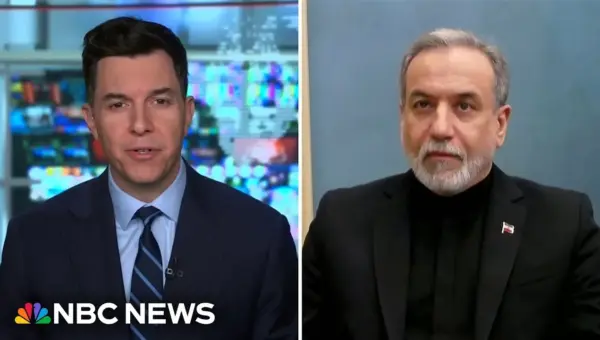
Iran Minister: Escalating Middle East Conflict Threatens Global Stability
Iranian Foreign Minister Mohammad Javad Zarif warned of escalating Middle East conflict threatening global stability in an exclusive interview. He urged diplomacy and restraint amid heightened regional tensions and discussed Iran's nuclear program and the impact of sanctions.


Miller’s Iran War Defense: A Desperate Echo of Bush-Era Rhetoric
Stephen Miller's defense of potential military action against Iran revives decades-old grievances, drawing parallels to George W. Bush's 'War on Terror' rhetoric. Critics argue this justification contradicts Trump's anti-war platform and risks perpetuating conflict.


Iran’s Elite Control Lucrative Sectors Through Nepotism
Iran's lucrative oil, gas, and resource sectors are increasingly controlled by the children of regime officials, a phenomenon known as 'agazade.' This nepotism consolidates wealth and power within an elite circle, impacting economic development and market dynamics.