US Tomahawk Missile Likely Hit Iranian School, Report Suggests
A preliminary inquiry suggests a U.S. Tomahawk missile may have struck an Iranian school, killing over 100 children. Satellite evidence supports this, raising questions about the U.S. military's actions and President Trump's conflicting statements on the conflict's duration. International pressure mounts as allies propose joint efforts to secure vital shipping lanes.

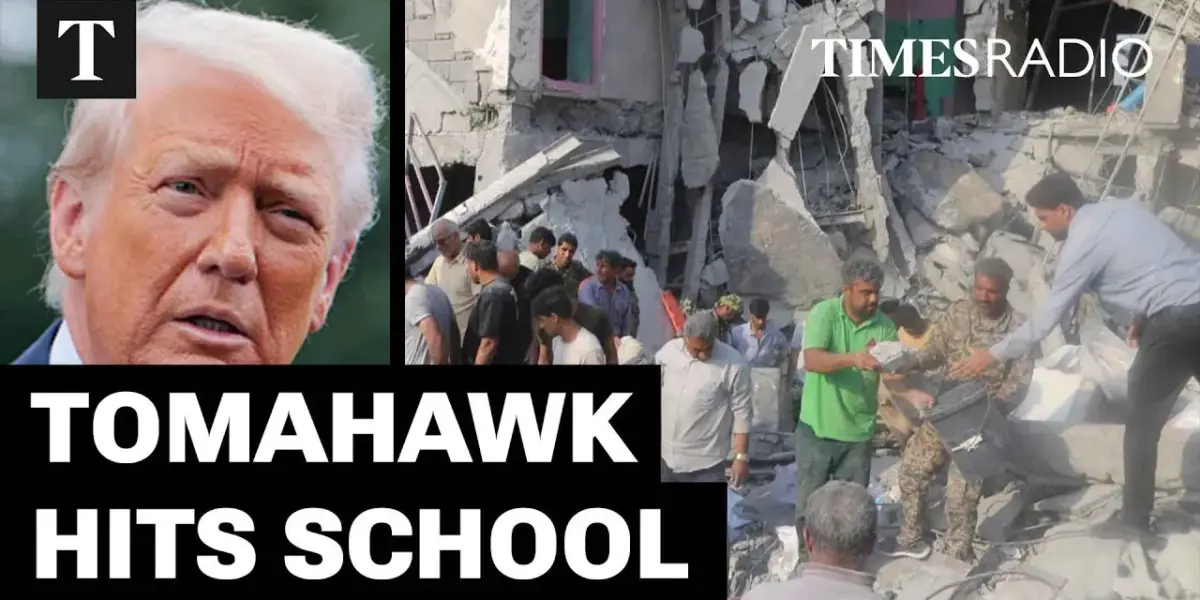
US Missile Strike on Iranian School Under Scrutiny
Preliminary investigations suggest a U.S. Tomahawk missile may have struck an Iranian school early in the conflict, resulting in the deaths of over a hundred children. The incident, which occurred on the first day of the war, is now a focal point of international concern and raises serious questions about the conduct of military operations in the Middle East.
Satellite Evidence Points to Tomahawk Missile
Defense experts indicate that satellite and other surveillance data provide strong evidence that a U.S. Tomahawk missile was responsible for the strike on the school. “It is pretty clear that they have concluded that it was a Tomahawk missile that struck the school,” stated Robert Fox, defense editor at The Standard, referencing the battle damage assessment (BDA). While the intended target was reportedly a nearby military base, the missile appears to have veered off course. Iran, despite possessing a significant arsenal, does not have weaponry comparable to the Tomahawk. Reports suggest multiple Tomahawk missiles were observed in the vicinity, with some accounts indicating a salvo was directed towards the school.
President Trump’s Shifting Stance on Conflict Duration
The emerging details of the school strike coincide with contradictory signals from President Donald Trump regarding the war’s potential end. While the President has previously suggested the conflict could conclude soon due to a lack of viable targets for the U.S., he has also indicated that military operations are far from over. “It looks as if it is going to go on a bit longer because it’s all the problems that were spotted at the beginning,” Fox observed. The rationale behind the initial U.S. strike remains unclear, with speculation ranging from Israeli influence to a miscalculation of the potential for a swift victory, possibly fueled by overconfidence after earlier operations.
International Reaction and UN Resolution
The United Nations Security Council has passed a resolution urging Iran to cease its attacks on Gulf States, deeming them violations of international law and threats to global peace and security. This action underscores the escalating tensions and the broader implications of the conflict, particularly the disruption to international shipping lanes. The closure of the Strait of Hormuz, a critical chokepoint for global oil and gas supplies, is a major concern, with predictions that its impact could be felt significantly within ten days.
Allied Discontent and European Initiatives
The U.S. approach to the conflict has reportedly met with disapproval from some allies, including the United Kingdom, which initially did not support the military action. However, the escalating situation, especially the threat to the Strait of Hormuz, has drawn even reluctant partners into the fray. “We’re all going to be affected by this and particularly by the closure of the Straits of Hormuse and I fear that it’s probably going to be quite a long time still,” Fox commented.
France, under President Emmanuel Macron, has demonstrated a more proactive stance. Macron visited the aircraft carrier Charles de Gaulle, accompanied by a significant naval escort, and has proposed a joint European force to escort ships through the Strait of Hormuz. This initiative aims to reopen the vital waterway, crucial for the supply of oil, LPG, and LNG. The proposal highlights a divergence in strategy between the U.S. and some European allies, with European nations seeking a more coordinated and multilateral approach to de-escalation and maritime security.
UK’s Role and Defense Spending Pressures
The United Kingdom’s involvement, while framed as defensive, has drawn scrutiny. U.S. warplanes armed with cruise missiles have been operating from British bases, and a British warship is en route to Cyprus. However, the UK’s contribution is perceived by some allies, like France, as insufficient in the face of the escalating crisis. The French response, involving a substantial carrier group and a clear proposal for European leadership in securing the Strait of Hormuz, contrasts with the UK’s more limited deployment. This situation is expected to intensify pressure on the British government regarding its defense spending and its capacity to contribute meaningfully to international security efforts.
Future Outlook and Key Questions
The coming days will be critical in determining the trajectory of the conflict. Key questions remain about the U.S. strategy, the effectiveness of international diplomatic efforts, and the willingness of allies to commit to joint security initiatives. The ongoing investigation into the school strike, coupled with the looming threat to global energy supplies from the Strait of Hormuz, will undoubtedly shape future developments and necessitate difficult decisions for world leaders. The potential for a prolonged conflict, as suggested by defense analysts, underscores the urgent need for clarity, cooperation, and effective crisis management.
Source: Satellites Images Show It's 'Pretty Clear' US Tomahawk Missile Struck Iranian School | Robert Fox (YouTube)

Related Articles


Israelis Forge Resilience Amidst Constant Bomb Shelter Drills
Life in Israel is a blend of resilience and constant vigilance, with many families adapting to frequent bomb shelter drills and even sleeping in makeshift shelters. Despite ongoing missile attacks, Israelis strive to maintain normalcy, though businesses face disruption and emotional fatigue is a growing concern.

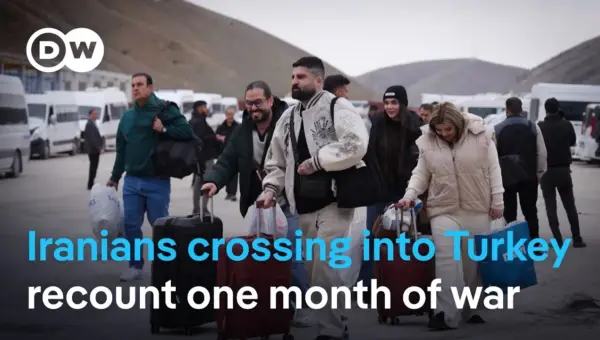
Iran War Exodus: Refugees Flee to Turkey Amidst Bombings
A train from Tehran brings refugees to Turkey, fleeing daily bombings and economic collapse. Many express deep fear for loved ones left behind, while some hold onto national pride and hope for victory. The conflict's impact is also felt economically in Turkey, with rising gas prices.


Israel Escalates Iran Strikes, Warns of Wider War
Israel has launched significant strikes inside Iran following continued missile fire, warning of further escalation. The conflict risks wider regional instability and economic disruption, especially concerning the Strait of Hormuz.