US Strikes on Iran: A Calculated Blow Against China?
Recent US military actions against Iran are being interpreted as a strategic move to counter China's growing influence. By disrupting Iran's role as a key energy supplier and military partner to Beijing, the US aims to weaken China's global standing and limit its strategic options, particularly in the Pacific.

US Strikes on Iran: A Calculated Blow Against China?
The recent military actions taken by the United States against Iran, spearheaded by the Trump administration, are being framed not merely as a response to Iranian aggression, but as a sophisticated strategic maneuver with far-reaching implications for the global geopolitical landscape. At the heart of this analysis lies a bold assertion: these strikes are intrinsically linked to the United States’ broader strategy to counter China and its ruling Chinese Communist Party (CCP).
The Strategic Nexus: Iran, China, and Global Power Dynamics
For years, the United States has been engaged in a complex, often indirect, confrontation with China. While overt military conflict remains a distant prospect, the battle for influence, resources, and technological supremacy is ongoing. This analysis posits that the actions against Iran are a critical component of this larger strategy, designed to weaken China’s regional alliances and economic dependencies, thereby limiting its capacity to project power, particularly in the Pacific.
A central pillar of this argument is China’s significant reliance on Iranian oil. Data suggests that China has been Iran’s largest trading partner, with Iranian oil imports constituting a substantial portion of China’s total oil consumption. The disruption of these supplies, through US actions in Iran and previously in Venezuela, directly impacts China’s economic engine and its ambitious Belt and Road Initiative. This dependency creates a vulnerability that the US is seeking to exploit.
“China is now Iran’s biggest trading partner and has traditionally relied on Iran’s oil to fuel economic growth both inside China and as part of the Belt and Road Initiative.”
Historical Context: A Decade of Foresight
The assertion that the current US actions are strategically aligned against China is not a new one. Proponents of this view claim to have identified this connection nearly a decade ago, highlighting China’s deep entanglement with Iran. This entanglement extends beyond oil imports; China has reportedly been a primary supplier of materials and technology for Iran’s weapons programs, including ballistic missiles, drones, and nuclear technology. This support has empowered not only Iran but also its proxies like Hamas, Hezbollah, and the Houthis, fueling regional instability.
Furthermore, China has allegedly provided Iran with technology for surveillance and anti-riot measures, aiding the regime in suppressing internal dissent. Despite US and Israeli efforts to degrade Iran’s military capabilities, reports indicate that China has continued to supply Iran with crucial components, such as missile fuel chemicals and advanced weaponry, enabling Iran to rebuild its arsenal. This continuous flow of support underscores the strategic partnership between the two nations.
US Strategy: Isolating China on Multiple Fronts
The broader US strategy, as interpreted by some analysts, aims to isolate China by dismantling its key alliances and dependencies. The strikes on Iran, coupled with actions in Venezuela, are seen as removing Chinese proxies and allies, thereby diminishing China’s influence in critical regions. The ultimate goal is to ensure that if China were to make a move on Taiwan, it would do so without the support of regional allies, without proxy forces in neighboring regions, and without a Russia capable of engaging NATO.
This approach suggests a proactive rather than reactive stance by the US, anticipating potential Chinese aggression and taking preemptive measures to neutralize its advantages. The objective is to create a scenario where China is strategically weakened and isolated, forcing it to focus inward or face overwhelming opposition in a potential conflict in the Pacific.
China’s Reaction and Propaganda Efforts
Unsurprisingly, China has reacted with strong condemnation to the US actions in Iran. State-run media and affiliated groups have amplified anti-US narratives, labeling the US as a “war addict” and disseminating propaganda that seeks to portray the strikes as unjustified aggression. There are also allegations that China has actively worked to shape public opinion, even financing protests against US actions and promoting misinformation on social media platforms.
This propaganda war is seen as an attempt to deflect blame, rally international support against the US, and maintain its own narrative of being a force for peace and stability. The CCP’s efforts to control information and influence global discourse highlight the ideological battleground on which the US-China competition is being waged.
Why This Matters: The Shifting Global Order
The strategic implications of the US actions in Iran, if indeed they are part of a larger anti-China strategy, are profound. They signal a potential recalibration of global power dynamics, with the US actively seeking to disrupt China’s expanding influence. The success of this strategy could lead to a more multipolar world, or conversely, solidify US dominance by systematically dismantling China’s strategic partnerships.
For China, the loss of reliable energy supplies and the weakening of its allies represent significant setbacks. It forces Beijing to reassess its foreign policy and potentially accelerate its efforts to secure alternative resources and partnerships. The increased reliance of Gulf states on China, driven by perceived US unreliability, could be challenged if US actions demonstrate a renewed commitment to regional stability and security.
Implications, Trends, and Future Outlook
The long-term success of this strategy hinges on several factors. Firstly, the US must maintain its commitment to disrupting Chinese influence operations and ensuring that any future Iranian government does not become a pawn of Beijing. Secondly, the US needs to demonstrate consistent reliability to its allies, particularly in the Gulf, to counter China’s narrative of US withdrawal or indifference.
The trend suggests a heightened period of geopolitical competition, where economic, diplomatic, and military tools are used in concert to achieve strategic objectives. The future outlook involves a continued struggle for influence in key regions, with China likely to adapt and seek new avenues to exert its power. The US, in turn, must remain vigilant and adaptable, employing innovative strategies to counter China’s growing assertiveness.
Ultimately, the narrative emerging from this analysis suggests that the conflict with Iran is not an isolated event but a calculated move in a much larger game of global chess. The US, by targeting Iran, aims to strike at the heart of China’s strategic interests, forcing Beijing to confront the vulnerabilities created by its alliances and dependencies. The coming years will reveal the true efficacy of this strategy and its lasting impact on the international order.
Source: I Warned You about Iran Before Anybody Else Did (YouTube)

Related Articles
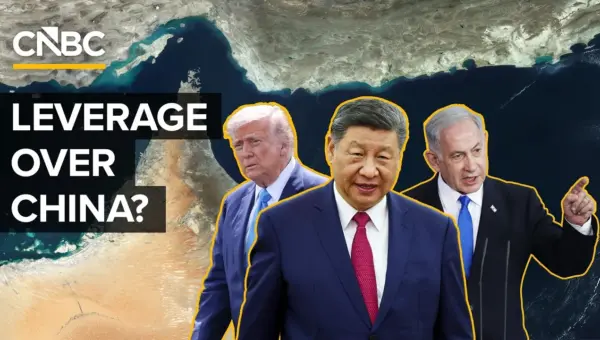
Iran Conflict Threatens 20% of Global Oil, China Faces Energy Squeeze
Escalating tensions around Iran and the Strait of Hormuz threaten 20% of global oil supply, with China facing a significant energy squeeze. Analysts warn of Brent crude exceeding $100 per barrel, impacting global economies and natural gas markets.
Trump Seeks Iran Exit Strategy Amid Strained UK Ties
President Trump's administration appears to be reassessing its goals in Iran as regime change looks unlikely, prompting questions about an exit strategy. This shift occurs amid significant strain in the US-UK "special relationship," with diplomatic friction and concerns over the UK's defense preparedness coming to the fore.
US War in Iran Escalates Amidst Domestic Economic Woes
As the war in Iran intensifies, the Trump administration faces mounting domestic economic challenges, including job losses and depleted retirement savings. Officials downplay the conflict's severity while critics highlight the human and financial costs.