US Strikes Iran’s ‘Mosquito Fleet’ to Secure Oil Lanes
Iran's use of naval mines and fast attack boats in the Strait of Hormuz prompted a decisive US response. The US employed a preemptive strategy, striking mine-laying ships and storage facilities with precision-guided missiles and bombs.

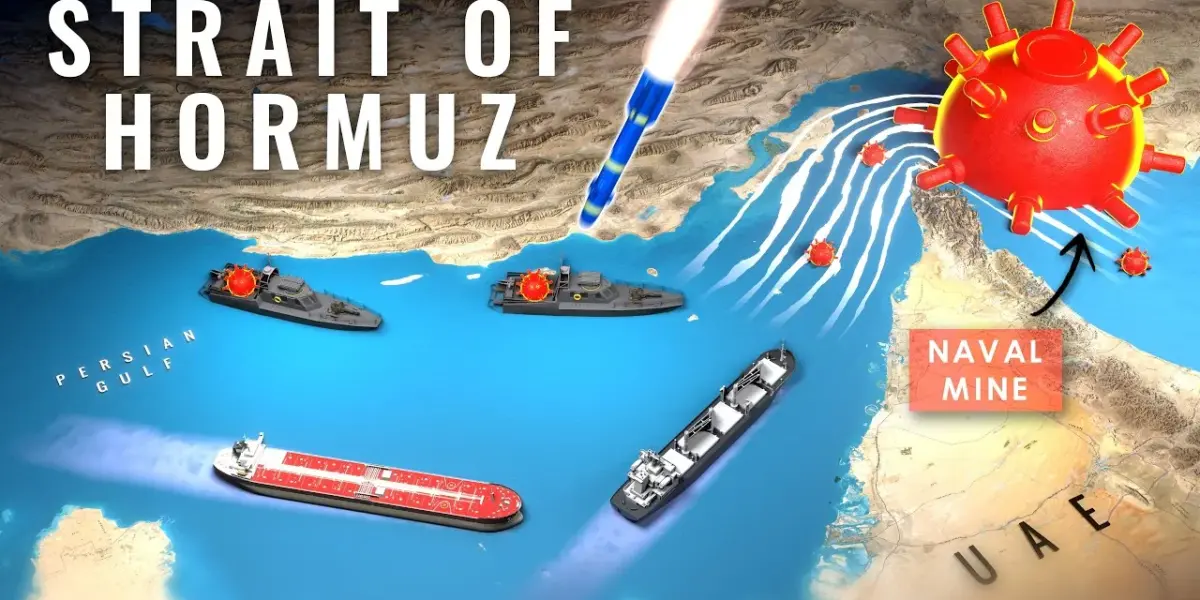
US Strikes Iran’s ‘Mosquito Fleet’ to Secure Oil Lanes
The Strait of Hormuz, a vital waterway for global oil, has become a dangerous minefield. Iran’s Islamic Revolutionary Guard Corp (IRGC) is using old-school tactics, dropping anti-ship mines to create a blockade. These mines can be simple contact types or advanced bottom mines that listen for the sounds of passing ships.
Fighting these hidden weapons is tricky. The US Central Command decided not to fight the mines in the water. Instead, they chose to strike the mine-laying ships before they could even leave port. They also targeted factories storing the mines.
Battle footage shows Hellfire missiles hitting mine-laying vessels before they could become a threat. The Strait of Hormuz handles about 20% of the world’s daily oil supply. Iran has threatened to stop oil from reaching its enemies.
Iran’s ‘Mosquito Fleet’ Strategy
Iran’s navy, having lost many warships, relies on a World War II-style tactic. They use a “Mosquito Fleet” – swarms of fast, small attack boats. These are not large, easy-to-hit destroyers. Instead, they are quick fiberglass boats like the Ashura and Turk, and modified speedboats.
These small boats are armed with machine guns, rockets, and anti-ship missiles. Their strategy is not to fight a US destroyer head-on. They launch dozens of boats at once from all directions. The goal is to overwhelm the US ship’s defenses by providing too many targets to track and destroy.
Iran also uses boats that look like fishing vessels or commercial trawlers. These “dual-use” craft are secretly equipped for military operations. This makes them hard to identify and target.
Low-Tech Mine Laying, High Impact
These small boats don’t have high-tech systems for laying mines. Their methods are very simple but effective in the narrow Strait of Hormuz. Often, they use the “stern drop” method. Mines are secured to the back of the boat and then pushed or rolled into the water once the boat reaches its target location.
Some slightly larger boats might have simple rails to help slide the mines off. This basic setup is perfect for hit-and-run attacks. The strategy relies on speed and stealth. A small boat can quickly enter busy shipping lanes, hide in darkness, or blend in with civilian traffic.
They drop a few mines in seconds and speed back to Iran’s coast. This happens long before US warships can lock onto them. Iran has a stockpile of 2,000 to 6,000 mines. These include simple contact mines that explode on impact and advanced bottom mines that lie on the seafloor, waiting to detect the sound of a supertanker.
US Preemptive Strikes: A Four-Part Strategy
The US used a four-part strategy to counter these threats. This approach aimed to deny Iran the ability to mine the strait.
Strategy 1: Preemptive Denial
Instead of waiting for mines to be deployed and then conducting dangerous mine clearance operations, the US struck first. They targeted the vessels before they could lay any mines. This is a preemptive strategy: destroy the enemy’s means of attack before it can be used.
Strategy 2: Intelligence and Precision Targeting
The strikes were not random guesses. They were based on detailed intelligence about Iran’s plans. The US gathered information from signals intelligence, maritime surveillance, and human sources. This allowed them to identify the specific mine-laying ships, their locations, and when they were most vulnerable.
Strategy 3: Striking Moored Vessels
Most of the targeted vessels were docked at the time of the attack. Hitting stationary ships is much easier, safer, and more precise than chasing moving targets. This also reduced the risk of an accidental international incident in the busy strait.
Strategy 4: Dual Target Doctrine
By hitting both the mine-laying ships and the storage facilities for the mines simultaneously, the US ensured that even if replacement boats were available, there would be no mines to load onto them. This layered approach maximized the impact of the operation.
The Arsenal Used
The US employed a comprehensive set of weapons. They used Hellfire missiles fired from MQ-9 Reaper drones against the small boats. Long-range cruise missiles were launched from Navy destroyers. For the final blow, heavy bombers dropped 2,000lb bunker-buster bombs to destroy boats in their storage facilities.
Footage shows a Hellfire missile, launched from an MQ-9 Reaper drone, hitting an enemy mine-laying vessel. The MQ-9 Reaper uses advanced sensors to track targets. A pilot uses a joystick to zoom in, lock onto a heat signature, and fire the missile. The Hellfire missile is a precision weapon guided by lasers or radar, allowing it to hit fast-moving targets accurately.
The missile travels at speeds over 760 mph, far faster than the boats. Its guidance system can adjust to evasive maneuvers. The drone’s continuous tracking helps the missile predict the boat’s movement and ensure a hit.
Securing the Strait
In a period of just 10 days, the US reportedly took out over 60 Iranian warships and submarines. Examples include the sinking of the fast attack craft Joshin in the world’s first missile duel between warships, and the destruction of the frigate Sahand and Sabin after they challenged the US fleet.
The main goal was to secure the Strait of Hormuz, the critical route for global oil. This preemptive and precise action aimed to prevent Iran from disrupting vital oil supplies through mining operations.
Why This Matters
This situation highlights the evolving nature of naval warfare and the challenges of securing critical global chokepoints. Iran’s use of asymmetric tactics, like the “Mosquito Fleet” and naval mines, forces major powers like the US to adapt their strategies. The US response demonstrates a clear shift towards preemptive action, relying heavily on intelligence and precision-guided munitions to neutralize threats before they materialize.
The effectiveness of drones like the MQ-9 Reaper armed with Hellfire missiles shows how smaller, agile platforms can be decisive. It also points to a future where traditional naval power might be challenged by swarms of smaller, faster, and more numerous threats, coupled with sophisticated, low-tech countermeasures.
Implications and Future Outlook
The successful strikes against Iran’s mine-laying capabilities have immediate implications for maritime security in the Strait of Hormuz. It sends a strong message about the consequences of disrupting global shipping lanes. For Iran, it means a significant setback in its ability to project naval power and threaten international trade.
Looking ahead, we can expect continued tension and a potential arms race in the region. Both sides will likely seek to counter the other’s tactics. Iran may develop more sophisticated mines or new ways to deploy them, while the US will likely enhance its intelligence gathering and preemptive strike capabilities. The use of dual-use civilian vessels by Iran also presents a challenge for international maritime law and enforcement.
Historical Context
The Strait of Hormuz has been a strategic flashpoint for decades, given its importance for oil transport. During the Iran-Iraq War in the 1980s, both sides attacked each other’s oil facilities and shipping, leading to increased international naval presence. The concept of a “Mosquito Fleet” is not new; smaller, faster vessels have been used effectively against larger, slower warships throughout history, notably by Japan in World War II.
Naval mines have also been a persistent threat since the Crimean War. Their low cost and high potential for disruption make them a favored weapon for asymmetric warfare. The US response, using modern precision weapons against these older tactics, represents a continuation of this historical struggle between technological advancement and adaptive, often unconventional, warfare.
Source: How US Navy Strikes Mine-Laying Ships in the Strait of Hormuz? (YouTube)

Related Articles
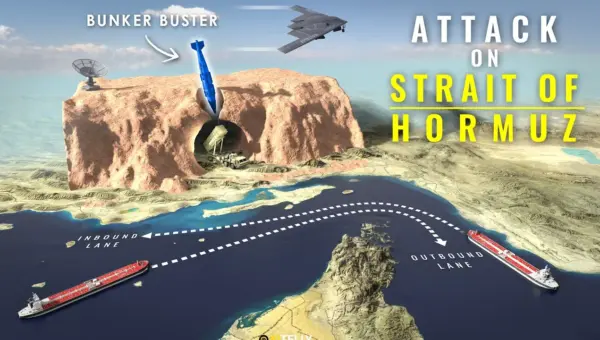
Iran’s Strait of Hormuz Trap: How the US Fights Back
Iran's strategy to control the Strait of Hormuz involves using islands as bases for anti-ship missiles and launching swarm attacks with small boats. The US counters with advanced defense systems, surveillance drones, and powerful bunker-buster bombs, highlighting the ongoing tension in this vital global shipping lane.
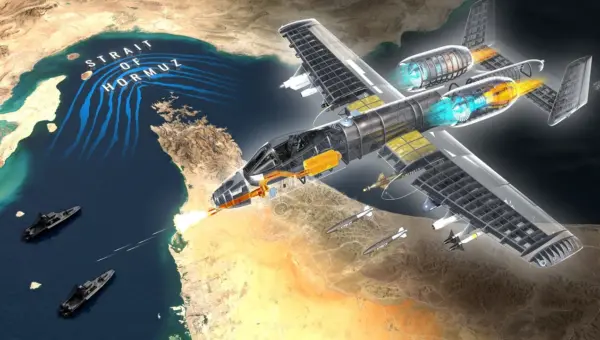
A-10 Warthog Defies Retirement in Hormuz Strait
The U.S. Air Force's plan to retire the A-10 Thunderbolt faces a challenge in the Strait of Hormuz. Its unique design, built for low-and-slow flight and extreme durability, makes it essential for countering small boats and drones in the narrow waterway. The Warthog's ruggedness and specialized firepower prove its continued value.


US Aims to Cripple Iran’s Power Grid to Secure Strait of Hormuz
A new US strategy reportedly targets Iran's power grid, including major plants like Damavand, to force open the Strait of Hormuz. The plan involves multi-stage air attacks using advanced bombers and precision munitions to cripple energy infrastructure and cause cascading failures.