US Strikes Iran’s Kharg Island, Military Action Accelerates
The U.S. military has intensified its campaign against Iran with strikes on key targets like Kharg Island, signaling a strategy of "coercive diplomacy." Experts believe this military action, coupled with diplomatic efforts, aims to prevent Iran from acquiring nuclear weapons. The situation highlights a long-standing national security challenge with potential implications for global energy markets.

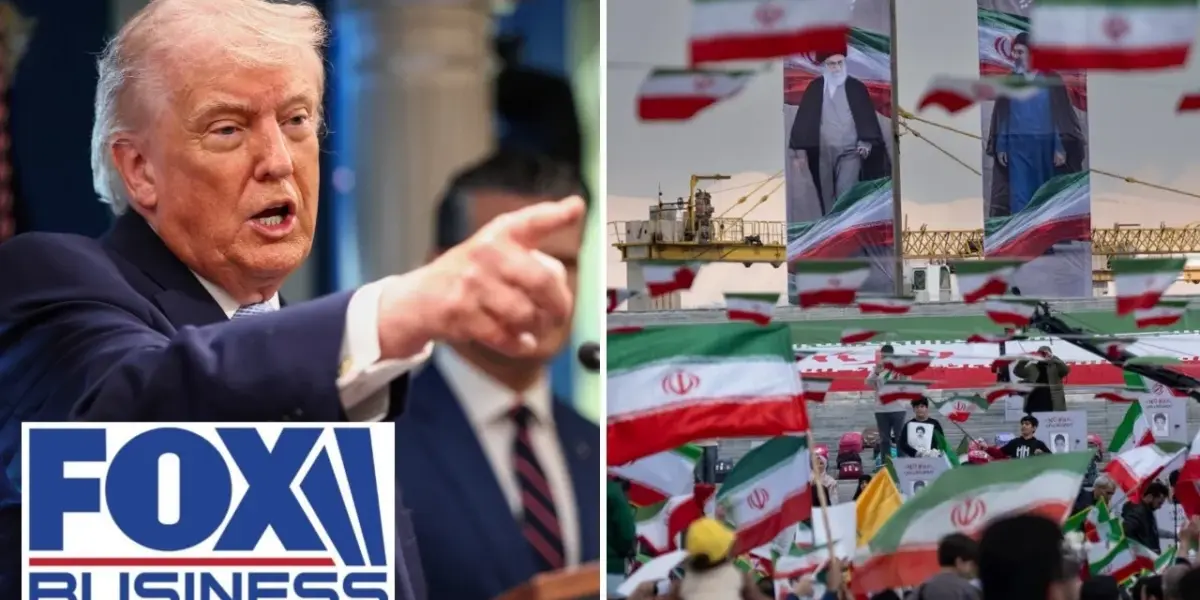
US Military Strikes Key Iranian Targets, Including Kharg Island
The United States military has intensified its campaign against Iran, launching strikes on significant targets such as Kharg Island. This move is seen by some analysts as a critical part of a broader strategy to pressure the Iranian regime and prevent it from acquiring nuclear weapons. The actions come amid ongoing, though stalled, diplomatic efforts.
A Strategy of Pressure and Distraction
Experts suggest President Trump’s administration is employing a dual approach: public diplomacy as a distraction while the military carries out direct actions. Roger Zakheim, Director of the Ronald Reagan Institute, stated that the focus on Iranian energy targets was an initiative by President Trump to escalate pressure. “While President Trump distracts the world, including our own Congress, with the diplomacy and the possibility of this escalation, our military is as we speak, doing what it takes to open the Strait of Hormuz through U.S. force,” Zakheim explained. He believes the military is only two to three weeks away from achieving this goal.
Brian Hook, former U.S. Special Representative for Iran, echoed this sentiment. He described President Trump’s strategy as “psychological warfare” where diplomatic talks serve as a diversion. “The U.S. military, which has done such a fabulous job… attacking Kharg Island last night is very important and I think that it’s a harbinger of the future,” Hook commented. He sees the Pentagon and military as making a final push.
Iran’s Nuclear Ambitions Remain Central
A key concern driving these actions is Iran’s pursuit of nuclear weapons. “What does it say about Iran’s behavior that they would rather absorb potentially devastating attacks rather than give up their ambitions to become a nuclear weapon state?” Hook questioned. He noted that the apparent dead end of diplomatic channels with Iran is telling. “Getting a nuclear weapon is absolutely central to Iran’s future projection of power capabilities,” Hook added. The regime’s violent and destabilizing actions, even without nuclear capability, are a major worry.
A Long-Standing National Security Challenge
Preventing Iran from obtaining nuclear weapons is a challenge that has faced U.S. presidents for decades, going back to Bill Clinton. Hook described it as “one of the hardest national security challenges in the world.” He believes President Trump deserves credit for confronting this issue, despite criticism. “It’s one of the most consequential in the world,” he stated.
Questions About Iranian Leadership
The effectiveness of negotiations is further complicated by uncertainty surrounding Iran’s leadership. Reports suggest the Ayatollah may be incapacitated. Zakheim raised questions about who is actually running the country, suggesting it might be the Revolutionary Guard. He pointed out that recent strikes may have targeted and killed members of the Revolutionary Guard leadership. “I don’t know whose running the place and that’s one of the other problems here,” Zakheim said.
Decapitation Strikes and the Path Forward
Zakheim suggested that the focus should not be on the diplomatic community or critics of the U.S., but on the military actions. He referred to a “decapitation strike” early in “Operation Epic Fury” that targeted leadership. “At some point, when they carry out the full target list of Central Command, when we force through the opening of the Strait of Hormuz, some person will emerge out of the wreckage, wave the white flag and that is what President Trump is going for,” Zakheim predicted. He views the ongoing diplomatic channel as a “sideshow” compared to the military operations.
Brian Hook agreed that the military campaign must continue. He expressed a belief that “decimating and decapitating Iran is exactly the right thing to do.” He sees the U.S. military, including Special Forces, Seals, and Marines, as being in a position to finish the job. Hook emphasized that the U.S. should not wait for Iran or a new leader to emerge for negotiations. “We have a game plan that’s working very well and let us continue it,” he urged.
Coercive Diplomacy and the Nuclear Imperative
Hook believes the Iranian diplomatic channel is in disarray. While President Trump always keeps the door open for diplomacy, Hook noted that Iran often negotiates in bad faith, sometimes seeking deals to ensure regime survival. “That’s not a trap that President Trump will fall into,” he stated. Hook described the current approach as “coercive diplomacy with military action.” The ultimate goal, he stressed, is to ensure Iran cannot possess a nuclear weapon.
“At the end of that, Iran cannot have a nuclear weapon.” – Brian Hook
The takeaway is clear: achieving the objective of preventing Iran from becoming a nuclear power will likely require sustained military pressure and a strategic approach that combines diplomatic maneuvering with decisive action. The situation remains highly consequential, representing one of the most complex national security challenges facing the United States.
Market Impact
The escalation of military actions in the Persian Gulf, particularly concerning the Strait of Hormuz and key oil infrastructure like Kharg Island, can have significant ripple effects on global energy markets. Disruptions or the threat of disruptions to oil supply routes can lead to increased oil prices. Investors in the energy sector, particularly those focused on oil and gas, should monitor geopolitical developments closely. Geopolitical tensions can also increase volatility across broader financial markets as uncertainty rises.
What Investors Should Know
Investors should understand that geopolitical events, especially those involving major oil-producing regions, can directly impact commodity prices and market sentiment. The strategy employed by the U.S. involves applying pressure through military means, which may lead to further instability in the short term. While the long-term goal is de-escalation and preventing nuclear proliferation, the path to achieving this could be fraught with volatility. Monitoring news related to Iran, U.S. foreign policy, and energy market reports will be crucial for assessing potential market impacts.
Source: THIS is one of the hardest national security challenges: Former US special rep for Iran (YouTube)

Related Articles

Trump’s Iran Deal: Bold Tactics Yield Fragile Peace
A panel discusses President Trump's Iran ceasefire deal, a special election in Georgia, the DOJ's renewed fight against fraud, and Trump's relationship with Hungarian Prime Minister Viktor Orbán. Analysts debate Trump's negotiation tactics, the implications of the Georgia race, and the U.S.'s foreign policy stance.
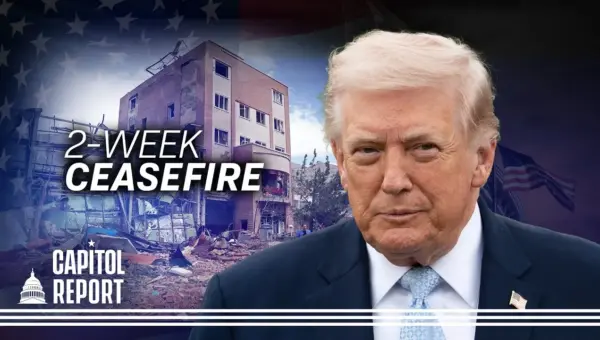
Trump Halts Iran Attacks, Seeks Peace Deal
President Trump has agreed to a two-week suspension of attacks on Iran, contingent on Iran reopening the Strait of Hormuz. This move comes as the U.S. reports progress on a peace proposal and highlights the Iranian people's desire for freedom.
US, Iran Agree to 2-Week Ceasefire Centered on Strait of Hormuz
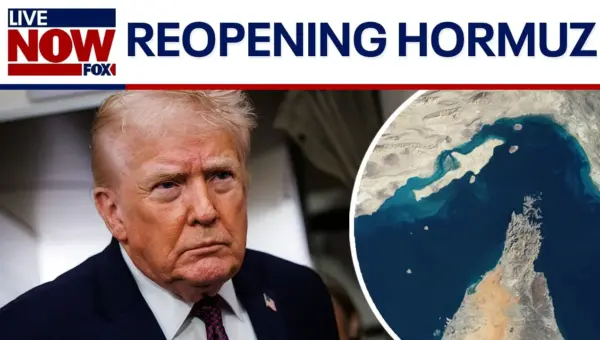
The U.S. and Iran have agreed to a two-week ceasefire, brokered by Pakistan, focusing on reopening the Strait of Hormuz. While a significant development, the deal's terms are complex and its fragility is a major concern due to the numerous actors involved.