US Strikes Iran: UK’s Lord Ricketts Warns of Escalation
Lord Peter Ricketts, former UK National Security Advisor, has expressed concern over recent US-led strikes on Iran, questioning their legality and warning of dangerous escalation. He noted President Trump's apparent embrace of military action, which risks significant retaliation from Iran.

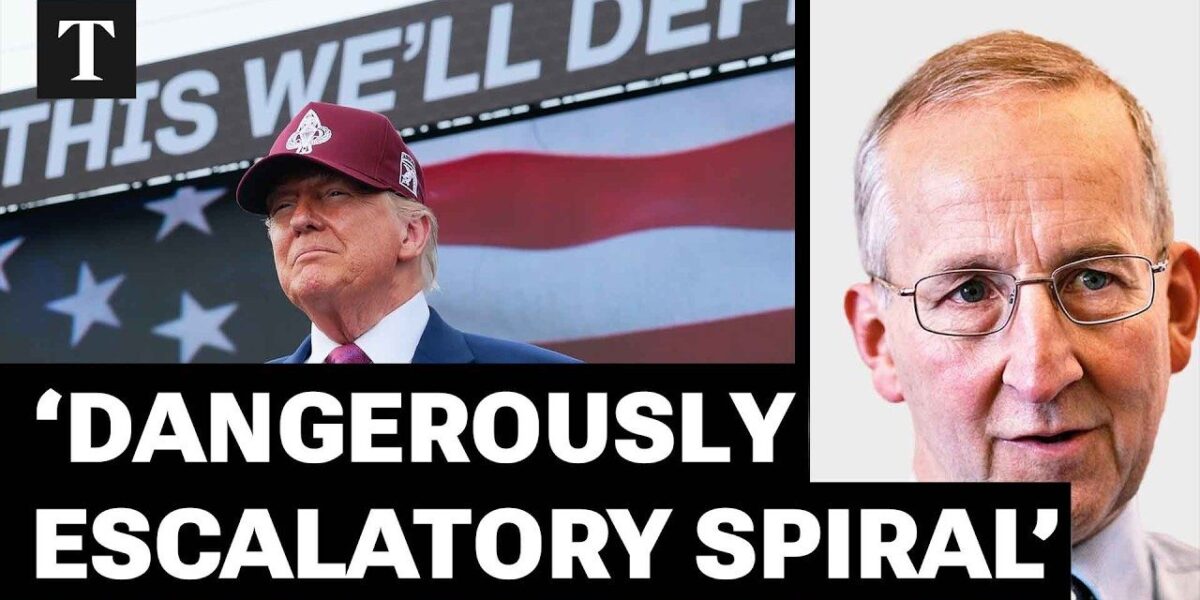
US Launches Strikes on Iran, UK Urges De-escalation
In a significant escalation of Middle Eastern tensions, the United States, in conjunction with Israel, has launched major combat operations against Iran. President Trump announced the commencement of these operations, stating that the “terrorist regime can never have a nuclear weapon.” The move has prompted an emergency COBRA meeting in the UK, chaired by Prime Minister SKama, to determine the nation’s response.
UK Questions Legality of US-Israel Strikes
Lord Peter Ricketts, former UK National Security Advisor, has voiced strong reservations regarding the legality and justification of the strikes. Speaking on the matter, Lord Ricketts stated, “I think as far as the UK interprets international law, there wasn’t a legal base for that in the sense that Iran was not posing an imminent threat to the US or the UK.” He characterized the action as a “war of choice” by the US and Israel, potentially aimed at regime change, a strategy he deems dangerous and unlikely to succeed without creating chaos.
The Iranian foreign ministry has denounced the strikes as “wholly unprovoked, illegal, and illegitimate.” Lord Ricketts concurred with this assessment under the UK’s interpretation of international law, noting that the UN charter restricts the use of force to take out a regime except under very special circumstances. He emphasized that the UK was not involved in the strikes and did not believe US bases in the UK were utilized for the operation. The immediate priority for the UK government, he noted, is to protect its citizens and assets in the region and to push for a return to negotiations.
“I would say that yes. Um I don’t see the case that Iran was presenting the kind of threat to Israel and the US which would um allow them to go for what is a an allout strike designed to topple the Iranian regime.”
Trump’s ‘Military Strongman’ Approach
Lord Ricketts suggested a concerning shift in President Trump’s approach to foreign policy. “Over the last six or nine months, he has come to rather like using the military instrument,” Ricketts observed. He pointed to past actions, such as the bombing of Iran with no American casualties and the operation in Venezuela, as evidence of Trump developing a taste for being a “military strongman.”
This perceived inclination, Ricketts warned, is dangerous. “This time round it’s entirely possible that the Iranians will succeed in hitting an American ship, an American aircraft, American bases.” He added that reports already indicate Iranian retaliation, with strikes on an Iranian base in Bahrain. This suggests Trump may be learning that “brandishing America’s enormous military potential is not risk-free.”
Regime Change Ambitions and Unintended Consequences
The explicit mention of regime change as an objective of the strikes, as stated by President Trump, has particularly alarmed Lord Ricketts. He argued that using military force without a clear and achievable political objective is inherently risky. While the previous attack in June was aimed at Iran’s nuclear program, the current objective appears broader and more destabilizing.
“The idea that you can somehow interfere and produce a regime change that leads to a new set of leadership pro-western pro-human rights pro-democracy although we’d all love to see that you can’t do that by air strikes,” Ricketts explained. He cautioned that such actions are more likely to result in regime collapse and chaos, with unpredictable outcomes, rather than the installation of a desired new leadership. He also noted that the security forces in Iran appear to remain loyal to the current regime, making the prospect of a popular uprising leading to regime change unlikely through air power alone.
UK’s Role and International Reactions
When questioned about the UK’s potential involvement in further strikes, Lord Ricketts was firm. “I don’t think the UK will agree to strike Iran.” He suggested that the UK’s role would likely be limited to providing defensive support to allies in the Middle East, such as air defense for Gulf States, rather than participating in offensive operations against Iran.
Regarding international reactions, Lord Ricketts noted Russia’s displeasure, stating that Moscow believes negotiations should have continued. China, he predicted, would likely remain on the sidelines, observing the situation and potentially benefiting from the US becoming bogged down in another Middle Eastern conflict. However, he cautioned that China would pay close attention to any threats to oil supplies, particularly concerning the Strait of Hormuz, a vital passage for global energy transport.
The Path Forward: Negotiation or Escalation?
Lord Ricketts concluded that the most achievable outcome of the current military actions might be to force Iran back to the negotiating table, weakened and potentially more willing to accept a broader deal. However, he underscored the uncertainty of this outcome and the significant risks of further escalation. The situation remains volatile, with the potential for a wider regional conflict looming.
Source: Trump Is Starting To Feel Like The ‘Military Strongman’ | Lord Peter Ricketts (YouTube)

Related Articles
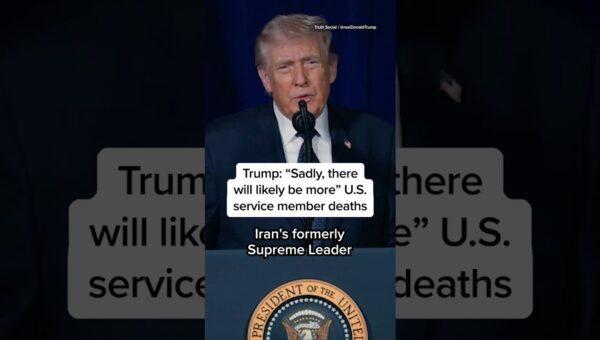
Trump Warns of More US Deaths in Escalating Conflict
Former President Donald Trump issued a somber warning on Truth Social, stating that further U.S. service member deaths are "likely" as geopolitical tensions escalate. He condemned Iran's former supreme leader, Ayatollah Ali Khamenei, and vowed retribution for fallen soldiers.


Air Travel Chaos Erupts as Gulf Conflict Shuts Skies
Tens of thousands of passengers are stranded as the conflict in the Persian Gulf forces widespread airspace closures, disrupting global air travel. A tourist in Israel described witnessing air strikes and the desperate search for escape routes amidst rapidly changing travel options.

Trump Threatens “Unseen” Force on Iran After Leader’s Death
Following the assassination of Supreme Leader Ayatollah Ali Khamenei, U.S. President Donald Trump has vowed to unleash unprecedented force on Iran. While outlining ambitious goals including regime change, experts express skepticism about the effectiveness of airstrikes and the potential for popular uprising against a resilient Iranian government.