US Strikes Iran: Trump Cites Imminent Threat, Markets Reel
The U.S. and Israel have launched joint strikes against Iran, killing Supreme Leader Ali Khamenei and escalating regional conflict. President Trump cited an "imminent threat" as justification, while markets reacted with volatility and oil prices surged. Meanwhile, Americans in the region face evacuation challenges amidst drone attacks on diplomatic facilities.


US Strikes Iran, President Cites ‘Imminent Threat’
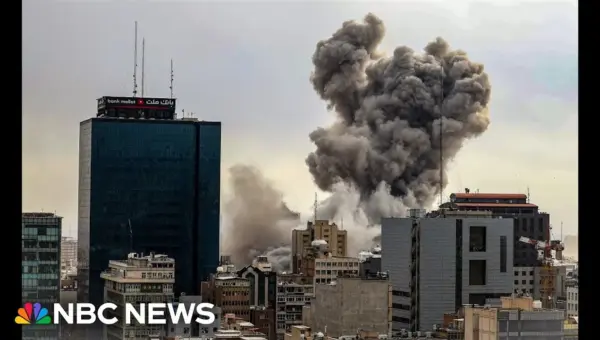
In a dramatic escalation of regional tensions, the United States and Israel have launched joint strikes targeting Iran’s leadership, resulting in the death of Supreme Leader Ali Khamenei and plunging the region into a broader conflict. Four days into the hostilities, President Trump addressed the decision for the first time, stating that the U.S. acted preemptively due to intelligence suggesting Iran was poised to attack.
“I might have forced their hand,” President Trump told reporters. “You see, we were having negotiations with these lunatics, and it was my opinion that they were going to attack first. They were going to attack. If we didn’t do it, they were going to attack first. I felt strongly about that.” He added that the strikes have severely degraded Iran’s capabilities, stating, “They no longer have air protection. They no longer have any detection facilities at all left.”
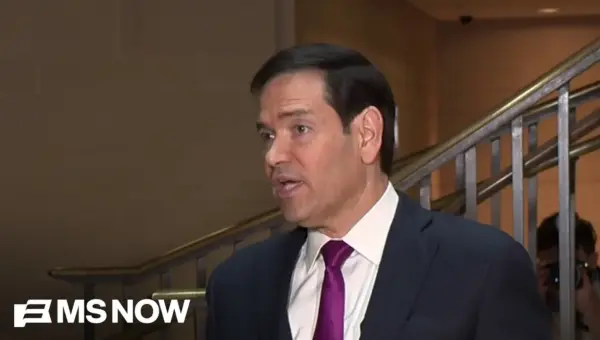
This account contrasts with remarks made by Secretary of State Marco Rubio the previous day. Ahead of a briefing with congressional leaders, Rubio indicated that the administration was aware of an impending Israeli action and anticipated a retaliatory strike against American forces. “We knew that there was going to be an Israeli action. We knew that that would precipitate an attack against American forces, and we knew that if we didn’t preemptively go after them before they launched those attacks, we would suffer higher casualties and perhaps even higher those killed,” Rubio stated.
Pressed on this discrepancy, Secretary Rubio clarified his remarks, emphasizing the timing of the joint operation. “I was very clear in that answer. This was a question of timing, of why this had to happen as a joint operation, not the question of the intent,” Rubio explained. “Once the President made a decision that negotiations were not going to work, that they were playing us on the negotiations and that this was a threat that was untenable, the decision was made to strike them.”
Economic Fallout and Maritime Security
The conflict has had an immediate impact on global markets, with oil prices surging approximately 10% since the war began. The closing bell on Wall Street saw markets rally from significant losses but ultimately close in the red amid the escalating uncertainty.
In response to the economic implications, President Trump announced via social media that the U.S. would provide a “financial lifeline for maritime trade.” He further stated that, if necessary, the U.S. Navy would escort tankers in the region to prevent an oil supply crunch. Brian Cheung, NBC News Business Correspondent, noted the critical role of the Strait of Hormuz, a vital chokepoint for global oil production. “Any conflict that would lead to closure of the Strait of Hormuz could lead to a substantial spike in oil prices,” Cheung said, highlighting that average gas prices have already risen by $0.06 from the previous day and $0.15 from the week prior.
The administration is working to mitigate the impact, with the U.S. Development Finance Corporation set to provide insurance for tankers. However, concerns remain about the effectiveness of naval escorts given Iran’s threats to target ships. “The President’s Truth Social post… does underscore that the administration wants to take some action to make sure that tankers can flow through the Strait of Hormuz,” Cheung observed. “But again, you have to remember what the Iranians are threatening. They’re threatening to set any ship that goes through the Strait of Hormuz on fire.”
Evacuation Challenges and Regional Attacks
As the conflict intensifies, Americans in the region face significant risks. The U.S. Consulate in Dubai was struck by a drone, causing a fire that was quickly extinguished without injuries. This incident follows an attack on the U.S. Embassy in Riyadh by two drones, which resulted in a minor fire and damage.
In response to the escalating threats, the State Department announced the closure of at least three embassies and urged American citizens to leave the region. For those unable to depart, the department issued a stark warning: “Please do not rely on the U.S. government for assisted departure or evacuation at this time. There are currently no United States evacuation points.” The State Department is now actively arranging military aircraft and chartered flights for citizens wishing to leave, though logistical challenges remain significant due to airspace closures and canceled flights.
Monica Alba, NBC News White House Correspondent, reported that senior administration officials revealed the diplomatic negotiations with Iran had “totally devolved.” According to these officials, Iran was perceived as not acting in good faith, fueling a sense of urgency within the administration regarding Iran’s nuclear program. “They felt like there was an urgency, given what they were able to develop, what they were moving underground, what could be the possibility of this nuclear weapon and further enrichment,” Alba stated, explaining the decision to pursue military strikes.
Military Objectives and Future Uncertainty
Retired Four Star General and former Director of the CIA, David Petraeus, described the initial strikes as achieving “extraordinary achievements” and being “historic” in their decapitation of Iran’s top leadership and significant damage to its missile and drone programs. “There’s been enormous damage done to the principal targets of this operation,” Petraeus noted.
However, the broader implications and the path forward remain uncertain. The strikes targeted Iran’s Assembly of Experts, the body responsible for electing the next Supreme Leader, causing considerable damage to the facility. General Petraeus raised questions about the potential for regime change, stating, “The U.S. from the air can do a great deal to damage these regime forces, but it can’t bring about regime change through the air.” He emphasized that the conditions on the ground would need to enable the Iranian people to rise up.
President Trump has indicated that the U.S. has substantial munitions stockpiles to sustain prolonged conflict, but Courtney Kube, NBC News National Security Correspondent, cautioned that defensive munitions might be finite. “The concern here is the defensive capability, the defensive stockpile,” Kube explained. “The U.S. also has to be ready to shoot those down when they’re targeting U.S. bases… And there is a finite number of those defensive munitions.”
The military’s objectives, such as destroying Iran’s ballistic missile program and navy, are considered finite and definable. However, the ultimate goal of regime change is far more complex, with the administration seemingly waiting to see how events unfold and whether the Iranian populace will mobilize.
Midterm Primaries Underway Amidst Conflict
Amidst the unfolding international crisis, voters are heading to the polls for the first major primaries of the 2026 midterm elections in Texas, Arkansas, and North Carolina. Key races, particularly in Texas, are being closely watched for insights into the future direction of both major parties. Incumbent Republican Senator John Cornyn faces challenges from his right, while Democratic contenders Jasmine Crockett and James Talarico offer different visions for flipping the state’s Senate seat.
Reports from Texas indicate confusion at polling sites due to new voting restrictions, with some voters being redirected. Representative Jasmine Crockett criticized these measures as “dirty tricks” by Republicans, asserting that Democrats would prevail despite such challenges.
Source: Meet the Press NOW — March 3 (YouTube)

Related Articles
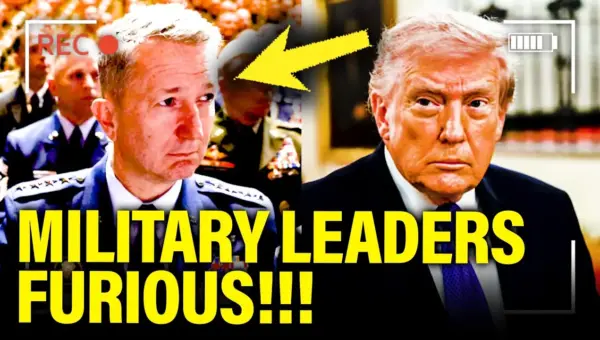
Faith, Fury, and Fire: Iran War Fueled by Divine Mandate?
US troops reportedly briefed on the Iran conflict using 'Armageddon' and 'divine plan' narratives, raising serious questions about the justifications for war. Shifting official rationales and intelligence discrepancies fuel public distrust.
US Dragged Into Iran War: Critics Slam Trump, Rubio Over Justifications
Critics are questioning the U.S. entry into military conflict with Iran, citing a lack of clear objectives and intelligence discrepancies. Revelations suggest Israel may have influenced the decision, leading to bipartisan backlash and concerns about American citizens stranded in the Middle East.
US Strikes Iran: Trump Cites Negotiation Failure, Markets Reel
The U.S. and Israel have launched joint military strikes against Iran, killing Supreme Leader Ali Khamenei and igniting regional conflict. President Trump cited failed negotiations as the catalyst, while economic markets reacted with surging oil prices. The U.S. plans naval escorts for tankers and is arranging evacuations for citizens in the affected region.