US Strikes Iran to Neutralize Missile Threat, Official Says
U.S. Secretary of State Marco Rubio confirmed a proactive military operation against Iran, aimed at dismantling its ballistic missile capabilities. The strike was deemed necessary to prevent Iran from acquiring the power to threaten global security, with officials emphasizing a defensive posture to avert future escalation and casualties.


US Strikes Iran to Neutralize Missile Threat, Official Says
In a significant development, U.S. officials have confirmed that a proactive military operation was conducted against Iran, aimed at dismantling its ballistic missile capabilities and preventing the regime from holding the world hostage. Secretary of State Marco Rubio, speaking from Capitol Hill, stated that the operation was not only necessary but also executed defensively to avert greater future damage and casualties.
‘Operation Needed to Happen’ Amid Imminent Threat
Secretary Rubio emphasized the critical nature of the operation, asserting, “this operation needed to happen.” He explained that intelligence indicated Iran was on the verge of acquiring capabilities that would allow it to inflict significant damage on the United States and its allies. “Imagine a year from now or a year and a half from now the capabilities they would have to inflict damage on us. It’s an unacceptable radical risk, especially in the hands of a regime run by radical clerics,” Rubio stated.
The rationale behind the preemptive strike was rooted in the assessment of an imminent threat. “There absolutely was an imminent threat, and the imminent threat was that we knew that if Iran was attacked, and we believe they would be attacked, that they would immediately come after us,” Rubio elaborated. He further clarified that the Department of War assessed that waiting to be hit first would result in more casualties. “We went proactively in a defensive way to prevent them from inflicting higher damage.”
Focus on Missile Capabilities, Not Regime Change
While the operation’s primary objective is to neutralize Iran’s ballistic missile and drone manufacturing capabilities, as well as its naval threats to global shipping, Rubio expressed a hope for the Iranian people to overthrow their current government. “We would not be heartbroken, and we hope that the Iranian people can overthrow this government and establish a new future for that country,” he remarked. However, he was clear that U.S. objectives are focused on military capabilities, not direct intervention in Iran’s governance. “The objective of this mission is the destruction of their ballistic missile capabilities and their ability to manufacture them, as well as the threat posed by their Navy to global shipping.”
Addressing Congressional Concerns and War Powers
Rubio addressed concerns raised by critics in Congress regarding the notification process for the operation. He asserted that Congress was notified, including the “Gang of Eight” and congressional leadership, prior to the hostilities, despite no legal requirement to do so. “There’s no law that requires us to do that. The law says we have to notify them 48 hours after beginning hostilities, we’ve done that,” he explained, adding that notifying all 535 members of Congress is not feasible.
He also commented on the ongoing debate surrounding the War Powers Act, noting that “no presidential administration has ever accepted the War Powers Act as constitutional.” Nonetheless, he affirmed, “we complied with the law 100 % and we’re going to continue to comply with it.”
Denying Iran’s Ability to Threaten Global Stability
The overarching goal, as articulated by Rubio, is to deny Iran the ability to threaten its neighbors, U.S. bases, and regional presence, and to prevent it from using its missile program as a shield for nuclear ambitions. “The objective of this mission is to make sure they don’t have these weapons that can threaten us and our allies in the region,” he stated. He reiterated that regardless of who governs Iran, the U.S. aims to ensure they lack the capacity to threaten global security through ballistic missiles and drones.
Mitigating Economic Impact and Future Actions
Acknowledging potential economic repercussions, particularly rising energy prices, Rubio assured that the administration has a program in place, to be implemented by Secretaries of Defense and Energy, to mitigate these impacts. “Starting tomorrow, you will see us rolling out those phases to try to mitigate against that,” he announced.
Regarding the duration and scope of the operation, Rubio indicated that while ground forces are not currently being postured, the president retains all options. The focus remains on achieving the set objectives, which he believes can be accomplished without a ground invasion. “We will do this as long as it takes to achieve those objectives and we will achieve those objectives. The world will be a safer place when we’re done with this operation,” Rubio concluded.
Targeting Civilian Infrastructure Denied
Responding to reports of a strike on a building in southern Iran, which Iranian state media claimed was a school, Rubio stated that the U.S. would not deliberately target civilian infrastructure. “The United States would not deliberately target a school. Our objectives are missiles… and the one-way attract drones that would be our focus,” he asserted, contrasting this with Iran’s alleged targeting of civilian infrastructure like hotels and airports.
Source: Secy. Rubio on Iran: 'This operation needed to happen' (YouTube)

Related Articles
Gulf States Must Act Amid US-Iran Uncertainty, Expert Urges
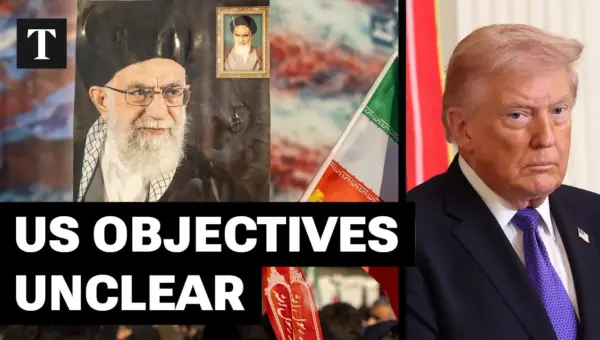
Gulf states must take a more active role in shaping regional security due to unclear US objectives regarding Iran, argues historian Bader Al-Saif. He stresses the need for comprehensive negotiations involving all regional players and warns against the chaotic consequences of regime change.

Conflicting Messages Emerge on Iran Conflict Goals, Duration
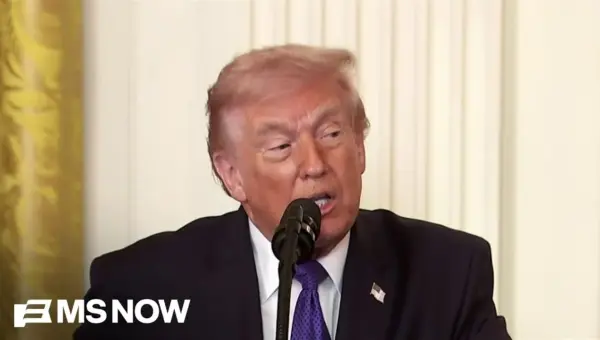
The Trump administration is facing scrutiny over conflicting messages regarding the ongoing conflict with Iran. Varying timelines for the duration of operations and divergent stated objectives, from destroying missile capabilities to regime change, are creating confusion. The human cost is also rising, with six U.S. service members killed in action.


Iran, US, Israel: Analyzing Goals Amidst Escalating Middle East Conflict
As the Middle East teeters on the brink of wider conflict, this analysis delves into the strategic goals and limitations of Iran, the US, and Israel. Iran prioritizes regime survival amidst leadership losses, employing a strategy of attrition through missiles and drones. The US faces unclear objectives and domestic constraints, while Israel focuses on neutralizing Iranian threats and preventing nuclearization.