US Strikes Iran: The Real Reason Behind Operation Epic Fury
This analysis delves into the strategic rationale behind the U.S. military action against Iran, moving beyond speculative theories to examine the Pentagon's perspective. It explores the concept of preventive war, regional power dynamics, and the role of Iran's domestic instability in shaping the timing of Operation Epic Fury.

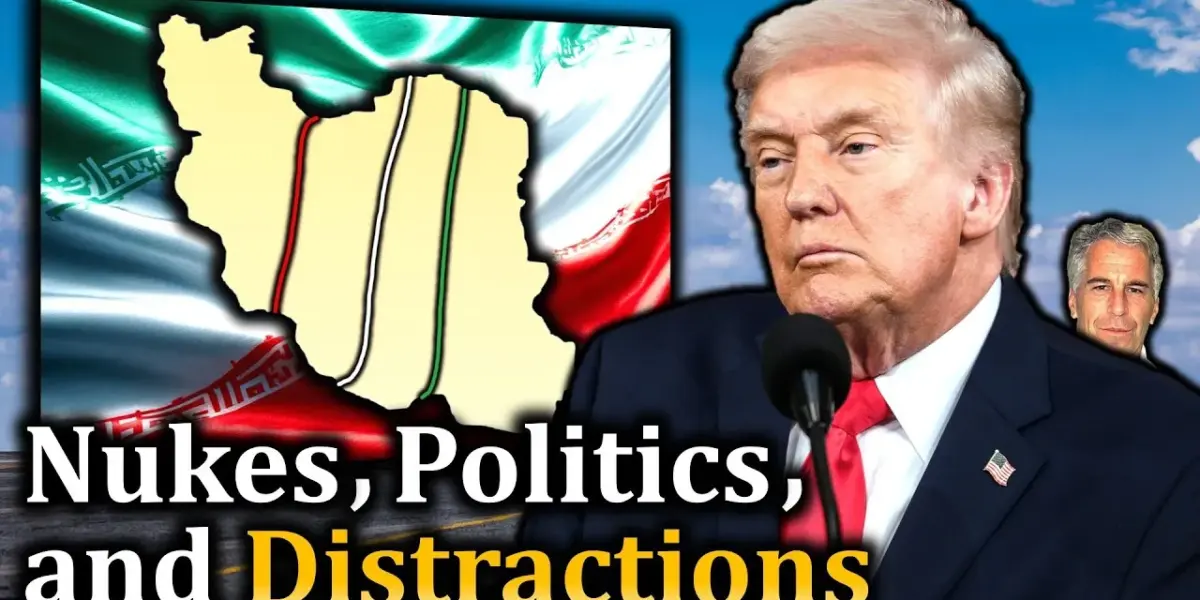
US Strikes Iran: The Real Reason Behind Operation Epic Fury
The sudden escalation of military action against Iran, dubbed “Operation Epic Fury” by the Trump administration, has left many questioning the underlying motivations. While military movements in the Middle East might signal impending conflict to seasoned observers, the articulation of *why* such actions are taken often remains opaque. In the absence of clear communication from the White House, public discourse has gravitated towards speculative theories, most notably a connection to the Jeffrey Epstein case. However, a deeper analysis, separating the Pentagon’s strategic rationale from political messaging, reveals a more complex picture rooted in regional power dynamics and the strategic timing of perceived threats.
Deconstructing the Official Narrative
The Trump administration’s public justifications for the military campaign have been characterized by a “shotgun approach,” conflating substantive disagreements with the strategic timing of the conflict’s onset. This lack of a coherent narrative has fueled public skepticism and led to low initial support for the war, a far cry from the expected “rally ’round the flag” effect. Observers note that figures like Senator Marco Rubio have demonstrated a greater capacity for explaining policy logic, a skill seemingly lacking in the President and Secretary of Warfense, who have struggled to articulate a clear rationale. The failure to provide a clear, concise explanation, perhaps through a State of the Union address, has created a vacuum that has been filled by speculation and doubt.
The Pentagon’s Rationale: Regional Influence and Preventive War
At its core, the conflict stems from the ongoing struggle for political influence in the Middle East. This can be viewed on a micro-level, concerning issues like the borders of Israel or the influence of Iran in Iraq, or on a broader scale, touching upon Iran’s domestic human rights record. While these are substantive policy disputes where the U.S. might achieve its objectives through military success, they do not fully explain the *timing* of the current engagement. The administration’s public appeals have heavily emphasized Iran’s nuclear program and ballistic missile production. These are not ends in themselves, but rather *means* to an end – the acquisition of greater power and influence.
The concept of preventive war emerges as a central tenet of the Pentagon’s thinking. The logic posits that if Iran is allowed to develop its military capabilities, particularly ballistic missiles and nuclear weapons, it will achieve a power shift that would make future military intervention by the U.S. prohibitively costly. This mirrors the situation with North Korea, where the buildup of artillery near the DMZ and the subsequent development of nuclear weapons have constrained U.S. options for decades. The fear is that Iran’s advancements in these areas would create a future bargaining problem that the U.S. wishes to avoid.
This preventive war logic explains the administration’s focus on Iran’s weapons programs. The argument is that Iran building ballistic missiles would make a future preventive war too expensive, and the subsequent development of nuclear weapons would further tip the balance of power. The intervention, therefore, is framed as a necessary action to preempt a future, more dangerous scenario.
Iran’s Agency and the Timing of Conflict
However, this explanation, while outlining the U.S. strategic calculus, risks overlooking Iran’s own agency. The decision to invest in weapons programs is an active choice by Iran to gain coercive power, with the expectation of profiting from future concessions. If a rival is likely to destroy these programs before they mature, then the investment becomes strategically unsound. The Joint Comprehensive Plan of Action (JCPOA) agreement a decade prior, which constrained Iran’s nuclear program, serves as a historical precedent. The preventive war logic explains why the U.S. might intervene *if* Iran develops these weapons, but it doesn’t fully explain Iran’s initial decision to pursue them.
Two potential bargaining problems can arise: an intelligence gap where the U.S. cannot observe Iran’s secret weapons development, or Iran underestimating the U.S. willingness to engage in preventive war. Given the U.S.’s intelligence capabilities, the former seems less likely. The latter, however, is plausible – Iran might have misjudged U.S. resolve. Yet, the timing of the current conflict suggests another factor at play, one that doesn’t rely solely on Iran’s deliberate choices to shift power.
Exogenous Power Shifts and Domestic Instability
Not all power shifts are initiated by one party’s deliberate actions. Some occur “exogenously,” meaning neither party has complete control over the future distribution of power. The current protests within Iran represent such a scenario. The Iranian government is simultaneously engaged in conflict with external forces and dealing with internal dissent stemming from its inability to provide basic public services. Protest movements, however, are inherently volatile and require sustained coordination, which is not guaranteed.
This internal instability creates an opportunity. The U.S. assessment, as suggested by the timing of the intervention, is that its chances of success in a conflict are better now than they would be later, especially given the difficulty in freezing the current dynamic of expectations and potential for renewed protests. When President Trump signaled support for protestors, and amid signs of renewed demonstrations despite a harsh government crackdown, the opportunity for a U.S. intervention was presented. The Ayatollah, unable to credibly commit to a reduced regional role in the long term, faced a situation where waiting longer might mean losing the chance to act decisively.
Why This Matters
Understanding the true drivers of the conflict with Iran moves beyond simplistic narratives and conspiracy theories. It highlights the intricate interplay of strategic calculations, regional power balances, and domestic political dynamics. The U.S. approach, framed by the doctrine of preventive war, underscores a proactive stance against perceived future threats. However, the volatile nature of regional politics and internal dissent within Iran suggests that the conflict’s trajectory is far from certain. The success of Operation Epic Fury, and its broader implications for regional stability and U.S. foreign policy, will depend on a complex set of factors that extend far beyond the immediate military objectives.
Implications, Trends, and Future Outlook
The current conflict signals a continuation of a long-standing U.S. policy of confronting Iran’s regional ambitions. The emphasis on preventive action suggests a potential shift towards more assertive, pre-emptive military engagements in the face of perceived threats, particularly concerning nuclear proliferation and ballistic missile development. This trend could lead to increased volatility in the Middle East, with potential for wider regional escalation. The internal situation in Iran, coupled with external military pressure, creates a precarious environment where unexpected developments could rapidly alter the strategic landscape. The future outlook remains uncertain, with the effectiveness of U.S. strategy hinging on its ability to navigate both external power plays and the unpredictable currents of Iranian domestic politics.
Historical Context
The current tensions are not an isolated event but rather a continuation of decades of strained relations between the United States and Iran. Following the 1979 Iranian Revolution and the subsequent hostage crisis, relations have been marked by mutual suspicion and intermittent confrontation. U.S. policy has largely focused on containing Iran’s influence, curbing its nuclear program, and supporting regional adversaries. The present military action can be seen as an intensification of these long-standing objectives, driven by a specific administration’s strategic assessment of immediate and future threats.
Source: The Real Reason the United States Is at War with Iran (YouTube)

Related Articles
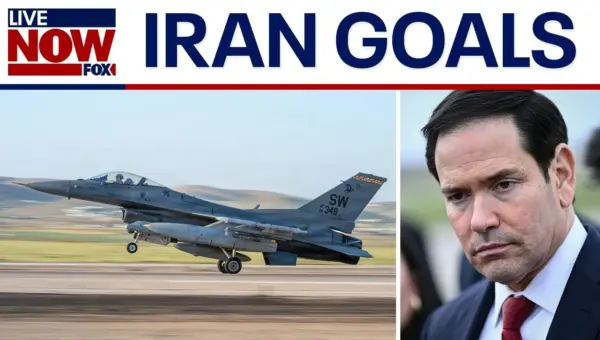
Rubio: US Can Achieve Iran War Goals Without Troops
Senator Marco Rubio outlined a strategy to counter Iran without deploying U.S. ground troops, focusing on weakening the regime and enhancing maritime security. He also criticized Cuba's economic system and expressed concerns about West Bank violence.


Israel Escalates Iran Strikes, Warns of Wider War
Israel has launched significant strikes inside Iran following continued missile fire, warning of further escalation. The conflict risks wider regional instability and economic disruption, especially concerning the Strait of Hormuz.
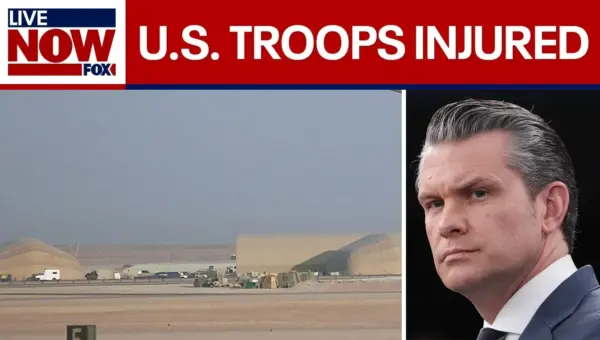
US Troops Wounded in Saudi Base Attack by Iran
An Iranian missile attack on Prince Sultan Air Base in Saudi Arabia wounded multiple U.S. service members and damaged aircraft. The incident highlights the ongoing risks in the Middle East and the limitations of air defense systems. Analysts discuss the strategic implications, economic pressures, and the isolation of Iran amidst the conflict.