US Strikes Iran: Supreme Leader Killed, Regional Attacks Ensue
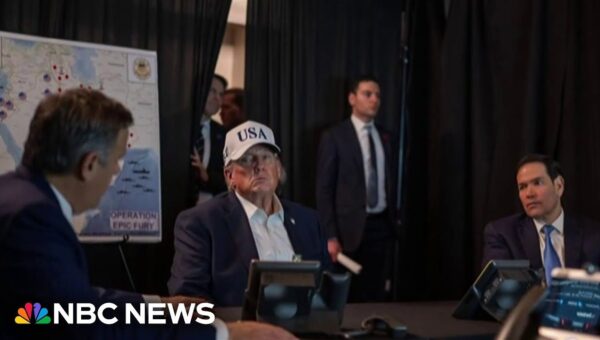
The U.S. and Israel have launched significant strikes across Iran, reportedly killing Supreme Leader Ayatollah Khamenei. In response, Iran retaliated with attacks on Bahrain, Dubai, and other regional targets. The operation, dubbed "Operation Epic Fury," aims to prevent Iran from acquiring nuclear weapons amid heightened regional tensions and uncertainty over Iran's future leadership.


US Strikes Iran: Supreme Leader Killed, Regional Attacks Ensue
In a historic and consequential move, President Trump announced early this morning that U.S. and Israeli forces have conducted strikes across Iran, resulting in the death of Iran’s Supreme Leader, Ayatollah Khamenei. The coordinated operation, dubbed “Operation Epic Fury,” targeted key leadership figures within the Iranian regime. In retaliation, Iran launched attacks across the region, striking civilian targets in Bahrain, Dubai, and near a U.S. Navy base, marking a significant escalation in Middle East tensions.
Operation Epic Fury: Targeting Iran’s Leadership
President Trump, addressing the nation from Mar-a-Lago, declared that the mission’s primary objective was to eliminate imminent threats posed by the Iranian regime and prevent it from acquiring nuclear weapons. “They will never have a nuclear weapon,” Trump stated. He further elaborated in a conversation with NBC News’ Kristen Welker that the strikes inflicted “very great losses on their leadership,” with many of the decision-makers now believed to be dead. Satellite imagery revealed the Ayatollah’s compound in Tehran to be decimated, a stark visual of the operation’s impact. Israel released footage showing strikes on a ballistic missile launcher, indicating a joint effort to neutralize Iran’s offensive capabilities.
“Our objective is to defend the American people by eliminating imminent threats from the Iranian regime. A vicious group of very hard, terrible people. For 47 years the Iranian regime has chanted ‘Death to America’ and waged an unending campaign of bloodshed and mass murder targeting the United States, our troops and the innocent people in many, many countries. It’s been mass terror. And we’re not going to put up with it any longer.”
Iran’s Retaliation: Attacks Across the Region
Following the U.S. strikes, Iran launched retaliatory attacks, targeting multiple nations across the Middle East. High-rise buildings and hotels in Bahrain and Dubai, including the Fairmont Dubai Palm Hotel, were hit by drones and missiles, causing significant damage and sparking fear among civilians. Debris from an intercepted Iranian missile fell in Qatar, and a drone struck Terminal 1 of Kuwait’s International Airport. Notably, the headquarters of the U.S. 5th Fleet also sustained a drone strike, though the Pentagon reported no U.S. casualties. These attacks underscore the volatile nature of the region and the potential for widespread conflict.
The Nuclear Threat and Diplomatic Stalemate
A central justification for the U.S. strikes, as articulated by President Trump, is Iran’s persistent pursuit of nuclear weapons. The administration stated that Iran’s efforts to reconstitute its nuclear program after previous strikes, coupled with its refusal to negotiate its ballistic missile program, constituted an “intolerable risk.” Trump emphasized that ongoing negotiations had failed, describing them as unproductive and indicative of the regime’s unwillingness to de-escalate. The U.S. previously destroyed Iran’s nuclear sites last year, but intelligence suggested the regime was attempting to rebuild them.
Uncertainty and Questions of Succession
The death of Ayatollah Khamenei, who had led Iran since 1989, plunges the nation into a period of significant uncertainty. Khamenei was known for his stubbornness and kept his succession plans secret. With many of his potential successors reportedly killed in the strikes, the question of who will lead Iran next remains unanswered. Richard Engel, reporting from Israel, noted that while the Iranian opposition is reportedly delighted, a smooth transition of power is not guaranteed. The lack of a clear successor could lead to internal power struggles or further instability within Iran.
Congressional Reaction and War Powers Debate
The U.S. military’s actions have drawn mixed reactions from Congress. While many Republicans have largely defended President Trump’s decision, Democrats have sharply criticized the move, expressing concerns about the lack of a clear endgame and the potential for escalating the U.S. into a protracted war. Democrats have vowed to force a vote on restricting the President’s war powers next week, though their immediate impact is uncertain given Republican support for the administration’s actions.
Domestic Security and Economic Impact
The heightened tensions have placed U.S. law enforcement on high alert for potential retaliatory strikes within the United States. While no specific threats have been identified, authorities are increasing patrols at sensitive locations. The economic implications are also significant, with analysts predicting a rise in oil prices. Disruptions to global oil supply, particularly concerning the Strait of Hormuz, could lead to substantial increases in gas prices for consumers.
Looking Ahead: What Comes Next?
The situation remains fluid, with ongoing attacks and a deeply uncertain future for Iran and the wider Middle East. President Trump indicated that the “bombing will last through the week,” suggesting a prolonged operation. The world watches to see how Iran will respond, who will emerge as its next leader, and whether this dramatic escalation will lead to a broader regional conflict or a path toward de-escalation. The coming days will be critical in determining the long-term consequences of these unprecedented U.S. strikes.
Source: NBC Nightly News Full Episode – Feb. 28 (YouTube)

Related Articles

Trump: Iran Strikes Ahead of Schedule, Expects ‘Great Deal for World’
Three U.S. service members have been killed amid escalating conflict with Iran, President Trump confirmed. He stated that strikes are ahead of schedule, with senior Iranian leaders killed, and expressed optimism for a "great deal for the world" despite ongoing talks with Iranian officials.
Trump Agrees to Talks with Iran After Major Strikes
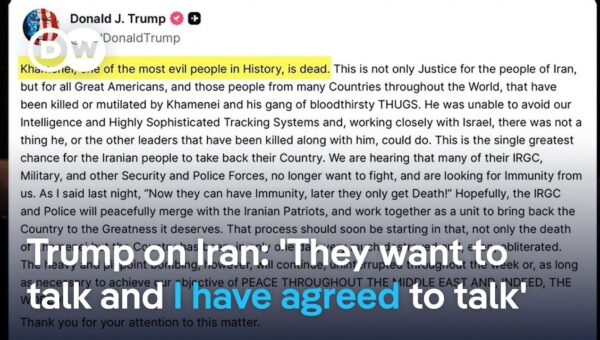
President Donald Trump has agreed to talks with Iran's leadership following coordinated strikes that reportedly killed key figures, including the Supreme Leader. While Trump claims significant military successes, U.S. strategy remains unclear, and public opinion shows limited support for the actions amid rising American casualties.

Trump’s Putin Stance: US Strategy and Global Implications
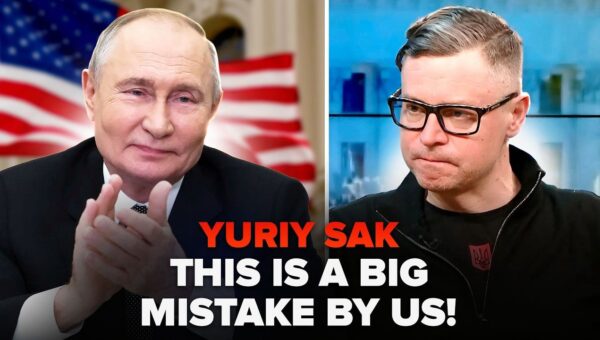
Analysis suggests Donald Trump's approach to the Ukraine war involves pressuring Kyiv, but US involvement is crucial for resolution. China's influence and the 'MAGA' agenda's geopolitical implications are key factors.