US Strikes Iran School: A Devastating Blow to Innocence
New evidence suggests US Tomahawk missiles struck a girls' primary school in Iran, killing nearly 180, mostly children. This revelation raises serious questions about US military actions and accountability amidst escalating conflict.

US Strikes Iran School: A Devastating Blow to Innocence
The escalating conflict between the United States and Iran has taken a deeply disturbing turn, with new evidence suggesting that US-fired Tomahawk missiles may have struck a girls’ primary school in southern Iran, resulting in the deaths of approximately 180 people, a significant portion of whom were children. This harrowing revelation, brought to light by investigative journalist group Bellingcat and researcher Trevor Ball, casts a grim shadow over the initial US military actions in the region and raises profound questions about accountability and the true objectives of the ongoing hostilities.
A ‘Sickening’ Scale of Destruction
The human cost of the war has been described as “sickening and mind-blowing in scale.” Adding to this tragedy, the confirmation of the school strike represents a “next level” and “new low” in the conflict. Bellingcat’s review of footage, geolocated and confirmed, points to US Tomahawk missiles hitting the school in southern Iran. Researcher Trevor Ball has emphasized a critical detail: Israel does not possess Tomahawk missiles, while the United States does. This distinction is crucial in understanding the potential origins of the strike.
A Shadow Over US Casualties and War Aims
The timing of this revelation is particularly poignant, coinciding with breaking news that a US service member died from injuries sustained during Iran’s initial attacks. This marks the seventh US service member to pass away in the conflict. The author of the analysis questions the stated objectives of what is described as Donald Trump’s “war with Iran,” noting a shift in rationale from preventing an “imminent threat” to “regime change” and then to stopping ICBMs. The piece suggests that Israel, under Prime Minister Netanyahu, may have been a driving force behind the US involvement, with Netanyahu having a long-held desire for conflict.
Pete Hegseth and the ‘Investigating’ Dodge
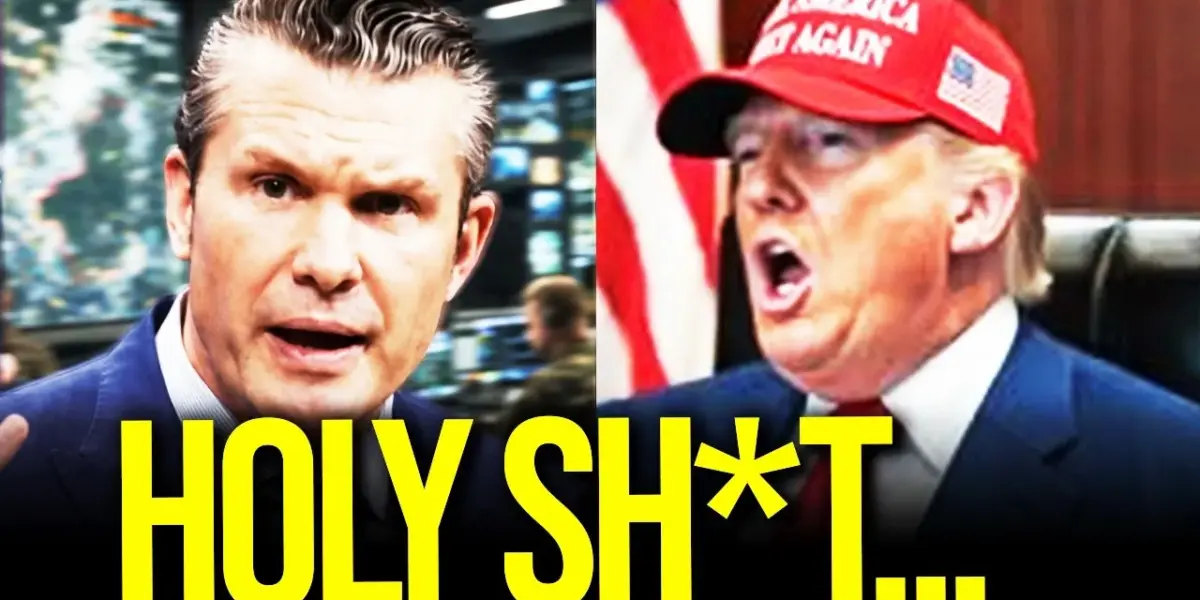
The report also critically examines the public statements of US officials, particularly Pete Hegseth, identified as the “War Secretary.” During a Pentagon briefing, Hegseth proudly displayed a strike map that included Manbij, the site of the school in Iran. When questioned by BBC’s Tom Bateman about whose munitions hit the school, Hegseth repeatedly stated that the department was “investigating.” This response is contrasted with Donald Trump’s own statements, where he blamed Iran for the attack while simultaneously acknowledging that the US was “investigating.” The author posits that Hegseth’s demeanor during these exchanges, including a downward glance, is a “telltale sign of a lie.”
Further complicating the narrative, footage reviewed by Bellingcat appears to contradict Trump’s assertion that Iran was responsible. The strike occurred during the US’s “opening salvo,” prior to any significant Iranian retaliation. The analysis highlights a video released by Mayar News, geolocated by Bellingcat, showing a missile hitting a building near the school. Images comparing this missile to US Tomahawk missiles used earlier in the conflict in Tehran further support the claim of US involvement.
The Geolocation Evidence
Detailed analysis of the geolocation evidence is presented, showing a red cone indicating the estimated impact area of the missile. Within this zone were an IRGC facility, a clinic, and other damaged buildings, including the elementary school. The school, described as a “very, very white structure at the top,” is clearly depicted in diagrams as being adjacent to the targeted areas. This precise targeting, within the identified strike zone, aligns with the broader pattern of US military actions and the presence of Tomahawk missiles in the US arsenal, but not Israel’s.
Collateral Damage and a Question of Intent
The author expresses concern that the US may have “rained down hell upon the Iranian people,” which was purportedly not the intention. While acknowledging the repressive nature of the Iranian regime and its leadership, the piece argues that bombing and killing civilians, including school children, does not serve the cause of liberating the Iranian people. The bombing of streets and schools is presented as counterproductive to the goal of fostering freedom and democracy within Iran.
A President’s Priorities?
The analysis concludes by contrasting the gravity of these events with the actions of President Trump, who is depicted as golfing in Doral, Florida, the morning after extending his trip to continue playing golf, following a meeting the previous day. This juxtaposition is used to question the administration’s focus and priorities amidst a conflict that has resulted in significant civilian casualties and potential war crimes.
Why This Matters
The implications of these findings are profound. If US Tomahawk missiles indeed struck a civilian school in Iran, it represents a catastrophic failure of targeting and a severe violation of international humanitarian law. It raises urgent questions about the chain of command, intelligence failures, and the ethical considerations guiding US military operations. Furthermore, it undermines any claims of precision warfare and could have severe diplomatic repercussions, potentially galvanizing international condemnation and further escalating regional tensions. The incident also highlights the critical role of independent investigative journalism in uncovering truths that may be obscured by official narratives.
Implications, Trends, and Future Outlook
This event, if confirmed, could significantly shift public and international opinion regarding the conflict. It may embolden calls for de-escalation and a renewed focus on diplomatic solutions. The trend of increased reliance on advanced weaponry, such as Tomahawk missiles, in complex geopolitical environments necessitates a robust ethical framework and stringent oversight to prevent such tragedies. The future outlook depends heavily on the transparency of the US investigation, the willingness to hold individuals accountable, and a potential recalibration of the strategic objectives in the region. The author’s skepticism about the stated war aims suggests a need for clearer communication and a more defined, achievable end goal that prioritizes civilian safety.
Historical Context and Background
The broader context involves decades of strained relations between the US and Iran, punctuated by periods of heightened tension and direct confrontation. The narrative of US involvement in the Middle East, often framed around national security interests and combating threats, has frequently been scrutinized for its impact on civilian populations. The specific mention of Netanyahu’s long-standing desire for conflict with Iran provides a historical backdrop to the current geopolitical alignment. The analysis implicitly draws parallels to past instances where military actions have resulted in unintended but devastating civilian casualties, underscoring the enduring challenges of modern warfare.
Source: Pete Hegseth's Worst Nightmare Drops on Him (YouTube)

Related Articles


Iran Appoints New Leader Amid Escalating Global Tensions
Iran has appointed Mojtaba Khamenei, son of the former leader, as its new Supreme Leader amidst escalating international conflict. The war has driven oil prices to record highs, impacting global markets and American consumers. Meanwhile, the U.S. military toll rises, and travel faces significant disruption due to the government shutdown.
US Mulls Iran Ground Troops, Draft Amid Escalating Tensions
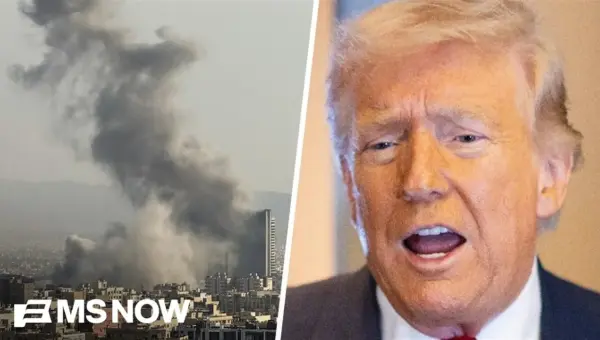
The White House is reportedly considering extreme military options against Iran, including the potential deployment of ground troops and even a military draft. Retired Colonel Jack Jacobs expressed skepticism about a draft but discussed limited scenarios for special forces raids.
Iran Conflict Backfires: Trump’s War Fuels Unrest, Profits
Donald Trump's approach to Iran is reportedly backfiring, fueling public unrest in Tehran and sparking accusations of family members seeking to profit from a new drone company. The conflict's economic impact is evident with disruptions to oil infrastructure, while political rhetoric focuses on internal divisions.