US Strikes Iran: McMaster Explains Objectives Amidst Regional Tensions
Former National Security Advisor H.R. McMaster detailed the U.S. military's immediate objectives in striking Iran, focusing on denying destructive weapons and countering proxy warfare. He indicated that lasting regional security may require a fundamental change in Iran's government, driven by its own people.

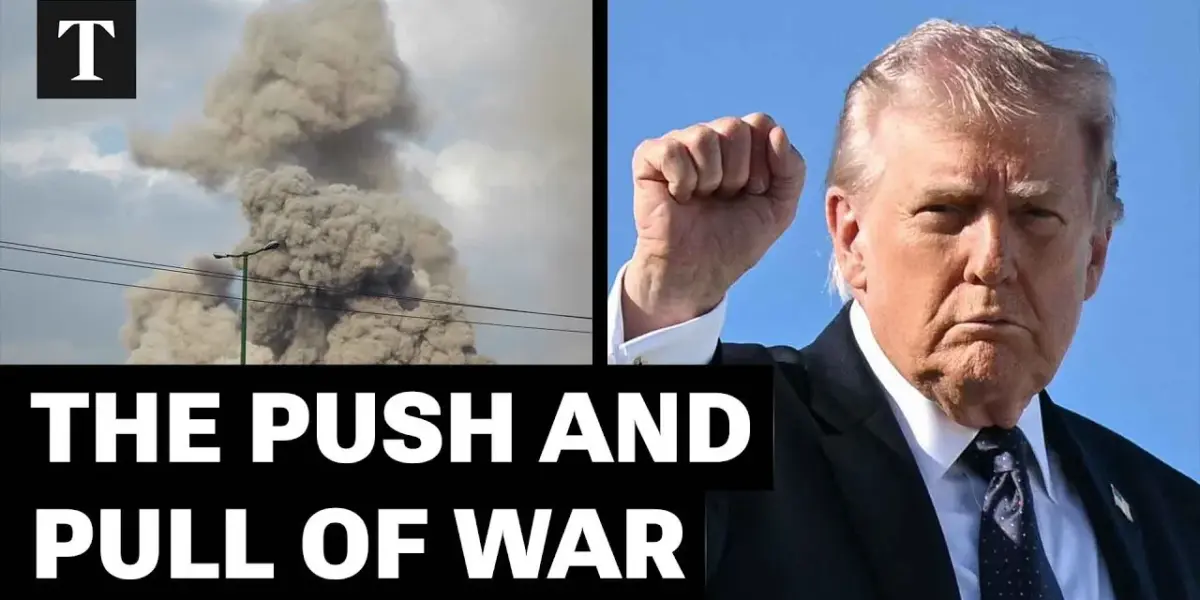
US Strikes Iran: McMaster Explains Objectives Amidst Regional Tensions
In the wake of escalating strikes between the United States and Iran, former National Security Advisor H.R. McMaster has provided insights into the immediate objectives of U.S. military action in the Middle East. Speaking amidst ongoing retaliatory actions, including Iranian strikes on the Gulf and Israeli ground forces entering southern Lebanon, McMaster clarified the strategic aims, emphasizing the need to counter Iran’s pursuit of destructive weapons and its long-standing proxy warfare.
Denying Destructive Capabilities: The Immediate Objective
General McMaster, a retired U.S. Army Lieutenant General and author of “Battlegrounds: The Fight to Defend the Free World,” stated that the immediate objective of the U.S. campaign is to “deny Iran the ability to threaten its neighbors with these destructive weapons.” He highlighted that Iran’s actions extend beyond its nuclear program, encompassing the development and proliferation of a significant arsenal of other destructive capabilities, particularly a sophisticated drone and missile strike complex. This complex, he noted, is not only operated from Iranian soil but is also used to equip proxies such as the Houthis in Yemen and Hezbollah in Lebanon, as well as providing support to groups like Hamas.
McMaster pointed out that Iran had already engaged in aggressive actions against ten countries in the region prior to the current operations, underscoring the pervasive nature of the threat. “We’ve seen them do that even before, you know, the this latest campaign against Iran because they had fired, you know, missiles and and drones against six countries in the region before this operation started. Now it’s up to to 10 countries,” he stated.
A Fundamental Change: The Broader Realization
Beyond the immediate tactical goals, McMaster suggested a growing realization that lasting peace and security in the region, including for the Iranian people themselves, may necessitate a “fundamental change in the nature of the government in Iran.” He described the current Iranian government as one that “doesn’t adhere to this extremist ideology and doesn’t sign up for permanent hostility to the United States, their Arab neighbors, the West and and their own people.” He cited the regime’s reported killing of at least 30,000 of its own citizens in recent weeks as evidence of its oppressive nature.
The former National Security Advisor also addressed the shifting geopolitical narrative, noting that Iran, alongside its supporters Russia and China, may have concluded that the West was in decline. He referenced a meeting between Vladimir Putin and Xi Jinping in April 2023, where they discussed “changes like we haven’t seen in a hundred years.” McMaster believes Iran bought into this narrative of Western weakness, which he argues contributed to their decision to “light the fire the ring of fire around Israel in October of 23.”
Trump’s Role and the Duration of Action
Addressing President Trump’s stated timeline for military action, which has varied between a few days and four to five weeks, McMaster acknowledged the difficulty in anticipating the enemy’s response. “The future course of events in war depends on not what you decide to do but often times what the enemy decides to do and that’s sometimes very difficult to anticipate,” he explained.
McMaster suggested that if Trump’s objectives are focused on “eliminating, severely reducing down to a minimum the destructive capabilities that they have that threaten U.S. interests, U.S. bases, trade, U.S. partners and and allies in the region,” then a four-to-five-week timeframe might be feasible. However, he stressed that the ongoing interaction with the Iranian regime, which he believes has been “fundamentally changed,” will be critical. The current phase, with U.S. aircraft operating with impunity over Iran, is expected to drive the government underground and target its repressive arms. The ultimate hope, McMaster noted, is that the regime will be sufficiently weakened to allow the Iranian people to force a change in their government.
Navigating Domestic and International Pressures
The interview touched upon the mixed messages and varying justifications for the U.S. actions, with President Trump asserting that Iran was planning to attack first, while others, like Senator Rubio, suggested Israel might have initiated the escalation. McMaster acknowledged the need for clearer communication but framed the overall U.S. strategy as an attempt to “end a forever war, a forever war waged by the Islamic Republic of Iran.” He contrasted this with the previous U.S. counsel of de-escalation, which he argued essentially gave Iran a “license to escalate on their own terms with impunity.”
McMaster also touched upon the domestic pressure within the Republican party, where some segments are wary of prolonged foreign entanglements. He suggested that the current actions are not necessarily the beginning of an endless war, but rather a strategic move to address a long-standing threat posed by the Iranian regime.
Looking Ahead: The People’s Role
The critical question moving forward, according to General McMaster, is whether the current campaign will sufficiently weaken the Iranian regime to empower its own people to “force a change in the nature of the government.” He concluded by stating that this outcome is what many are hoping for, both for the Iranian populace and for regional stability and U.S. interests.
Source: Trump Can Reach His Objectives In Iran, But War Is Difficult To Anticipate (YouTube)

Related Articles

Iran Cyber Threats: US Faces Limited Retaliation Risk
While Iran has issued threats of cyber retaliation against the U.S., analysts suggest their capabilities are limited, focusing instead on minor incidents. However, recent drone strikes on Amazon data centers in the Middle East highlight the broader risks to digital infrastructure.


Iran Crisis Spikes Oil Prices, Threatens Global Energy Supply
Millions of barrels of crude oil are being held back daily from global markets, pushing prices up and threatening an energy crisis. The prolonged disruption highlights the world's continued dependence on fossil fuels and the geopolitical risks involved.
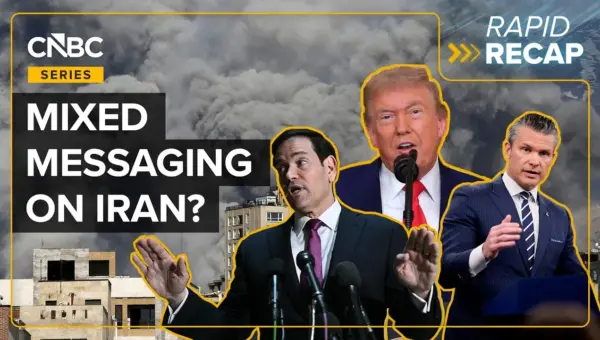
Iran Tensions Flare: US Vows “Annihilation” Amid Nuclear Fears
The Trump administration has adopted an aggressive tone towards Iran, vowing military action and highlighting concerns over the nation's nuclear ambitions. Officials cited "imminent threats" and Iran's development of missiles and drones as justifications for a preemptive stance.