US Strikes Iran: Market Braces for Escalation
The US and Israel have launched 'Operation Epic Fury' against Iran, leading to the reported death of Supreme Leader Khamenei and sparking fears of regional escalation. Markets are bracing for potential oil price spikes and supply chain disruptions, while investors await key US economic data.


US Strikes Iran, Sparking Geopolitical Uncertainty and Market Jitters
In a dramatic escalation of regional tensions, the United States and Israel launched a significant military operation, dubbed ‘Operation Epic Fury,’ against Iran early Saturday morning. The pre-dawn strikes, reportedly initiated between 8 to 9 a.m. local time, targeted Iranian facilities, a move that deviates from traditional nighttime military operations. This action comes amidst complex diplomatic undertones, with reports suggesting Iran had previously signaled a willingness to halt nuclear enrichment, a claim met with skepticism by many analysts.
The Rationale and Shifting Goalposts
President Donald Trump, according to reports, justified the strikes by citing the immediate threat posed by Iran’s ballistic missile systems, even as negotiations for a new nuclear deal were reportedly showing nascent signs of progress. However, the underlying motivations and the strategic rationale behind the timing and scale of the operation remain subjects of intense debate. Skepticism persists regarding Iran’s true intentions concerning its nuclear program, given that byproducts of uranium enrichment can potentially be used for weapons development. The possession of nuclear capabilities by global powers like China, Russia, and North Korea, which appear to shield them from direct US military action, is often cited as a key driver for Iran’s nuclear ambitions.
Nuclear Material Concerns and Intelligence Gaps
A significant point of concern highlighted by analysts is the estimated 400 kg of highly enriched, weapons-capable uranium reportedly held by Iran. There is speculation that this material may have been moved to deeper, more fortified facilities like ‘Pickax Mountain,’ potentially beyond the reach of existing US bunker-busting munitions. The withdrawal of UN weapons inspectors prior to the strikes has further obscured the visibility of Iran’s nuclear activities, creating a critical intelligence gap. Reports from The Washington Post, citing on-the-ground sources, indicated continued development at the Pickax Mountain facility, even as Iranian officials publicly discussed halting enrichment activities.
Casualties, Alliances, and International Reactions
The operation has not been without immediate consequences. Multiple American casualties have been reported, including at least three fatalities. Unconfirmed reports also mentioned fighter jets being downed due to friendly fire over Kuwait. Notably, the operation was primarily a US and Israeli endeavor, with limited participation from European allies. While Canada and the United Kingdom have expressed support, Europe has remained largely silent. Conversely, China and Russia have condemned the strikes as a violation of Iran’s sovereignty, underscoring a widening geopolitical divide.
The Demise of Khamenei and Potential Power Vacuum
A pivotal development stemming from the operation is the reported death of Ayatollah Ali Khamenei, Iran’s Supreme Leader. Khamenei, a figurehead since the 1979 revolution and a staunch opponent of the US and Israel, had been in power since 1989. His death, alongside numerous other high-ranking Iranian officials including the defense minister and intelligence director, signals a potentially seismic shift in Iran’s political landscape. Iran has declared 40 days of mourning, while some Iranian factions, recalling the December-January protests, have reportedly celebrated his demise. However, the response from Iran’s parliament speaker has been defiant, vowing retribution and promising a future of ‘begging for mercy’ from the US.
Domestic Ramifications: The Austin Shooting
Coinciding with the international developments, a tragic mass shooting occurred in Austin, Texas, on Sixth Street. A naturalized US citizen from Senegal reportedly opened fire from an SUV, killing at least three Americans and injuring others before being killed by law enforcement. The incident, occurring shortly after the strikes in Iran, has raised concerns about potential radicalization and lone-wolf attacks inspired by geopolitical events.
Future Scenarios and Market Volatility
The long-term implications of Khamenei’s death and the US strikes are highly uncertain, with analysts outlining several potential scenarios for Iran’s future:
- Regime Survival (50% probability): The current military dictatorship could persist, potentially leading to a hydra-like situation where new leadership emerges without fundamentally altering Iran’s trajectory. This outcome mirrors scenarios observed in Venezuela and Cuba, where regime change efforts have yielded uncertain results.
- Revolution (30% probability): A popular uprising could lead to a new form of government. However, the uncertainty surrounding who would emerge as the new leadership, and their potential alignment, presents significant risks. President Trump has expressed concern that potential successors might also pose a threat.
- Fragmentation (20% probability): The country could fracture into various splinter cells and local militias, leading to increased regional instability and power struggles, similar to the vacuum left in Afghanistan following the US withdrawal. This scenario is viewed with concern by regional players like Turkey and Egypt.
The immediate aftermath has seen Iran retaliate by reportedly launching hundreds of missiles and drones, overwhelming some defensive systems and leading to the closure of major airport hubs like Dubai International Airport, a critical global transit point. The Strait of Hormuz has also been targeted, leading to a spike in oil prices and exacerbating inflationary pressures. This ‘scorched earth’ approach by Iran is expected to contribute to short-term inflationary pressures, particularly in energy and supply chains.
Market Reaction and Investor Outlook
The market’s initial reaction to the geopolitical developments was characterized by a ‘buy the dip’ sentiment, with the S&P 500 reaching 6079.2. Economic data released concurrently, including stronger-than-expected ISM and S&P manufacturing PMI reports, provided some support. However, underlying weaknesses persist, such as a slowdown in new orders and exports, and a reduction in hiring noted in manufacturing employment figures. Despite these headwinds, the immediate geopolitical uncertainty has somewhat subsided as markets digest the knowns of the situation. The focus is now shifting towards upcoming labor market data, including ADP employment figures, Challenger job reports, and the BLS jobs report, which will be crucial in determining the near-term market trajectory. A continued rebound in labor data could foster a broadly bullish outlook, contingent on the absence of further private credit spillovers.
What Investors Should Know
The strikes on Iran and the subsequent events introduce a significant layer of geopolitical risk into the market. Investors should monitor the following:
- Energy Prices: The disruption in the Strait of Hormuz and potential supply chain issues could lead to sustained higher oil prices, impacting inflation and corporate costs.
- Regional Stability: Any further escalation or fragmentation in Iran could destabilize the broader Middle East, affecting global trade and investment.
- US Economic Data: Upcoming labor market reports will be critical in assessing the resilience of the US economy amidst geopolitical turmoil. Positive data could support a ‘risk-on’ sentiment.
- Dollar Strength: Geopolitical uncertainty can sometimes lead to a flight to safety, potentially strengthening the US dollar.
While historical patterns suggest that markets often ‘buy the dip’ during geopolitical crises, the long-term implications of the current situation in Iran remain fluid and warrant cautious observation. The potential for a protracted conflict, regime change, or further fragmentation poses significant risks that could impact global economic stability and financial markets for the foreseeable future.
Source: On Trump's Bombing of Iran & the Stock Market. (YouTube)

Related Articles


Drapes Over Diplomacy: Trump’s Priorities Under Fire
Donald Trump's focus on drapes and building aesthetics over the human cost of military action against Iran has drawn sharp criticism. The lack of a consistent narrative from his administration regarding foreign policy raises concerns about leadership priorities and accountability.
Trump Predicts Iran Operation Lasting Weeks, Cites Rapid Progress
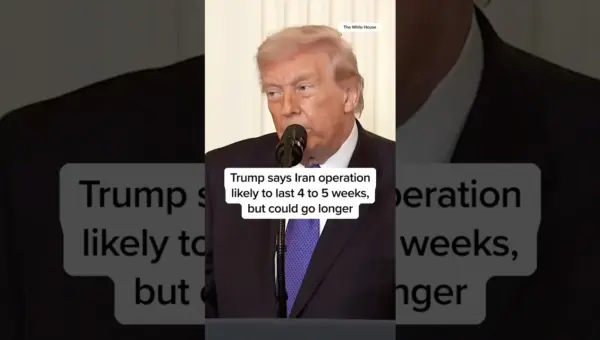
President Donald Trump stated that the U.S. military operation in Iran is progressing ahead of schedule and is likely to conclude within four to five weeks. He emphasized the nation's capability to extend the operation if necessary, signaling flexibility in strategic planning.

Trump’s Iran Strikes Spark Backlash in MAGA Base
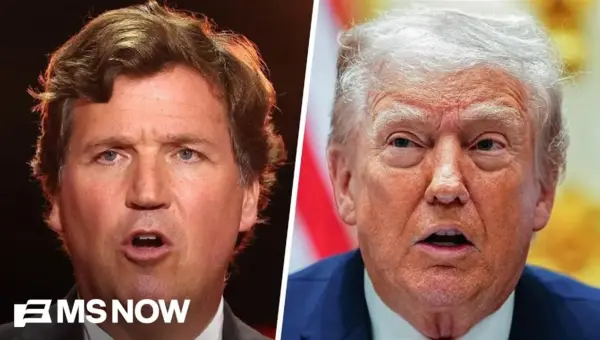
President Trump's military actions against Iran are facing unexpected criticism from his own MAGA base, challenging his "America First" foreign policy stance. Early polls show low public approval for the strikes, raising concerns about potential political fallout for Republicans if the conflict escalates.