US Strikes Iran, Jolting Beijing’s Grand Bargain Dreams
Recent U.S. military actions in Iran, termed 'Operation Epic Fury,' are analyzed as a pivotal moment that may have disrupted Beijing's geopolitical strategy. The author posits that these strikes signal a shift to an 'enforcement through strength' global order, undermining China's reliance on Iran and its hopes for a 'grand bargain' with the U.S.

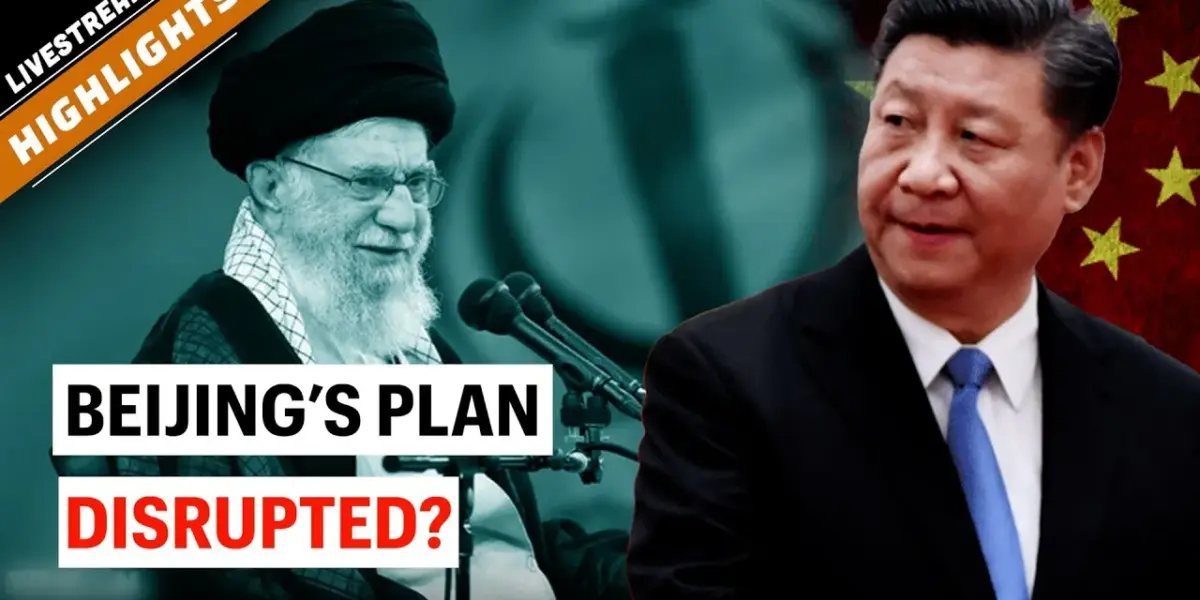
US Strikes Iran, Jolting Beijing’s Grand Bargain Dreams
Recent military actions in Iran, dubbed ‘Operation Epic Fury,’ may represent a seismic shift in global strategy, with profound implications for China’s geopolitical ambitions and its relationship with the United States. The author argues that these strikes signal the end of an era defined by negotiation and procedural restraint, ushering in a new order based on enforcement through strength, and that Beijing’s carefully laid plans, particularly concerning a potential ‘grand bargain’ with the U.S., have been fundamentally disrupted.
The Iran-China Nexus: More Than a Partnership
The author draws a parallel between the Iranian regime and the Chinese Communist Party (CCP), noting their shared characteristics: centralized authority, ideological control, suppression of dissent, economic struggles, and reliance on security forces. This similarity, it is argued, makes the fate of the Iranian regime psychologically significant for Beijing.
For years, China has strategically leveraged Iran as a cornerstone of its West Asia policy. This relationship provided China with:
- Discounted oil imports, crucial for its energy needs and bypassing sanctions.
- Opportunities to settle transactions outside the U.S. dollar system.
- A key anchor for its Belt and Road Initiative.
- Significant arms contracts.
- A vital geopolitical counterweight to U.S. power.
The transcript highlights that approximately 18% of China’s total oil imports, a substantial and non-marginal amount, comes from Iran, often heavily discounted. The potential collapse of the Iranian regime, or even a disruption of its oil exports through chokepoints like the Strait of Hormuz, presents a serious energy vulnerability for China, especially at a time when its economy is already facing headwinds. Unlike the U.S., which can rely on domestic production and diversified supply, China is far less capable of absorbing such a shock. This loss of access to subsidized oil, discounted shipping, and a strategic partner challenging American influence signifies a ‘strategic compression’ for Beijing, shrinking its global leverage while increasing its costs.
A Shift in the Global Order: Strength Over Sanctions
The analysis posits that the recent military operations represent a departure from the post-1979 world order, which largely centered around the United Nations system, relying on negotiation, sanctions, and resolutions. The author contends that this framework has repeatedly failed to restrain authoritarian regimes like Iran, which have often defied UN resolutions and sanctions with impunity.
Instead, the current actions are seen as redefining a new order characterized by ‘enforcement through strength.’ This approach moves beyond mere negotiation or procedural containment. Furthermore, for the first time in years, the author suggests, popular calls for freedom in Iran were not only heard but acted upon, potentially triggering a domino effect.
Timing is Everything: Disrupting Beijing’s Calculations
A critical element of the analysis is the timing of these strikes, occurring just weeks before former President Donald Trump’s planned visit to Beijing. The author suggests that Beijing’s calculations for this visit, which were reportedly based on the assumption of a U.S. focus on diplomacy and a desire for deals, have been significantly upended.
Recent discussions, including articles in Foreign Affairs, had floated the idea of a ‘grand bargain’ between the U.S. and China. The thinking in Beijing, particularly among those who view Trump as a dealmaker, was that Taiwan could be part of a larger negotiation, involving trade concessions in exchange for geopolitical compromises. This strategy, reportedly proposed by a PLA advisor, relied on the assumption that the U.S. was strategically overextended and might need China’s cooperation on issues like Iran, Russia, and North Korea. Beijing seemingly believed it held leverage, especially in light of economic challenges and potential complications for Trump’s trade policies.
The military action in Iran, coupled with the arrest of figures like Nicolás Maduro, is framed not as a gift but as a powerful message. It signals to Beijing that the U.S. prefers decisive action over protracted negotiation when core strategic interests are at stake. This undermines China’s strategy of positioning itself as a Middle East peacemaker to gain leverage, rendering that diplomatic card obsolete.
The ‘Flipping the Table’ Moment and Future Outlook
The author characterizes the recent military escalation as Washington ‘flipping the table’ right before the summit with Xi Jinping. The message is clear: core strategic interests are not transactional and cannot be easily negotiated. This has significant implications for issues like Taiwan, making it highly unlikely to be part of any future ‘grand bargain,’ at least under the current U.S. administration.
A significant warning is also directed at Chinese officials. A statement from the U.S. Treasury Department reaffirming commitment to a ‘maximum pressure campaign’ and tracking illicit funds flowing out of Iran is interpreted as a broader warning to CCP officials, including Xi Jinping’s family, about the security of their overseas assets. The message is that financial escape routes may be closing, challenging the strategy of some officials to abandon ship if the regime falters.
Why This Matters
The analysis argues that the events in Iran and the U.S. response represent a fundamental recalibration of global power dynamics. The shift towards ‘enforcement through strength’ challenges the established UN-centric order and signals a more assertive U.S. foreign policy. For China, this means the erosion of a key strategic partnership, a potential energy crisis, and the disruption of its carefully crafted diplomatic strategies. The potential for increased U.S. pressure on illicit financial flows also adds a new layer of vulnerability for the CCP elite.
Implications and Future Outlook
The implications of this shift are far-reaching. Beijing’s ability to project power and influence may be curtailed as its strategic partnerships are weakened and its economic vulnerabilities are exposed. The U.S., by demonstrating a willingness to act decisively, may be reshaping the global security landscape. The future outlook suggests a more confrontational dynamic, where strategic interests are defended through direct action rather than solely through diplomatic maneuvering. The credibility of the UN system as a primary tool for global governance may also be further diminished, replaced by a more power-centric approach.
Historical Context
The analysis implicitly references the long-standing U.S.-Iran adversarial relationship since the 1979 revolution, Iran’s pursuit of nuclear capabilities, and its support for terrorism. It also touches upon China’s consistent efforts to secure energy resources and expand its global influence through initiatives like the Belt and Road. The idea of a ‘grand bargain’ echoes historical attempts at great power diplomacy, often characterized by complex trade-offs, but the current context suggests a departure from such traditional approaches, favoring a more direct and assertive stance from the United States.
Source: Did Operation Epic Fury Just Upend Beijing’s Strategy? (YouTube)

Related Articles
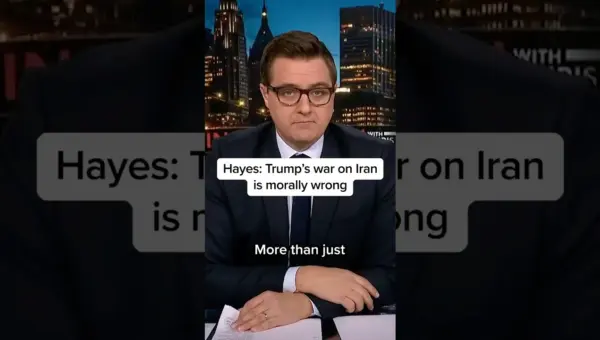
Hayes: Trump’s Iran War Plans Are Morally Wrong
Chris Hayes has strongly condemned potential US military action against Iran, labeling it morally reprehensible and illegal. He argues that such a conflict violates international law and ethical principles, urging for public opposition. Hayes's commentary highlights the critical need for discourse and accountability in foreign policy decisions.
Merkley Slams Trump’s Iran Action as ‘Unconstitutional War’
Senator Jeff Merkley has strongly condemned President Trump's recent military strikes on Iran, labeling them an "unconstitutional war." Merkley asserted that the president's actions violate the Constitution and the War Powers Act, drawing parallels to a child's tantrum and signaling a potential showdown over war powers on Capitol Hill.
Iran’s IRGC Unlikely to Disarm Amidst Trump Threats
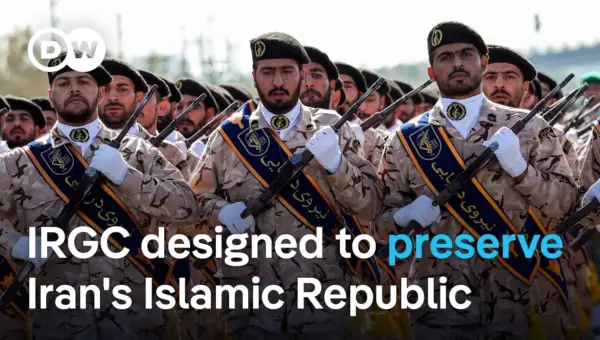
President Trump's demand for Iran's Revolutionary Guard Corps (IRGC) to disarm is unlikely to be met, according to Middle East historian Dr. Sio Ranchar Daimi. The IRGC is deeply entrenched in Iran's economy and security, acting as the regime's primary tool for control and external operations. Despite recent losses, the Guard remains ideologically committed to resistance.