US Strikes Iran Amidst Conflicting White House Messages
The United States has launched airstrikes against Iran, but the White House is struggling to present a unified message, causing division within the MAGA base and straining UK-US relations. Conflicting statements from officials and President Trump himself have fueled domestic criticism and international confusion.

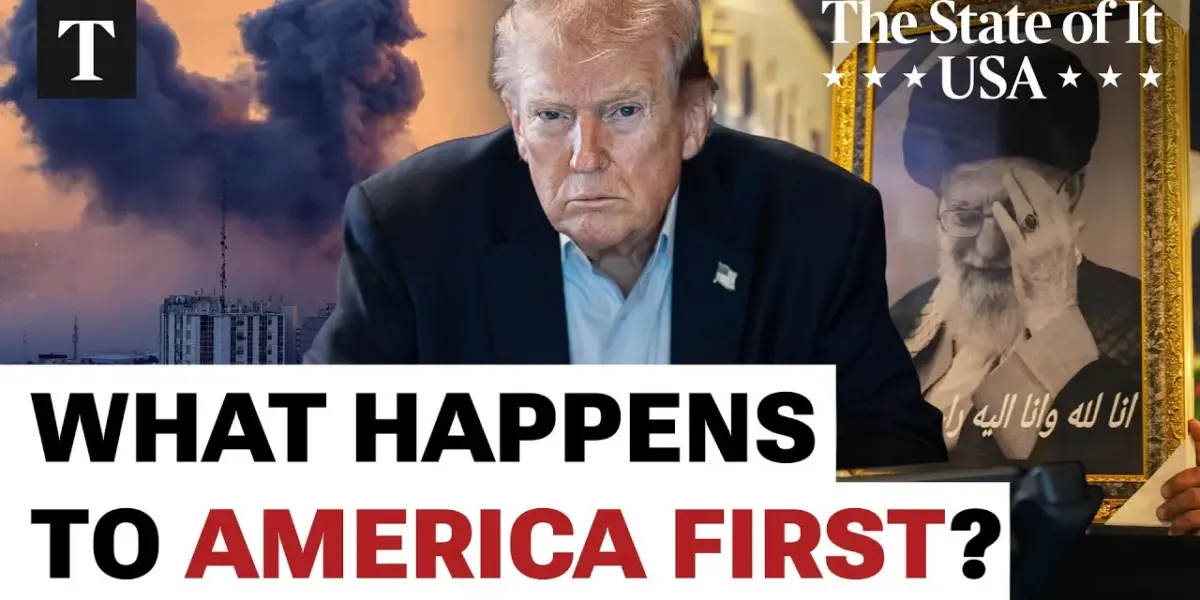
US Launches Airstrikes on Iran, Sparks Domestic Division
In a dramatic escalation of regional tensions, the United States, in conjunction with Israel, has launched airstrikes targeting sites within Iran. The coordinated military action, which began recently, has sent ripples through both international diplomacy and domestic American politics, exposing a significant rift within the Republican party and raising questions about the clarity of the White House’s strategy.
Conflicting Narratives Emerge from Washington
The immediate aftermath of the strikes has been marked by a puzzling lack of a coherent narrative from the White House. President Trump, in a series of rapid-fire interviews with numerous journalists, has presented a shifting rationale for the military engagement. This inconsistency has led to confusion and criticism, particularly from within his own political base.
“There is this contrast between the power, the efficiency, frankly, the awesome might of the American military machine and the kind of bizarre ineptitude and inconsistency of the people at the top,” observed one commentator, highlighting the disconnect between military capability and political communication.
MAGA Base Divided on Intervention
Traditionally, periods of military conflict have seen a rally-around-the-flag effect in the United States. However, the current situation in Iran appears to be defying this pattern. While elected Republicans have largely offered support, a significant segment of the “MAGA” base, historically skeptical of foreign entanglements, has voiced strong criticism.
Figures like Tucker Carlson and Meghan Kelly, who have generally been staunch supporters of Donald Trump, have been vocal in their opposition to the strikes. This dissent stems from Trump’s own past condemnations of “dumb wars” and a perceived departure from an “America First” isolationist stance.
Steve Bannon, a former White House strategist, has been quoted as saying, “The mission of the movement is not to make Iran great again.” The phrase “regime change,” often associated with past controversial interventions, has also sent “shivers down their spine,” according to reports.
“The two words that send shivers down their spine tend to be regime change. And when Donald Trump announced what he was doing and started to justify his actions on Saturday, he kept talking about regime change.”
Rubio’s Remarks Fuel Controversy
Adding to the confusion were comments made by Senator Marco Rubio, who suggested that the U.S. preemptively struck Iran to avoid higher casualties that would have resulted from an Iranian retaliatory attack following an anticipated Israeli strike. The White House quickly moved to walk back these remarks, attempting to clarify that the U.S. action was not solely precipitated by Israeli plans.
Rubio himself later stated that the strikes were always planned due to Iran’s nuclear program and ballistic missile development, and that his comments were merely about the specific timing. However, the initial explanation caused significant backlash among Trump supporters, who viewed it as a justification for intervention based on the actions of another nation.
JD Vance Navigates the Tightrope
Vice President JD Vance, a prominent figure within MAGA circles and a potential successor to Trump, has adopted a more measured approach. While not offering a running commentary, Vance has made targeted interventions, emphasizing that the conflict will not lead to long-term foreign wars and focusing on Iran’s nuclear capabilities rather than regime change.
Reports suggest Vance may not have personally supported the strikes initially but has since aligned himself with the President. This nuanced position, coupled with the silence from his team regarding certain reports, suggests a strategic balancing act between loyalty to Trump and appeasing the anti-interventionist sentiments within his base.
The Special Relationship Under Strain
The U.S. military’s actions have also cast a shadow over the special relationship between the United States and the United Kingdom. President Trump publicly criticized UK Prime Minister Keir Starmer, stating, “This is not Winston Churchill that we’re dealing with.” This remark came in the wake of the UK’s initial hesitation to grant access to its bases for potential strikes on Iran.
While the UK eventually granted permission for defensive strikes and is providing support, Trump’s comments have been seen as a stinging rebuke. British officials, while downplaying the long-term impact, acknowledge the current strain on relations, drawing parallels to the difficult relationship Trump had with former Prime Minister Theresa May.
“I think there are plenty of people in the UK who would agree that Keir Starmer is not akin to Winston Churchill. Um, but the context of how he said this, which is a row about an initial refusal by the UK to let the US use RFA bases for strikes on Iran.”
Uncertainty and Future Implications
The ongoing military operations and the conflicting messages from the White House have created an atmosphere of uncertainty. Many Republicans, even those privately skeptical, are reportedly holding back their criticism due to the unclear trajectory of the conflict. The effectiveness of the U.S. and Israeli military actions is undeniable, but the political leadership’s inability to articulate a clear strategy and objectives leaves the ultimate outcome of this engagement in doubt.
Looking ahead, the focus will remain on the evolving situation in Iran, the domestic political fallout within the U.S., and the impact on international alliances. The coming weeks will likely reveal whether the administration can forge a more cohesive message and whether the current military engagement will achieve its undefined objectives without further entangling the United States in a protracted conflict.
Source: The White House's Mixed Messages On Iran (YouTube)

Related Articles
Texas Redux: GOP’s Self-Inflicted Wounds Fuel Democratic Hopes
The Texas primary has exposed deep fissures within the Republican party, highlighting Latino voter shifts and a costly Senate runoff. Analysts suggest this, combined with Trump's controversial actions, creates a challenging landscape for the GOP and a potential opening for Democrats.
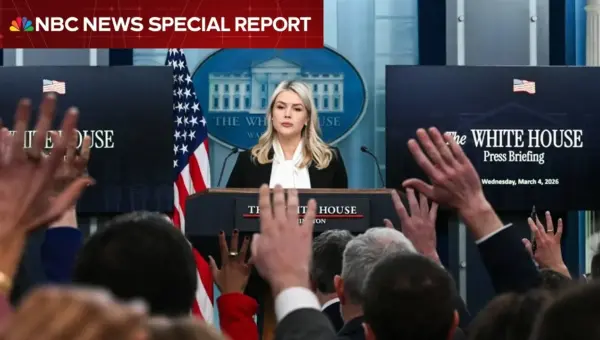
White House Briefs on ‘Operation Epic Fury,’ Iran Strikes
The White House provided an update on "Operation Epic Fury" following strikes against Iran, detailing evacuation efforts for U.S. citizens and the strategic military objectives. Press Secretary Karoline Leavitt highlighted intelligence that informed the timing of the strikes and the administration's commitment to regional security.
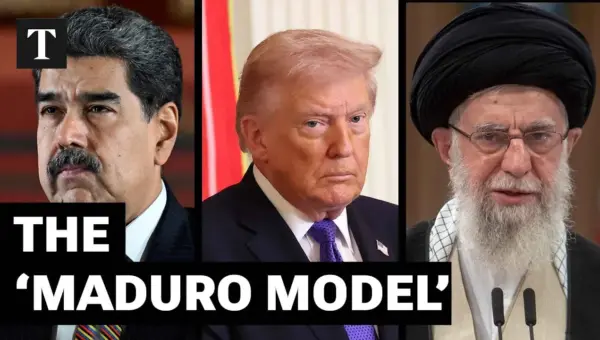
US-Israel Strike Iran’s Police State, Trump Eyes ‘Maduro Model’
The U.S. and Israel have launched a significant aerial assault targeting Iran's internal security forces, aiming to degrade the regime's capacity for repression. Amidst the strikes, President Trump has alluded to a potential "Maduro model" for leadership transition, while experts caution about the challenges of fostering internal dissent under duress.