US Special Forces Pull Off Daring Rescue Deep in Iran
U.S. special forces executed a daring rescue deep inside Iran to save downed F-15 aircrew. The complex operation involved hundreds of commandos, CIA deception tactics, and a temporary forward operating base. Despite the successful rescue, the skies over Iran are becoming more dangerous as the conflict evolves.

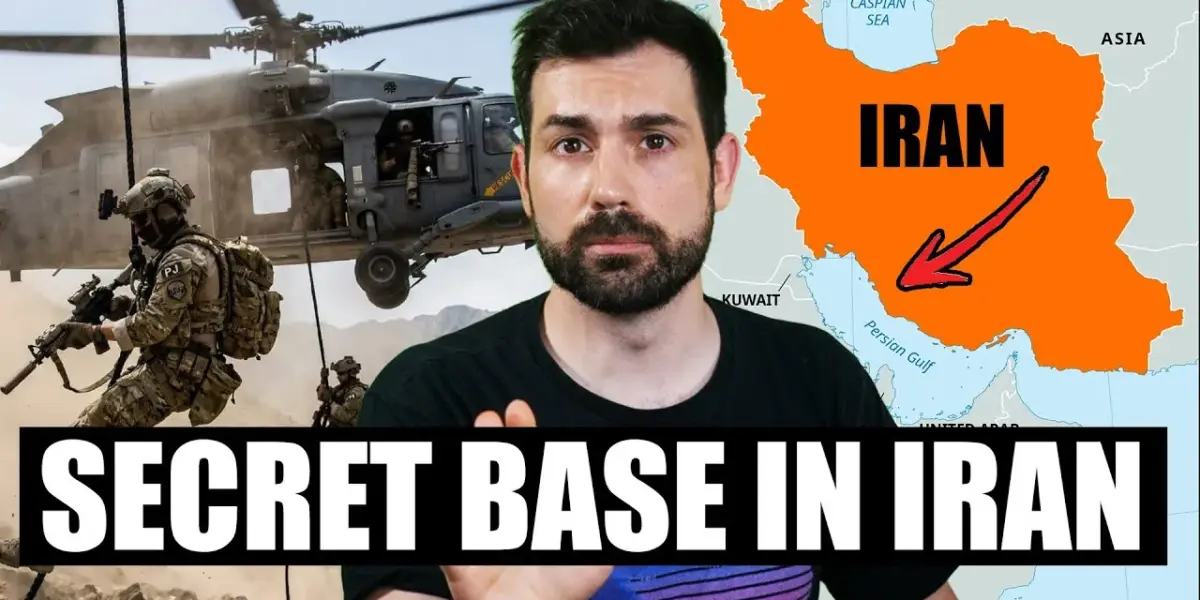
US Special Forces Pull Off Daring Rescue Deep in Iran
In a remarkable display of military capability, U.S. special forces executed a high-stakes combat search and rescue mission deep within Iran. The operation, aimed at recovering downed aircrew, involved hundreds of commandos and the establishment of a temporary forward operating base on Iranian soil. This mission highlights the complex tactics employed in modern warfare and raises questions about the evolving nature of the conflict.
F-15 Downed, Race Against Time Begins
The incident began on April 3rd when an F-15 Eagle fighter jet was shot down by a surface-to-air missile during a bombing run over southern Iran. This marked the first loss of a U.S. aircraft on a combat mission after a month of fighting. Both crew members ejected over hostile territory, with their emergency beacons signaling their last known locations to U.S. Central Command (CENTCOM). The pilot and weapon systems officer parachuted into the mountainous Ber Ahmed province but were separated upon landing.
As the Iranian Revolutionary Guard Corps (IRGC) launched a massive search effort to capture the airmen, the U.S. initiated a daring rescue operation. The U.S. military’s commitment to its personnel was evident, with commanders vowing to spare no effort and risk other assets to ensure the crew’s safe return. This principle is encapsulated in the motto: “these things we do that others may live.”
Complex Rescue Operation Unfolds
The downed F-15 pilot managed to signal his location to rescue crews. An HC-130J, a specialized fixed-wing aircraft, flew at extremely low altitudes to act as command and control, avoiding radar detection and long-range air defense systems. This C-130 faced enemy fire, deploying decoy flares to evade threats. It also served as a mobile refueling station, mid-air refueling two HH-60W Jolly Green Combat Rescue helicopters in contested airspace.
These helicopters, equipped with advanced electronics, homed in on the pilot’s beacon. Overhead, A-10 Warthogs provided close air support with their powerful cannons. Early reports suggest that heavily armed Air Force special forces pararescuemen, known as PJs, were aboard the helicopters. Upon landing, these ground forces provided covering fire, secured the pilot, and facilitated his extraction. However, as the rescue team exfiltrated, both helicopters sustained damage from small arms fire, injuring some crew members, though all made it back to base.
Second Airman Missing, Airspace Becomes Too Dangerous
The situation intensified as the second airman, a colonel serving as the weapons systems officer (WSO), remained missing deep inside Iran. The airspace had become too dangerous for the same type of low-flying, vulnerable aircraft to operate during the day. This contradicted public statements from some U.S. officials who claimed total air dominance over the region.
The IRGC had established air defense ambushes. The missing airman, despite being wounded from a 15 G ejection, had managed to hide in a mountain crevice. He possessed a personal weapon and a recovery beacon from his ejection seat. The rescue area was a deep valley surrounded by mountains, with several villages and a city of over 100,000 people nearby, many of whom were reportedly searching for the pilot.
CIA Deception and Unconventional Recovery
In response, the Central Intelligence Agency (CIA) launched a deception campaign, disseminating misinformation within Iran to suggest the airman had already been rescued and was being moved via ground convoy. The CIA also employed Unconventional Assisted Recovery (UAR) tactics, a broader strategy involving engagement with local civilians, either through ground infiltration or signal intelligence.
UAR, a protocol used since the 1950s, involves teams entering behind enemy lines before formal rescue operations begin. These teams connect with the downed airman, often with the help of friendly local forces. In this case, a CIA officer located the airman’s hiding spot and relayed the information to the Pentagon. This allowed for the precise geolocation of the rescue mission area.
Massive Special Operations Force Assembled
The Pentagon then mobilized one of the largest and most complex special operations rescue missions in history. To support the deployment of hundreds of commandos from elite units like Delta Force, Green Berets, and SEAL Team 6, a Forward Armed Refueling Point (FARP) was constructed approximately 200 kilometers inside Iran. This FARP, established on an agricultural runway near Sharza, allowed transport aircraft to refuel in remote, dangerous locations.
Setting up a FARP is a highly specialized task, with only 63 qualified members in the entire U.S. Air Force. This operation created a localized air superiority bubble, enabling C-130s to fly in troops. The U.S. achieved this temporary air dominance by concentrating cyber warfare, space-based systems, air strikes, and electronic warfare efforts on the specific province. This move near the Isfahan nuclear site represented a significant security lapse for the IRGC.
Night Rescue and Intense Gun Battle
Under the cover of darkness, American commandos moved to rescue the airman. Reports indicate that two MH-6M Little Bird helicopters flew approximately 200 kilometers to the mountaintop location. The operation mirrored tactics seen in unconventional assisted recovery, exfiltrating from outside the alerted zone. Many Iranian forces lacked night vision, giving the operators an advantage.
According to U.S. military officials, the commando team engaged Iranian forces with suppressing fire to keep them away from the rescue site. Roads leading to the location were reportedly destroyed, causing traffic jams for responding Iranian forces. Footage from the ground showed intense gun battles with flares and explosions. Reaper drones provided overhead support, firing missiles at armed military-aged men within a three-kilometer radius of the airman’s position.
The team successfully reached the injured but alive airman. He was reportedly taken by Little Bird helicopter back to the FARP. However, two C-130 transport aircraft experienced issues, with wheels stuck in sand or damage from enemy fire. With the IRGC closing in, CENTCOM decided to fly in three additional transport aircraft for evacuation. Delta Force reportedly destroyed two C-130s and the Little Bird helicopters in place to prevent sensitive equipment from falling into Iranian hands.
Evacuation and Escalating Air War
Both aircrew were safely recovered after what is described as one of the most intense 48-hour combat search and rescue operations in history. The psychological impact of such a rescue is profound, reinforcing the belief among U.S. troops that they will not be abandoned, even deep behind enemy lines.
Following the rescue, the IRGC released footage of the destroyed FARP, claiming the aircraft had been downed by their air defenses. During the rescue operation, A-10 Warthogs, flown by specialized pararescue pilots known as “Sandys,” conducted close air support missions in uncleared Iranian airspace. One A-10 was hit by enemy fire, believed to be a surface-to-air missile, but managed to return to friendly airspace before ditching equipment in the Persian Gulf and being rescued.
Assessing Aircraft Losses and Shifting Tactics
The incident raises questions about why more U.S. combat aircraft appear to be targeted. In a recent 72-hour period, nearly ten aircraft were reportedly destroyed or damaged. However, in the broader context of the conflict, with over 15,000 sorties flown and 13,000 targets hit, these losses are considered tactically negligible compared to historical conflicts like the Gulf War or the Iraq invasion.
Despite tactical successes, the strategic situation remains complex. Iran’s regime remains in power, and the IRGC maintains the ability to threaten the Strait of Hormuz. This is a form of asymmetric warfare where Iran can achieve political objectives without a conventional military victory.
Iran Adapts Air Defense Strategies
The skies are becoming more dangerous due to several factors. Initial U.S. air strikes degraded Iran’s air defenses, but an estimated 20% remained, often hidden in underground bunkers. By late March, Iran began showing more coordinated resistance, with anti-air missiles coming closer to U.S. aircraft and an F-35 sustaining damage.
Iran is adapting its tactics, techniques, and procedures (TTPs). Observing U.S. aircraft behavior, such as descending below 20,000 feet to evade radar locks, has created opportunities for new missile systems, like the Majid truck-mounted system, which uses passive heat-seeking missiles and offers no radar warning. Furthermore, China and Russia may have supplied Iran with more advanced anti-air systems, with unconfirmed reports of Russian S-500 systems arriving.
Degrees of Air Control and Modern Warfare
Understanding air superiority is crucial. Military doctrine defines four levels: air parity (neither side controls the air), favorable air situation (careful target selection, potential mission cancellations), air superiority (ability to fly anywhere, though threats exist), and air supremacy (sporadic and ineffective threats).
The U.S. currently holds air superiority. Achieving air supremacy, however, is difficult without ground support, which explains the deployment of thousands of U.S. paratroopers to the Middle East. These troops are housed in hotels and office spaces, distributed among civilians, reflecting modern warfare tactics that avoid large, visible bases vulnerable to long-range missiles and drones.
Escalation and Infrastructure Strikes
The air war escalated in early April with the U.S. Air Force destroying the B2 Bridge near Iran, a significant infrastructure project. This action aimed to counter Iranian propaganda, demonstrate control, and instill fear. Such strikes on civilian infrastructure raise concerns, although targets like power plants could be restored more easily than other critical infrastructure.
Iran has retaliated by targeting Kuwait’s desalination plants. U.S. intelligence assesses that 50% of Iran’s ballistic missile systems remain intact, though not all are combat-effective due to underground storage and damaged tunnel entrances. Despite degradation, Iran continues to launch ballistic missiles daily.
Conclusion: A Dangerous, Evolving Conflict
The successful rescue of the two aircrew, despite the inherent dangers, offers a measure of relief. However, the ongoing conflict underscores the volatile and dangerous nature of the current situation. The war remains unpopular in the U.S., with a general reluctance to engage in direct conflict with Iran as a solution to its nuclear program. The sophisticated rescue operation and the evolving air defense tactics highlight the unpredictable trajectory of the war.
Source: How US Special Forces Rescued Airmen from Deep In Iran (YouTube)

Related Articles


US Rescues Pilot From Iran, Trump Hints at Escalation
U.S. forces executed a daring rescue of a downed pilot from Iran, while President Trump signaled an escalation of military action against the country. The operation and the President's rhetoric sparked debate among lawmakers about the war's rationale, duration, and congressional oversight.
Congress Ready to Act if Iran Conflict Escalates, Lawler Says
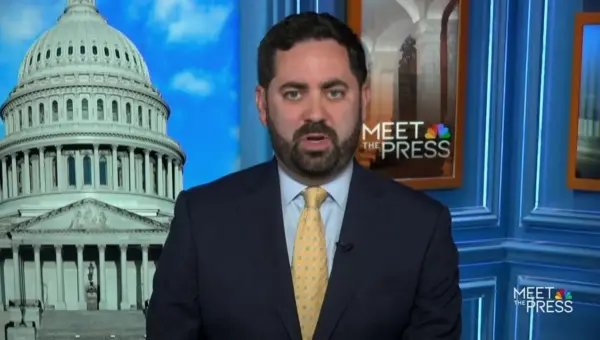
Congress is prepared to take "necessary action" if the Iran conflict escalates, according to Rep. Mike Lawler. He praised a recent military rescue operation and defended the president's authority under the War Powers Act, while also stressing the need for congressional briefing on troop deployments. Lawler also criticized Democrats for the Department of Homeland Security funding stalemate, vowing to fully fund border security agencies.


Protests Explode Across Middle East Amid War Escalation
Millions are protesting across the Middle East against the Trump and Netanyahu administrations. Large demonstrations in Baghdad, Syria, Yemen, and even Tel Aviv show widespread opposition to the ongoing war. Analysts criticize the aggressive rhetoric and strategy, warning of further escalation and regional instability.