US Shifts Strategy: India Gains Waivers, Russia Aids Iran
The U.S. has granted India waivers to import Russian oil amid Persian Gulf disruptions, a move distinct from intelligence on Russian assistance to Iran. This analysis explores the strategic nuances, internal U.S. dynamics, and potential future policy shifts.

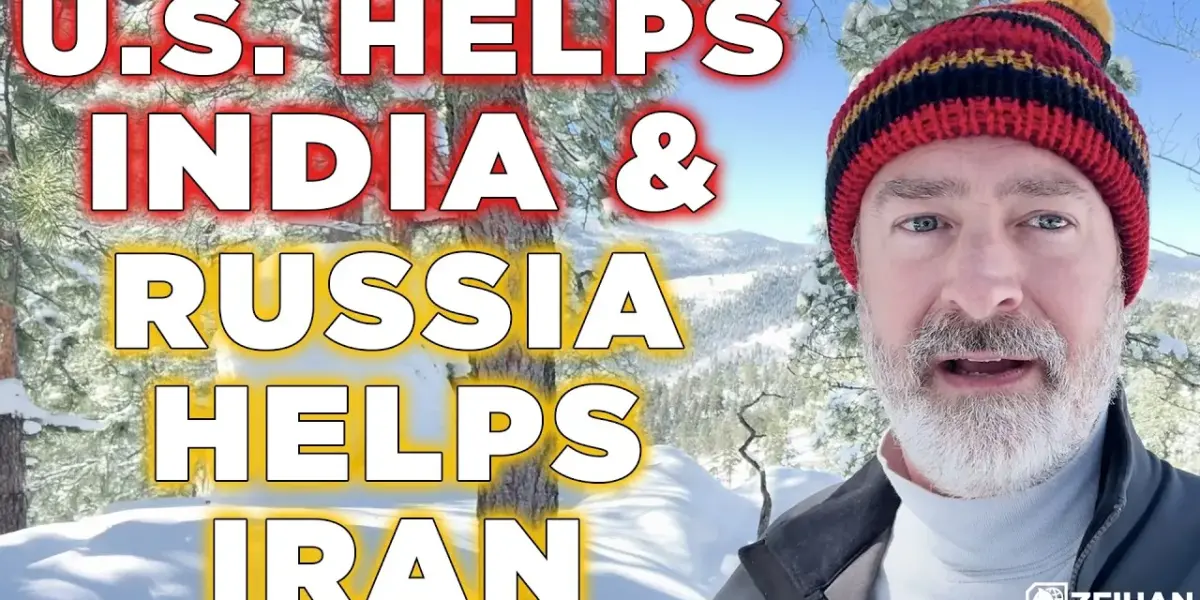
Navigating Geopolitical Crosscurrents: India, Russia, and Iran Under Scrutiny
In a complex geopolitical landscape, recent developments involving the United States, India, Russia, and Iran reveal a nuanced interplay of strategic interests and shifting alliances. While often conflated in public discourse, these events stem from distinct, albeit interconnected, global dynamics. At the heart of the matter are two significant developments: the U.S. administration’s granting of waivers to India regarding Russian oil imports, and intelligence indicating Russian assistance to Iran in targeting American troops.
India’s Energy Needs and US Sanctions Diplomacy
The Trump administration has issued a series of waivers to India, a move that appears to be a strategic adjustment in response to global energy market disruptions. Following the imposition of sanctions on several Russian oil companies, the U.S. had previously negotiated an agreement with India to cease importing Russian crude. This arrangement, though met with initial skepticism, seemed to hold, with India significantly reducing its intake of Russian oil.
However, the situation was complicated by the closure of the Persian Gulf shipping lanes, a critical artery for India’s energy supply. With this vital route effectively shut down for an extended period, India’s primary alternative source of crude oil was severely curtailed. Faced with the potential of an economic downturn in India if its energy supply was drastically reduced, the U.S. administration granted temporary waivers, allowing India to resume importing Russian crude for at least a month. This decision, according to analysts, was a pragmatic step to avoid destabilizing India’s economy and to maintain a semblance of a positive relationship between the two nations. Disrupting India’s energy supply while simultaneously attempting to foster a stronger alliance would have presented a significant challenge.
The broader implication of removing millions of barrels of oil from the global market simultaneously, as could have happened if India had been completely cut off from Russian supply and the Persian Gulf remained closed, would have been disastrous for global energy stability. While the focus here is on India, the potential impact on other major consumers like China represents a separate, albeit significant, geopolitical consideration.
Russia’s Enduring Ties and Iranian Targeting
The second major development involves intelligence reports suggesting that Russia is actively aiding the Iranian government in targeting American forces. This alleged assistance is not entirely new; Russia has historically maintained connections with various groups that have opposed or targeted the United States, including entities linked to Al-Qaeda and, more recently, Iran and specifically the Islamic Revolutionary Guard Corps (IRGC). The provision of targeting information by Russia to Iran is seen as a continuation of a long-standing Russian strategy.
From a Russian perspective, any action that diverts or ties down American resources and attention elsewhere in the world allows Russia greater freedom of action in its own sphere of influence. This is a tactic with deep historical roots, dating back to the Tsarist era. The current situation places the U.S. administration, and President Trump personally, in a difficult position. Despite Trump’s general inclination to give Russian President Putin the benefit of the doubt on global affairs, including the war in Ukraine, his administration’s key foreign policy initiative, Iran, is reportedly being undermined by Russian actions.
Conflation vs. Correlation: A Strategic Divide
There is a tendency among those strongly opposed to Trump to conflate these two events, suggesting that Trump’s actions regarding India are a direct consequence of his desire to appease Russia. This viewpoint posits that Trump is essentially acting as an agent for Russian interests. While there may be elements of truth in the criticism of Trump’s approach to Russia, linking these specific events as a single, orchestrated deal is deemed inaccurate by analysts.
The waivers for India are viewed as a pragmatic response to an energy crisis, aimed at preventing economic fallout and maintaining diplomatic ties. The Russian assistance to Iran, conversely, is seen as a continuation of a strategic Russian policy to counter American influence by leveraging anti-American actors. The fact that both events are occurring concurrently does not necessarily imply a direct causal link orchestrated by the U.S. administration.
Internal Administration Dynamics and Future Outlook
The situation within the U.S. administration regarding foreign policy towards Russia is described as complex, with certain individuals reportedly influencing President Trump’s perspective. Figures like Steve Witcoff, described as a primary interface between Trump and Putin, are seen as conduits for Russian propaganda. Vice President JD Vance is characterized as holding views sympathetic to Russian interests, while Director of National Intelligence Tulsi Gabbard is noted for her long-standing pro-Russian stance and her control over the daily presidential intelligence brief. This internal dynamic raises questions about whether critical information regarding Russian actions against American interests even reaches the President in a digestible format.
Despite these internal challenges, there are indications of shifts. Several Republican senators and House members have publicly called on the administration to address the issue of Russian influence and to reconsider personnel like Gabbard and Witcoff. The market’s response also offers a glimpse of potential change: Russian crude oil prices on the Indian market have risen above the Brent benchmark, suggesting a surge in purchases following the waiver, validating the administration’s adjustment.
While a dramatic overhaul of foreign policy is not anticipated in the immediate future, the convergence of these events suggests a potential, albeit slow, movement towards a more realistic stance on Russia. The departure of key individuals perceived as overly aligned with Russian interests would be a significant step. The recent dismissal of Kirstjen Nielsen from DHS, after a period of perceived mismanagement, is cited as an example of personnel changes occurring, albeit not always directly related to foreign policy. The sentiment among some Republicans in Congress is one of cautious optimism, hoping for a more robust U.S. foreign policy, but tempering expectations until more substantive changes are visible.
Why This Matters
This analysis highlights the intricate web of global power dynamics, where energy security, strategic alliances, and national security interests collide. The U.S. administration’s decisions regarding India’s energy imports, though seemingly localized, have ripple effects on global oil markets and international relations. Simultaneously, the intelligence regarding Russian support for Iran’s anti-American activities underscores the persistent and multifaceted nature of geopolitical competition. Understanding these separate yet concurrent events is crucial for deciphering the true state of international relations and anticipating future policy shifts. The internal dynamics of the U.S. administration also play a critical role, influencing how these complex global challenges are perceived and addressed.
Implications, Trends, and Future Outlook
The current situation suggests a period of strategic recalibration for the U.S. The need to balance sanctions policy with the economic stability of key allies like India is a persistent challenge. The ongoing reports of Russian interference and support for adversaries like Iran indicate that geopolitical tensions are unlikely to abate. The future outlook depends heavily on the U.S. administration’s ability to navigate internal divisions and formulate a cohesive, robust foreign policy that effectively counters adversarial actions while maintaining essential alliances. The trend towards a more pragmatic, albeit slow, adjustment in U.S. foreign policy regarding Russia is observable, but significant shifts will likely hinge on personnel changes and a clearer strategic vision.
Historical Context and Background
The historical context of Russian foreign policy reveals a consistent strategy of leveraging regional instability and opposing U.S. interests to enhance its own global standing. From the Tsarist era through the Soviet Union and into the present day, Russia has employed tactics to distract or tie down adversaries, thereby securing its own strategic space. The U.S. engagement with India has evolved significantly over decades, moving from a period of estrangement during the Cold War to a deepening strategic partnership in recent years. The sanctions regime against Iran, driven by concerns over its nuclear program and regional activities, has been a cornerstone of U.S. policy, with Russia and Iran often finding common ground in opposing U.S. influence.
Source: The U.S. Helps India and Russia Helps Iran || Peter Zeihan (YouTube)

Related Articles

Iran Extends Strait of Hormuz Deadline Amid Global Oil Tensions
The U.S. has granted Iran a 10-day extension to reopen the Strait of Hormuz, a critical global oil route. This move comes amid complex negotiations, military actions, and concerns over Iran's strategic leverage and resilience. Lawmakers express frustration over the lack of a clear strategy and potential escalation.

DOJ Official’s Remarks Spark Outrage Over Political Allegations
A top Trump DOJ official's speech at CPAC has sparked controversy, with claims of incriminating admissions regarding fears of prosecution and alleged political motivations. The remarks have raised serious questions about impartiality within the Department of Justice.
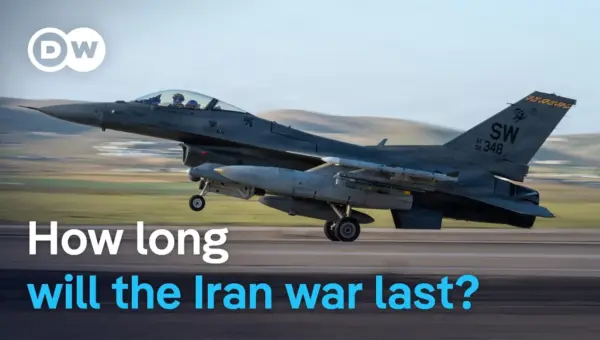
US Official Claims Iran War Could End Soon; Expert Skeptical
Despite US envoy Steve Woff's optimism about imminent talks and a swift end to the conflict with Iran, expert Aaron David Miller expresses significant doubt. Miller argues that a lack of shared urgency and fundamental miscalculations by the US administration make a quick resolution unlikely.