US Service Members Hurt in Iran War; Trump Issues Mine Threat
At least 140 U.S. service members have been injured in the ongoing conflict with Iran, the Pentagon confirmed. President Trump issued a stern warning against Iran mining the Strait of Hormuz, threatening unprecedented military consequences. Meanwhile, a manhunt is underway in Canada after a shooting at the U.S. Consulate in Toronto.


Grim Update from Pentagon: Over 140 US Service Members Injured in Iran Conflict
The United States is facing a growing human cost in its ongoing conflict with Iran, with the Pentagon reporting that at least 140 American service members have been injured. This grim statistic comes as the White House asserts that the war will continue until President Trump decides it should end, a timeline that appears contingent on Iran’s unconditional surrender.
President Trump Warns of Severe Consequences Over Strait of Hormuz Mines
Adding a new layer of tension, President Trump has issued a stark warning regarding potential Iranian actions in the Strait of Hormuz. He stated that the U.S. has intercepted ships that could have been used to deploy mines in the critical waterway. “If Iran puts any mines in the Strait of Hormuz… we want them removed. Otherwise, there will be military consequences at a level never seen before,” Trump declared via a Truth Social post.
The Strait of Hormuz is a vital global shipping lane, through which approximately one-fifth of the world’s oil supply passes. Its strategic importance makes any threat to its security a significant concern for global energy markets, contributing to rising oil prices.
Intensified Military Operations Amidst Conflicting Signals
The U.S. military’s operations in Iran are reportedly intensifying. The Defense Secretary described the current day as “yet again, our most intense day of strikes inside Iran,” involving an increased number of fighters, bombers, and strikes. This escalation, however, stands in contrast to President Trump’s statement just a day prior, where he characterized the war as “pretty well complete.”
Courtney Kube, reporting from Washington, explained the military’s strategy:
“They’re bringing more aircraft in. They’re doing more strikes, essentially, as they’ve paved the way and made it safer as they move from, you know, the western part of the country further, further in. Then they clear paths so that they can bring in more manned aircraft. So it stands to reason that they would have more air strikes because they can go further in inside the country. They can go after more targets.”
Iran’s Retaliatory Stance and Global Geopolitical Dynamics
Iran has also signaled its intent to retaliate, warning the U.S. and Israel that it will not permit the export of even a single liter of oil if bombings against Iran continue. Keir Simmons, reporting from Dubai, provided context on the broader geopolitical landscape:
“China doesn’t get said enough in relation to the Straits of Hormuz. So remember that the gas and oil that passes through there, much of it goes to an awful lot of it goes to Asia. And then a good deal of it goes to China. And China is a supporter of Iran. So effectively what Iran will want to do is to say, and it’s basically saying this, that it will not allow us or European allies and partners of us ships through there, but it will allow Chinese, it will allow Russians.”
Simmons also highlighted Russia’s advantageous position: “President Putin is in a win-win situation right now because he is continuing to support Iran… Oil prices are going up. Well, that’s good for Russia. And President Putin at the same time, appears to be trying to negotiate with the U.S. to remove sanctions in order to get his help to try and solve this problem that President Trump is now, frankly, in. So for President Putin, this is all looking pretty good.”
Concerns Over Iranian Escalation and Potential ‘Last Ditch Efforts’
Analysts express concern that as Iran faces increasing military pressure, it may resort to desperate measures. The possibility of Iran mining the Strait of Hormuz is seen as a potential “last ditch effort,” despite the inherent dangers it poses to Iran’s own operations in the waterways.
There is also ongoing investigation into a strike on an elementary school in Iran, with evidence increasingly pointing towards U.S. involvement. While the exact reason—whether poor targeting, faulty intelligence, or another factor—remains under investigation, the U.S. military possesses the capabilities to quickly ascertain responsibility.
Manhunt Underway in Canada After Shooting at U.S. Consulate
In a separate incident, a manhunt is underway in Toronto, Canada, after two men allegedly fired shots at the U.S. Consulate. The incident occurred early in the morning, with the suspects reportedly firing from a handgun before fleeing the scene. Fortunately, no one inside the heavily fortified building was harmed.
“The security posture at consulates and embassies around the world, Hallie, because of the war in Iran is really high. They’re on high alert,” commented Stephanie Gosk, who is following the story. The motive for the Toronto shooting is being investigated, with officials noting the timing in relation to the ongoing conflict in Iran.
Severe Storms Threaten Midwest; Instagram Faces Scrutiny Over Child Abuse Content
The news cycle also included warnings of severe storms expected in the Midwest, with high alerts for potential tornado watches. Additionally, Instagram is under fire, acknowledging that even with safeguards, content depicting child sex abuse could still appear on the platform, prompting calls for further changes in a landmark trial.
Source: LIVE: NBC News NOW – March 10 (YouTube)

Related Articles
US Claims Civilian Casualty Avoidance: A Contested War Record
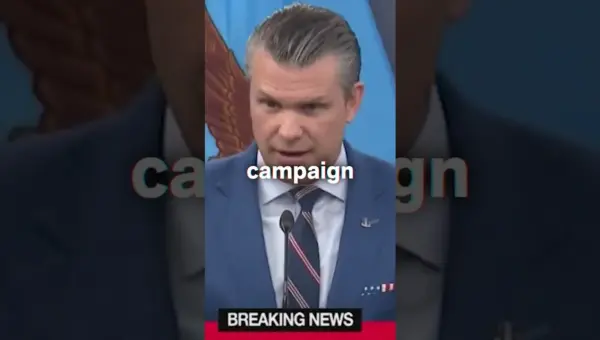
Pete Hegseth claims the US is unparalleled in avoiding civilian casualties, but recent events and historical context suggest a more complex and contested reality. The article delves into these claims, examining specific incidents and the broader implications for U.S. foreign policy and global standing.
Trump ‘Shopping Messages’ on Iran War, Says Yale Expert
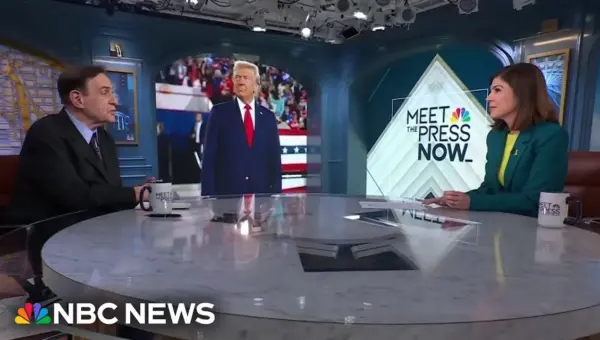
Yale scholar Jeffrey Sonnenfeld reveals that Donald Trump is 'shopping messages' regarding a potential conflict with Iran, testing different narratives to see what gains traction. Sonnenfeld draws parallels to the 'sleeper effect,' where repeated falsehoods, delivered confidently, can become accepted as truth.

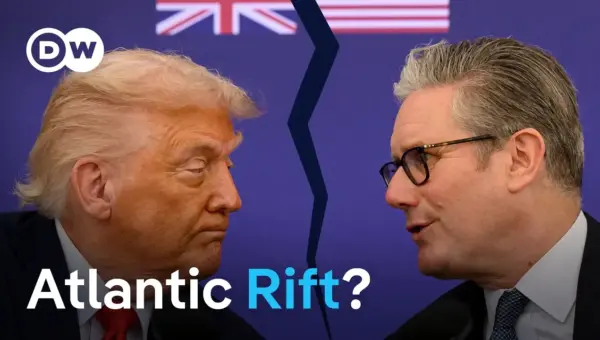
US-UK ‘Special Relationship’ Strained by Iran War Dispute
The long-standing 'special relationship' between the US and UK is facing unprecedented strain following the UK's reluctance to support the opening strikes on Iran. Public criticism from Donald Trump has intensified the debate over the alliance's future. Experts suggest this rift highlights deeper shifts in global priorities and evolving military capabilities, potentially reshaping transatlantic ties.