US Sends Troops, Signals Iran Standoff Continues
The U.S. is sending 2,000 troops to the Middle East amid ongoing tensions with Iran. This move is part of a strategy to pressure Iran while avoiding a wider war. Experts suggest the deployment is for rapid response capabilities rather than an immediate invasion.

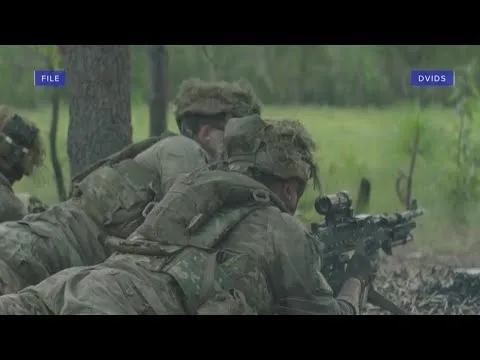
US Boosts Military Presence in Gulf Amid Iran Tensions
The United States is sending about 2,000 troops from the 82nd Airborne Division to the Middle East. This move comes as President Trump is considering a decision on Iran. The president has paused a threat to strike Iran’s power facilities. A deadline for this decision is now just 24 hours away from expiring.
Understanding the Deployment: More Than Just Backup
For those unfamiliar with military terms, this troop movement might seem like a direct step towards war. However, experts suggest it’s more complex. Dan Holloway, a veteran of the 82nd Airborne, explains that this unit is skilled in setting up bases. These bases include things like field hospitals and operational centers. This allows forces to act more quickly if needed. The goal appears to be having the ability to respond rapidly without immediately starting a large-scale ground war.
Strategic Goals and Balancing Act
The Trump administration has been putting pressure on Iran. This pressure aims to disrupt Iran’s ability to affect global energy markets. However, there’s a careful balance. Officials are working hard to avoid starting a wider, more dangerous conflict in the region. This involves a careful approach to what is called “disciplined escalation.” The aim is to achieve certain goals without triggering a broad regional war.
Potential Future Actions and Troop Numbers
Reports suggest the U.S. ground troop buildup could reach as many as 8,000 soldiers near Iran. The question arises: at what point does this presence become an invasion force? Experts believe that numbers significantly higher than 8,000 would be needed for an invasion. This is different from past conflicts like Iraq and Afghanistan. Those situations involved plans for much larger troop numbers, perhaps 100,000 to 150,000 soldiers.
Israel’s View on Internal Change in Iran
Israeli Prime Minister Netanyahu has stated that a revolution in Iran might require some form of ground action. It’s unclear if President Trump and Secretary Hegseth agree with this view. The first phase of the current conflict has focused on military targets. Many of these have been successfully eliminated. However, Iran’s internal security system remains in place. Some believe more action is needed to target this system. This could potentially allow for internal change within Iran.
Mixed Signals: Peace Talks and Military Readiness
The U.S. is sending paratroopers to the region while also suggesting that peace talks are close. President Trump has also stated that the U.S. has already won the war with Iran. He believes Iran desperately wants to make a deal. This mixed messaging could be a negotiating strategy. It might also reflect uncertainty about the next steps. The administration’s approach seems to be like holding out a hand for a handshake while keeping the other fist ready to punch. This push and pull is common in such negotiations.
A Classic Trump Strategy?
This approach is seen by some as classic messaging for President Trump. He may not want to reveal his exact intentions to adversaries. At the same time, he has been clear about setting “red lines.” He is also trying to manage the potential for escalation. The goal is to control the situation carefully.
Uncertainty on Cease-fire and Bombing Plans
Looking ahead, it’s difficult to predict if a cease-fire deal will be in place within 24 hours. It’s also hard to say if Iran’s power plants will be bombed this weekend. While principles have been discussed, follow-through has sometimes been lacking. The terms of any potential cease-fire are unclear. It’s also uncertain if there will be a clear leader or authority figure in Iran to ensure any agreement is carried out, similar to how a government operates.
Global Impact: A Tenuous Balance
This situation highlights the delicate balance of power in the Middle East. The U.S. is trying to deter Iran from aggressive actions without starting a full-scale war. The troop deployment signals a readiness to act if necessary. However, the emphasis on negotiation and the possibility of peace talks suggest a desire to avoid further conflict. The region’s stability, and global energy markets, depend on how this complex situation unfolds.
Source: More troops into Middle East doesn't mean ground fighting: Veteran | Morning in America (YouTube)

Related Articles

G7 Allies Clash Over Iran War Strategy, Urge Focus on Russia
G7 foreign ministers met in Paris, revealing deep divisions over the U.S. war with Iran. European allies urged the U.S. to pressure Russia, linking its actions to the conflict and fearing support for Ukraine will wane.

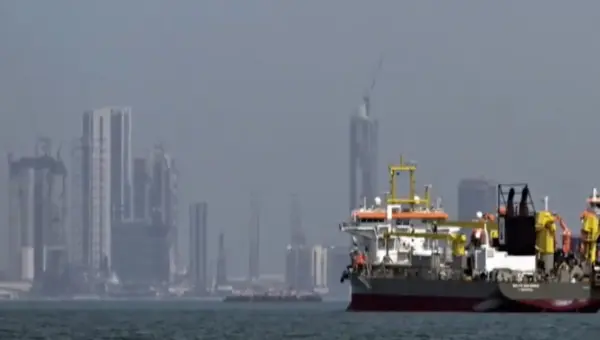
Iran Blocks China Ships, Exposing Beijing’s Weak Grip
Iran's recent decision to block Chinese ships at the Strait of Hormuz is exposing the limits of Beijing's influence in the Middle East. This action is causing delays and cancellations for Chinese manufacturers, turning a perceived geopolitical win into an economic strain.
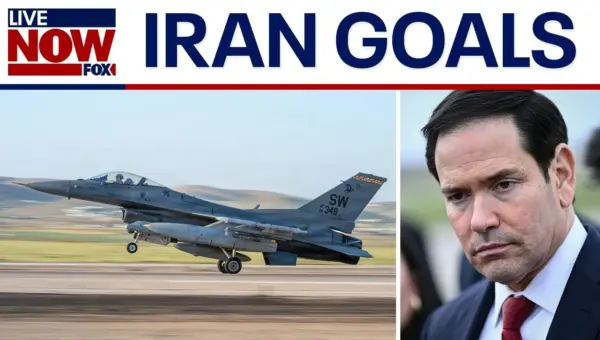
Rubio: US Can Achieve Iran War Goals Without Troops
Senator Marco Rubio outlined a strategy to counter Iran without deploying U.S. ground troops, focusing on weakening the regime and enhancing maritime security. He also criticized Cuba's economic system and expressed concerns about West Bank violence.