US Sends Elite Troops to Iran’s Oil Hub
The U.S. is deploying elite ground troops, including the 82nd Airborne and Marines, to the Middle East. While the focus is on Kharg Island, a key Iranian oil export terminal, experts warn this could be a risky strategy. An alternative plan involving strikes along the Strait of Hormuz is also being considered.


US Deploys Elite Troops Near Iran’s Vital Oil Terminal
The United States is moving thousands of its most elite ground troops into the Middle East, a significant step that could signal a major escalation in regional tensions. The 82nd Airborne Division, known as America’s rapid reaction force, has received orders to deploy to the region. This move, along with the repositioning of amphibious assault ships carrying Marines, suggests a potential military operation targeting Iran’s oil infrastructure.
Strategic Troop Movements Raise Red Flags
Two key U.S. Navy assets are involved in these deployments. The USS Tripoli, an amphibious assault carrier, is sailing through the Indian Ocean with F-35 fighter jets and between 2,000 to 2,500 Marines. It is expected to reach the Persian Gulf area soon. Additionally, the USS Boxer, another Marine Expeditionary Unit, has departed from San Diego and will arrive in about three weeks. These forces, totaling around 8,000 troops, are considered top-tier military units, capable of rapid deployment anywhere in the world.
Focus on Kharg Island: A Risky Gambit?
Much of the current discussion centers on Kharg Island, a small facility off Iran’s southwestern coast. This island serves as the critical hub for over 90% of Iran’s oil exports. A subsea pipeline connects it to the mainland, allowing it to handle large oil tankers. The United States has faced challenges in protecting shipping in the Persian Gulf and preventing Iranian attacks. Some analysts believe the plan is to occupy Kharg Island as a bargaining chip for former President Donald Trump, aiming to force Iran to cease attacks and allow passage through the Strait of Hormuz.
Why Occupying Kharg Island Could Backfire
However, this strategy faces strong criticism. Occupying Kharg Island would cut off Iran’s oil income, potentially leading to a severe escalation. Iran has demonstrated its ability to inflict significant damage on Gulf infrastructure, as seen in a recent attack on a natural gas facility. Furthermore, Kharg Island is located very close to Iran’s coast, making it extremely vulnerable to Iranian missile and artillery fire. Defending such a position would require substantial close-in support, which the U.S. currently lacks in the immediate vicinity. The current U.S. carriers are operating at a distance, suggesting a preference for avoiding direct confrontation in the Gulf itself.
Internal Disruption Weakens Decision-Making
The decision-making process behind these troop movements is also questioned. Reports suggest that key personnel within the Department of Energy and the Department of Defense who were responsible for studying critical areas like the Strait of Hormuz were dismissed last year. This removal of strategic planning expertise could hinder the ability to make informed decisions. Secretary of Defense Pete Hegseth has reportedly focused on cutting anything not directly supporting active combat, potentially reducing the capacity for strategic foresight and education within the military.
Trump’s Influence and Limited Counsel
The strategy is reportedly driven by Donald Trump, who may be limiting his information intake to a select few, possibly including Chairman of the Joint Chiefs of Staff Dean Kaine. However, even Kaine’s advice has reportedly been overruled. This concentration of decision-making power, coupled with a perceived lack of diverse input, raises concerns about the potential for miscalculation and a negative outcome, described as a “debacle.”
Alternative Strategy: Securing the Strait of Hormuz
An alternative, potentially more viable, strategy for deploying these troops is suggested: using them for rapid land strikes along the Strait of Hormuz. By conducting swift, hit-and-run operations, these forces could disrupt Iran’s ability to attack civilian tankers. This approach might be a more effective way to ensure freedom of navigation, especially since the U.S. lacks the naval assets for a robust convoy system. This plan, while still risky, appears more strategically sound than a direct assault on Kharg Island.
Timeline for Deployment and Action
The USS Tripoli is expected to arrive within 48 hours, potentially bringing Marines and F-35s into the operational area quickly. The 82nd Airborne could also be in position around the same time. If a larger force is deemed necessary, the arrival of the USS Boxer in the second week of April would be required. These deployments place significant military options at the United States’ disposal, but their actual use will depend on the final decisions made by leadership.
Source: U.S. Ground Troops Coming to Iran || Peter Zeihan (YouTube)

Related Articles

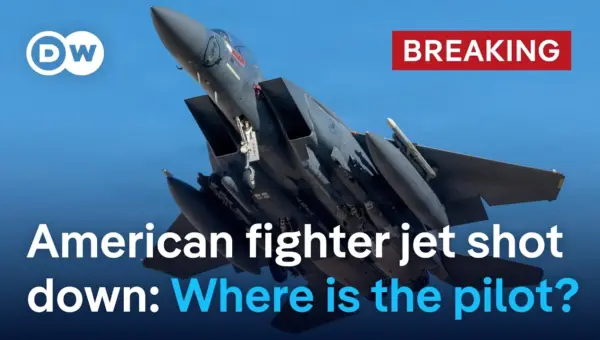
US Jet Downed in Iran: Crew Fate Unknown, War Unpopular
An American F-15 fighter jet has been shot down over Iran, with U.S. officials confirming the loss but offering few details on the crew's fate. The incident occurs amid widespread public opposition to the war and raises questions about Iran's air defense capabilities.


Iran Claims US Pilot Ejected; US Silent Amid Escalating Tensions
Iran claims a U.S. pilot ejected from a fighter jet over its territory, offering a reward for capture. The U.S. has not confirmed the report amid escalating regional tensions. Military experts discuss the strategic implications of U.S. strikes and the potential for internal change in Iran.

US Pilot Feared Lost in Iran; Search Underway
The U.S. military is conducting a search operation inside Iran for an American pilot whose fighter jet may have been downed. Details are limited, with uncertainty over whether the plane was shot down or suffered mechanical failure. The operation highlights the complexities of rescue missions in hostile territory and occurs amid heightened regional tensions.