US Seeks Unprecedented Iranian Goal Amidst Oil Politics
Historian A.N. Wilson examines the long-standing U.S. objective of transforming Iran into a compliant, oil-rich ally, a goal with no historical precedent. The discussion delves into how global oil interests have consistently driven Western policy in the Middle East, tracing a path from the 1953 coup to contemporary geopolitical challenges.

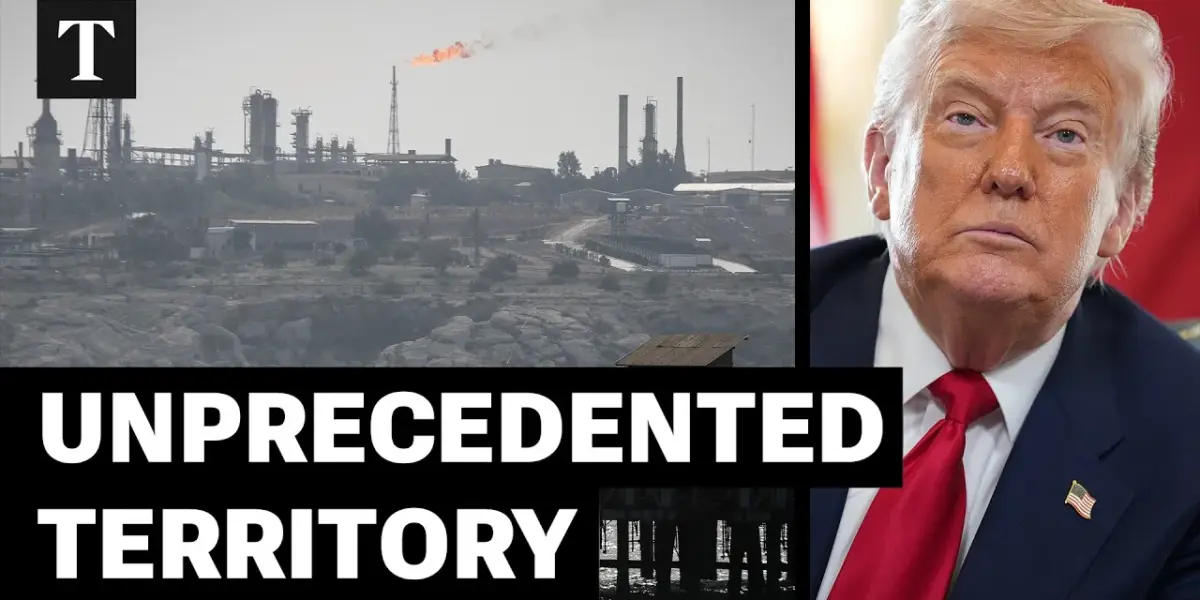
US Aims for Historical First in Iran, Driven by Oil Interests
In a move that historians suggest has no precedent, the United States is reportedly pursuing a policy objective in Iran that aims to transform the nation into a compliant, oil-rich ally. However, historical analysis indicates that such a scenario has never materialized, with the pursuit of Middle Eastern oil consistently shaping global politics and leading to complex, often volatile, geopolitical outcomes. This analysis, drawing insights from historian A.N. Wilson, suggests that the West’s enduring appetite for oil has been a primary driver of its engagement with the region, often superseding democratic ideals or regional stability.
The Shadow of 1953: A History of Intervention
The roots of current U.S. policy in Iran, according to Wilson, can be traced back to 1953. At that time, Iran’s democratically elected Prime Minister Mohammad Mosaddegh sought to nationalize the Anglo-Persian Oil Company, a move that would have transferred control of Iran’s vast oil reserves to the Iranian people. This declaration was met with a joint intervention by the United States and Britain, which overthrew Mosaddegh and reinstalled the Shah, Mohammad Reza Pahlavi, as a more amenable ruler. This event, Wilson argues, established a pattern of installing “puppets of the American regime” whose primary motivation was to ensure Western access to oil, rather than to foster genuine peace or democracy.
“What we’re talking about are puppets of the American regime. And what we’re talking about the chief motivation is not to bring peace, joy, democracy. It’s to make sure that the West hangs on, particularly at the moment with Putin having so much control over Russian oil. It was to is to hang on to oil in the Middle East.”
The Shah’s regime, installed through this intervention, lasted for approximately 25 years and was deeply unpopular among significant portions of the Iranian population. The legacy of this period continues to influence contemporary discussions, particularly regarding the potential return of the Shah’s descendants to a position of influence.
Oil’s Enduring Grip on the Middle East
Wilson emphasizes that the world’s dependence on oil has profoundly shaped the Middle East’s history. The discovery and exploitation of oil in the early 20th century, particularly in Iran and Iraq, became a focal point for imperial ambitions. The construction of the Berlin-Baghdad Railway, for instance, is cited as a key factor leading to World War I, as Britain feared German influence over routes to India and access to lucrative oil fields in the region. The Ottoman Empire’s alliance with Germany, motivated in part by these geopolitical pressures, irrevocably altered the course of history.
Even after the Iranian Revolution in 1979, which ousted the Shah, the country has continued to sit on immense oil wealth. However, Wilson points to the complex internal dynamics, including the influence of the current clerical regime, as factors contributing to Iran’s ongoing challenges. He notes that while the current regime is widely reviled and has been responsible for brutal actions, its ideology has a significant hold on a segment of the population. Furthermore, external actions, such as potential military actions by Israel and the United States, could inadvertently foster a sense of nationalist resistance, further complicating the geopolitical landscape.
Hypocrisy and Pragmatism: Western Policy Towards Oil-Rich Nations
The discussion also touches upon a perceived hypocrisy in Western foreign policy, where a remarkable tolerance is often extended to authoritarian regimes when energy supplies are at stake. Wilson draws parallels between current policies and historical instances, such as Western relationships with oil-producing nations like Saudi Arabia, or past dealings with figures like Saddam Hussein and Muammar Gaddafi. He suggests that while Western governments may espouse democratic values, their primary motivation in engaging with oil-rich countries is often economic, driven by the global economy’s reliance on oil for transportation, industry, and investments that affect everyday citizens’ pensions.
“I mean, I think I take I take it that we both agree on that, Hugo, and that we that’s the starting point. and but also that our main motivation is not so-cal western values or li liberalsis or any of these things. It’s money and and it’s what makes the world go around and it’s it’s oil in this particular case and oil is the huge source not only of making our transport systems work, our aircrafts and all the rest of it. It’s it’s the fact that investments in oil affect our pensions and everything else.”
The Road Ahead: Renewables as a Geopolitical Game Changer?
Looking forward, Wilson posits that a significant shift towards renewable energy sources could fundamentally alter the geopolitical landscape. If the world were to transition away from fossil fuels, countries whose political influence is currently derived from their oil wealth could become significantly less relevant on the global stage. This presents the strongest argument, he suggests, for embracing an “ultra green” future, driven by technologies like AI and sustainable energy.
For nations like Britain, the lesson from history is the importance of energy self-sufficiency. While not advocating for unchecked extraction, Wilson suggests that greater domestic production, such as in the North Sea, could enhance national security and reduce vulnerability to external pressures. The ultimate goal, he implies, is to navigate the complex interplay of energy, economics, and international relations without becoming subject to foreign destabilization.
Source: The US Attempts To Achieve A Goal In Iran Which Has Never Happened In History | AN Wilson (YouTube)

Related Articles

Iran’s Leadership Decimated: A Strategic Strike or Escalation?
Reports indicate a devastating strike on Iran's leadership and military infrastructure, raising questions about strategic objectives and escalating conflict. The potential for Iran to possess nuclear weapons adds a critical layer of urgency.

Trump’s War Presser Unravels: Threats, Confusion, and Blame
A recent press conference reveals Donald Trump's chaotic approach to foreign policy, marked by contradictory statements on the Iran conflict, threats against allies like Spain, and a concerning lack of preparedness for civilian evacuations. The event highlighted a volatile leadership style with potentially destabilizing global implications.

Petraeus: Iran Conflict Inevitable, ‘Staying Out Is Not An Option’
General David Petraeus warns that staying out of the conflict with Iran is no longer an option for the UK and regional powers. He details the likely military objectives and the uncertain outcome for the Iranian regime, while acknowledging the significant global economic repercussions.