US Rockets to Moon, Igniting New Space Race
The Artemis II mission marks humanity's return to the Moon after 53 years, with NASA astronauts and a Canadian counterpart set to orbit our celestial neighbor. This ambitious journey is driven by scientific goals, resource potential, and a renewed push for American leadership in space, potentially igniting a new era of international competition.

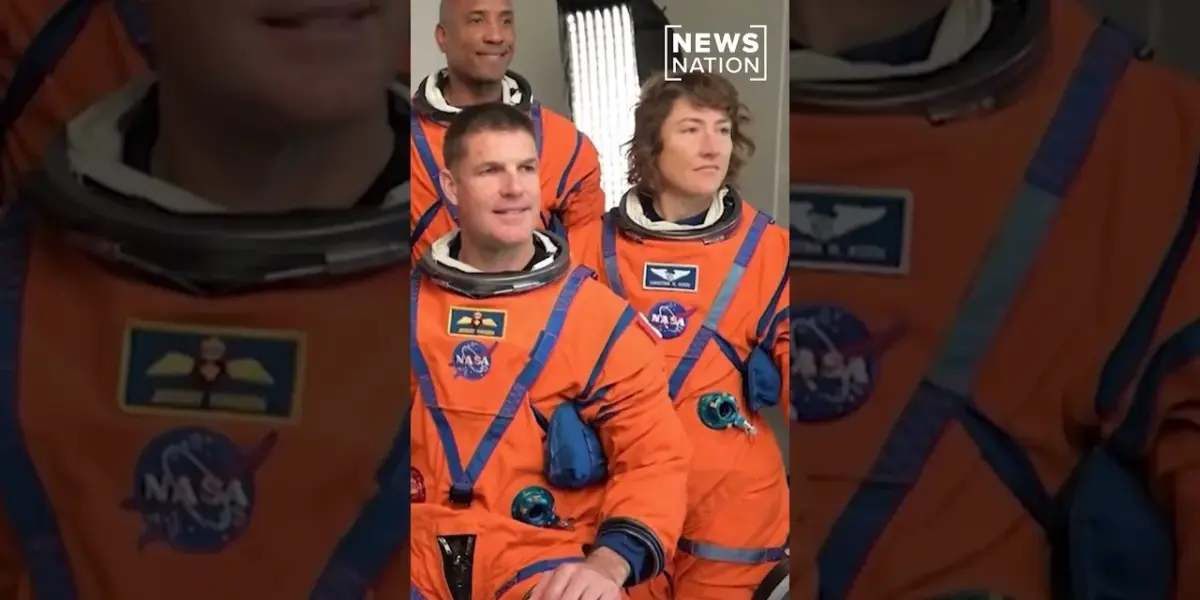
US Rockets to Moon, Igniting New Space Race
The United States is set to return humans to the Moon for the first time in over five decades with the upcoming Artemis II mission. This ambitious endeavor, aiming for a splashdown off the Southern California coast around April 10th, marks a significant moment in space exploration. It also signals a renewed push by NASA to reassert American leadership in deep space, potentially sparking a new era of international competition among spacefaring nations.
Artemis II: A Giant Leap Back to the Moon
The Artemis II mission will carry four astronauts: NASA’s Reid Wiseman, Victor Glover, and Christina Koch, along with Canadian astronaut Jeremy Hansen. Their journey will take them on a unique figure-eight path around the Moon after orbiting Earth. This mission is not just about revisiting lunar territory; it’s a critical test flight. It will evaluate the Orion capsule’s systems with humans aboard, paving the way for more complex future missions.
NASA has been working diligently to ensure the mission’s success. A previous scrubbed launch in February highlighted technical challenges, specifically hydrogen fuel leaks and a clogged helium line. These issues have since been addressed through repairs and system checks. Despite these hurdles, NASA reports the massive, 32-story rocket system is now ready. The weather forecast shows promise, with an optimistic 80% chance of a “go” for launch, though contingencies exist for a 20% chance of delays.
Motivations: Science, Resources, and Prestige
The Artemis program is driven by several key goals. Scientifically, returning to the Moon offers unparalleled opportunities for research. Scientists believe the Moon’s surface and interior hold valuable elements and rare minerals. These could be crucial for future technological advancements and industrial uses here on Earth. The mission is also seen as a stepping stone for even greater ambitions, including a crewed mission to Mars planned for the 2030s or 2040s.
Beyond scientific discovery and resource potential, the Artemis missions carry immense geopolitical weight. For the United States, successfully landing humans on the Moon again is a powerful statement of technological prowess and global leadership. After the Soviet Union’s early successes in the space race, the original Apollo program cemented American dominance. This new program aims to recapture that prestige and solidify the US position in the 21st-century space economy.
Global Impact: A New Space Race Begins?
The Artemis II mission does not operate in a vacuum. Other nations, particularly China, are also pursuing ambitious lunar programs. China has successfully landed robotic missions on the Moon and has stated its intention to land astronauts by 2030. This creates a dynamic where space exploration is increasingly intertwined with national competition and strategic advantage. The race for lunar resources and the establishment of a potential lunar presence could define future international relations.
The Artemis Accords, a set of principles for space exploration signed by the US and several allied nations, aim to promote responsible and peaceful lunar activities. However, the growing number of actors involved, each with their own strategic interests, could lead to new challenges. Ensuring that space remains an arena for cooperation rather than conflict will be a critical diplomatic task in the years ahead.
Historical Context: From Apollo to Artemis
The original Apollo program, which culminated in the first human Moon landing in 1969, was a product of the Cold War. It was a direct competition with the Soviet Union, a race for ideological and technological supremacy. The success of Apollo was a defining moment, showcasing American capabilities on a global stage. The Artemis program, while framed around scientific exploration and international cooperation, carries echoes of that past competition.
The 53-year gap since the last human Moon mission highlights the significant shifts in global power and technological development. While the US led the initial charge, today’s geopolitical landscape is more complex. Nations like China and India have developed advanced space capabilities, creating a multi-polar environment for space exploration. Artemis II is therefore not just a scientific mission, but a strategic move to define the future of human presence beyond Earth.
Future Scenarios: Cooperation or Competition?
The success of Artemis II and subsequent missions could lead to several outcomes. One scenario involves increased international collaboration, with more nations joining the Artemis Accords and contributing to lunar infrastructure. This could foster a peaceful and prosperous future for space exploration, benefiting all of humanity.
Alternatively, a more competitive scenario could emerge. If key nations pursue independent lunar ambitions without strong international agreements, competition for resources or strategic locations could increase. This could mirror historical colonial rivalries, but played out on a celestial body. The decisions made in the coming years, particularly regarding resource utilization and territorial claims, will heavily influence which path is taken.
Ultimately, the Artemis II mission represents more than just a return to the Moon. It is a bold declaration of intent, a scientific endeavor, and a geopolitical statement. As humanity ventures further into space, the old saying about the Moon being a stepping stone to the stars seems more relevant than ever, especially as the US aims for Mars and beyond.
Source: Artemis II mission: NASA to send humans to moon for first time since 1972 (YouTube)

Related Articles


Trump Dismisses Iran Threat, Sparks Reporter Clash
President Trump engaged in a tense exchange with a reporter over Iran's threats to U.S. companies. Trump questioned the details of the threat, leading to a breakdown in communication. This incident highlights the complexities of international diplomacy and business security.

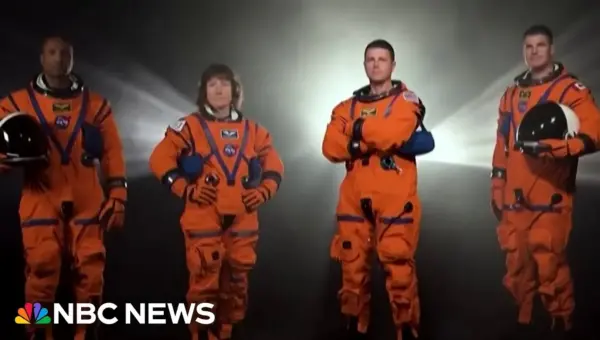
NASA Prepares Historic Moon Mission: Artemis II Gears Up
NASA is preparing for the historic Artemis II mission, sending astronauts around the Moon for the first time in over 50 years. This ten-day flight will test the Orion capsule and SLS rocket, paving the way for future lunar landings and a potential journey to Mars. The mission also features the first female astronaut to travel farther into space than any woman before.
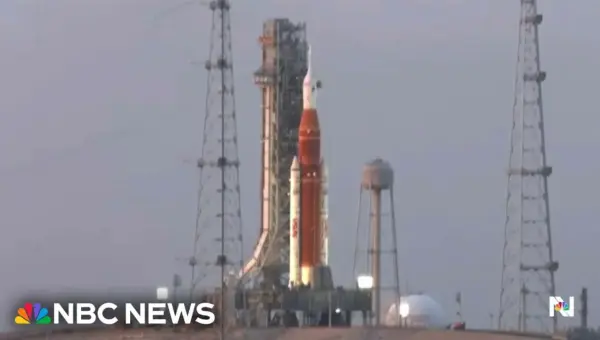
NASA’s Artemis II Rocket Prepares for Historic Moon Mission
NASA's Artemis II mission is set to launch, marking humanity's return to lunar orbit after over 50 years. The powerful SLS rocket will carry a four-person crew on a ten-day journey, serving as a critical step towards establishing a permanent lunar base by 2028. Mission managers emphasize astronaut safety while acknowledging the inherent risks of exploring beyond Earth.