US Rescues Fighter Pilot Deep Inside Iran
The U.S. military successfully executed a daring rescue operation to recover a downed fighter pilot deep inside Iran. The mission involved elite Navy SEALs and a complex strategy, highlighting the military's commitment to saving its personnel in hostile territory.

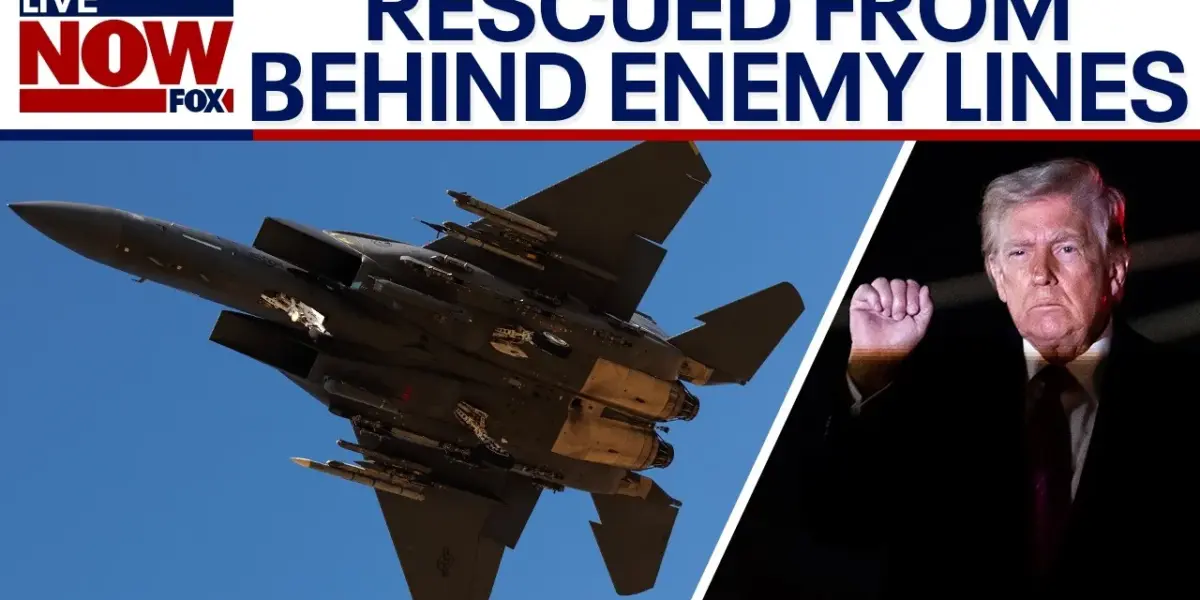
U.S. Military Conducts Daring Rescue of Downed Airman in Iran
In a high-stakes operation, the United States military successfully rescued a U.S. Air Force crew member whose fighter jet crashed deep within Iran. The successful mission, confirmed by President Trump via social media with the simple yet powerful statement, “We got him,” marks a significant achievement in combat search and rescue. The operation unfolded rapidly after an F-15E Strike Eagle jet went down on Friday, initiating a tense race against time and potential Iranian capture.
A Race Against Time in Hostile Territory
The downed airman, identified as a weapons system officer, was reportedly seriously wounded and located in a mountainous region of Iran. The rescue effort was described as a “life or death race” between U.S. and Iranian forces, spanning over two days. U.S. officials confirmed that the operation began Friday morning and involved a complex extraction. The urgency was amplified by Iran’s promise of rewards for anyone who returned the pilot, creating a dangerous environment for the stranded American.
Elite Forces Mobilize for Extraction
According to reports, the intricate rescue was carried out by U.S. Navy SEAL Team 6, a highly specialized unit. The operation required the involvement of hundreds of special operations troops and other military personnel. This level of mobilization underscores the critical importance placed on recovering downed airmen, no matter the risk. Retired Lieutenant Colonel Jason O’Hare highlighted the motto of combat search and rescue forces: “so that others may live.” He emphasized their rigorous training to ensure readiness for such missions, regardless of conditions or location.
Survival and Evasion Training Proves Crucial
Upon ejecting from the aircraft, the crew member would have relied heavily on Survival, Evasion, Resistance, and Escape (SERE) training. This training equips airmen with the knowledge and skills to survive in hostile environments, evade capture, and signal for rescue. O’Hare explained that airmen are provided with various survival equipment, including communication and signaling devices. They are trained to use these tools immediately to contact friendly forces, initiating the recovery process. The downed officer’s ability to survive and evade capture for an extended period is a testament to this specialized training.
The Dangers of Daytime Operations
A particularly challenging aspect of this rescue was its execution, at least in part, during daylight hours. Operating in daylight within contested territory significantly increases danger, as visibility allows enemy forces to spot and track U.S. assets. While darkness offers cover, daytime operations demand greater precision and expose rescue crews to heightened threats. The fact that the operation proceeded, and ultimately succeeded, highlights the extreme danger faced by the rescue teams.
Time is of the Essence in Rescue Missions
In any combat search and rescue scenario, time is a critical factor. The physical and mental toll on a downed airman increases with every passing hour, especially when facing the elements and potential enemy pursuit. O’Hare stressed that the longer an airman remains evading capture, the more dangerous the situation becomes for both the individual and the rescue forces. The swiftness of the U.S. response was crucial in preventing a potentially dire outcome.
CIA’s Role in Deception and Support
Intelligence gathered suggests the CIA played a vital role in the operation, potentially through a deception campaign. Reports indicate the CIA may have leaked information to divert Iranian attention away from the actual rescue location. This strategic misdirection would have been critical in allowing U.S. forces to operate with less interference, ensuring the airman’s safe recovery. The involvement of multiple agencies underscores the complex, coordinated nature of such high-stakes missions.
The Unthinkable Scenario: Capture
The possibility of the airman being captured by Iranian forces was a grave concern. O’Hare acknowledged the horrific implications, stating, “We have no idea what those fighters would be thinking about, what they would be charged to do. And then the question becomes is how they would treat an American airman.” This fear underscores why rapid recovery is paramount. SERE training also prepares airmen for the possibility of capture, emphasizing resistance and the refusal to divulge critical information.
Preventing Technology Fall into Enemy Hands
In addition to the rescue, U.S. forces took measures to prevent sensitive technology from falling into Iranian hands. Reports indicate that disabled U.S. transport planes on the ground were deliberately destroyed. This contingency plan ensures that sophisticated military equipment does not become accessible to adversaries, a critical consideration in any operation behind enemy lines.
A Message of Hope and Resilience
The rescued weapons system officer reportedly made contact by radio, stating, “God is good.” This phrase, recognized as something he would say due to his religious beliefs, confirmed his status to U.S. forces and possibly signaled he was not in captivity, though initial fears of an ambush were considered. The successful recovery of both this airman and another pilot in separate incidents highlights the U.S. military’s unwavering commitment to its personnel and its advanced capabilities in executing complex rescue missions in hostile environments.
Looking Ahead
This successful rescue operation serves as a powerful reminder of the capabilities and dedication of U.S. special operations forces. It reinforces the importance of rigorous training and inter-agency cooperation in safeguarding American lives. As the geopolitical situation in the region remains tense, future operations will likely continue to test these capabilities, with a constant focus on personnel recovery and strategic advantage.
Source: Middle East latest: Missing U.S. Air Force crew member rescued from Iran (YouTube)

Related Articles
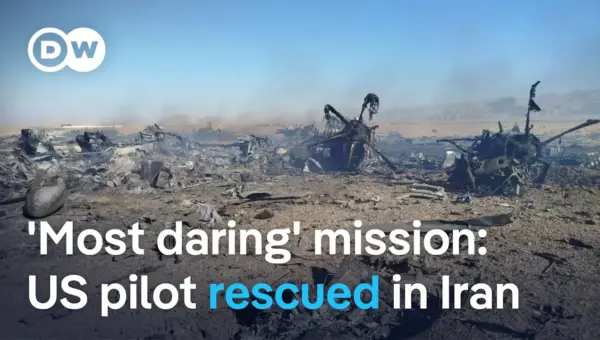
US Airman Rescued from Iran in Daring Special Ops Mission
U.S. forces executed a daring rescue of an airman downed in Iran, marking a significant military operation. The airman survived 24 hours in harsh terrain before being recovered by elite Navy SEALs in a complex mission that involved destroying U.S. aircraft.
Iran’s Drone Swarms Challenge US Military Might
Iran's growing use of low-cost drone swarms presents a new challenge for the U.S. military, forcing a shift towards a high-low mix of advanced and affordable systems. This evolution may lead to fewer frontline troops in future conflicts.


Trump’s Iran Threat: ‘Not Sane Messaging,’ Says Ex-Air Marshal
A U.S. airman was rescued after his F-15 jet was shot down over Iran, a mission President Trump lauded. However, Trump's subsequent aggressive threats towards Iran have drawn sharp criticism from former Air Marshal Greg Bagwell, who called the messaging 'not sane.' The operation highlighted the risks involved and raised questions about Iran's capabilities.