US Regime Change Efforts: A History of Tactical Wins, Strategic Losses
A comprehensive review of U.S. interventions reveals a consistent pattern: while the United States is adept at tactically removing foreign governments, achieving strategic success—the establishment of stable, legitimate political orders—has proven exceedingly difficult. Historical analysis points to unintended consequences and long-term instability as common outcomes.

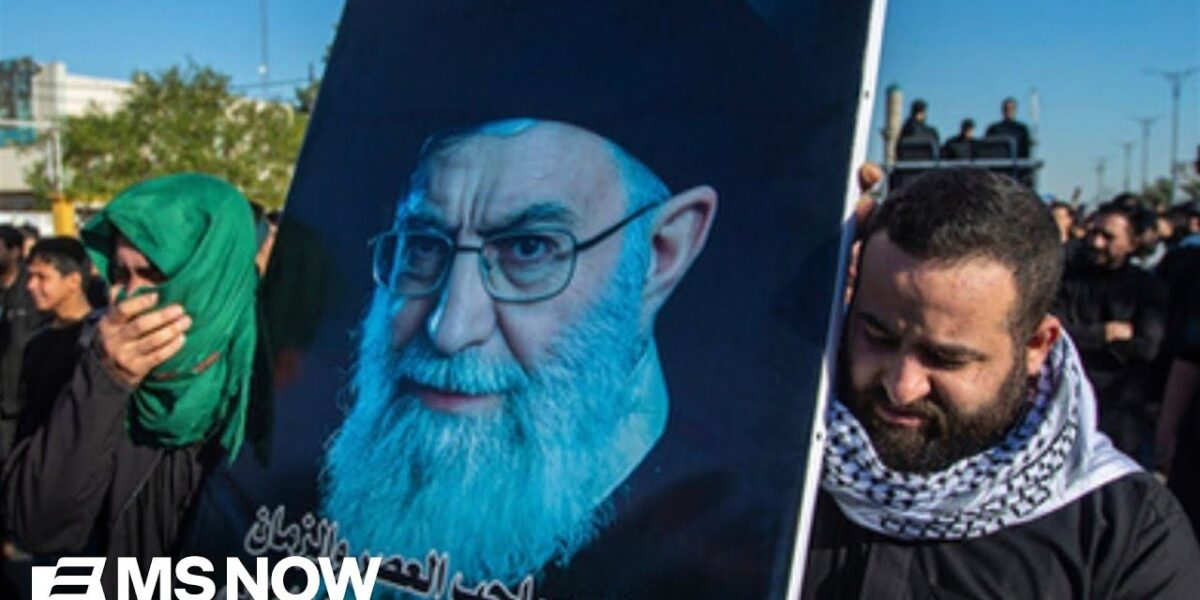
Regime Change: A Look Back at US Interventions
For over two centuries, the United States has engaged in efforts to alter or replace foreign governments, employing a range of tactics from overt invasions and covert intelligence operations to economic pressure and political engineering. While these interventions have sometimes achieved their immediate tactical goals—the removal of a targeted regime—the historical record reveals a far more complex and often unsuccessful trajectory when it comes to achieving strategic success, defined as the emergence of a stable political order, a decline in violence, functioning institutions, and the establishment of legitimacy.
Tactical Success vs. Strategic Success: A Crucial Distinction
The distinction between tactical and strategic success is paramount when evaluating the outcomes of U.S. foreign policy interventions. Tactical success refers to the straightforward overthrow of a government. Strategic success, however, entails a much more profound and difficult achievement: the establishment of a stable, legitimate political order that enhances regional or global security without creating greater instability. The evidence suggests that while the U.S. has often proven capable of the former, the latter has remained largely elusive.
Early Interventions: The Caribbean and Central America
In the late 19th and early 20th centuries, the United States frequently intervened in the Caribbean and Central America. American forces occupied Cuba, Haiti, the Dominican Republic, and Nicaragua at various times, leading to the reshaping or replacement of governments and the installation of leaders aligned with U.S. interests. While these actions often yielded tactical victories, securing compliant governments and protecting commercial routes, the strategic outcomes were mixed at best. Many of these nations experienced prolonged instability, cycles of authoritarian rule, and enduring resentment toward the United States.
The Cold War Era: Iran, Guatemala, and Chile
During the Cold War, regime change became a more systematic tool. A pivotal early instance occurred in Iran in 1953, when the CIA orchestrated the removal of Prime Minister Mohammed Mossadegh after he nationalized the country’s oil industry. Although tactically successful in removing Mossadegh and consolidating power under Shah Muhammad Reza Pahlavi, this intervention ultimately dashed hopes for a democratic Iran. The autocratic rule of the Shah, bolstered by U.S. support, fueled opposition that culminated in the 1979 Iranian Revolution and the establishment of the Islamic Republic, which became a significant adversary of the United States. Prior to 1989, Iran had been an ally.
The pattern continued. A year after the Iran coup, the U.S. backed a coup in Guatemala against President Jacobo Arbenz. While Arbenz was overthrown, the result was not democratic consolidation but decades of civil conflict that claimed over 200,000 lives. Similarly, U.S.-backed efforts destabilized Chile’s elected president, Salvador Allende, leading to a military coup by General Augusto Pinochet. Pinochet ruled for 17 years, during which thousands of his opponents were killed or disappeared. These cases highlight how tactical government changes failed to produce lasting stability or legitimacy.
Post-World War II Reconstruction: Germany and Japan
In contrast to the often-unstable outcomes of covert operations or targeted interventions, the post-World War II occupations of Germany and Japan are frequently cited as successes. Following total war, unconditional surrender, and the deployment of massive U.S. forces, these nations underwent complete political transformation, emerging as stable democracies and close U.S. allies. However, these were not swift covert operations but comprehensive national rebuilds under extraordinary circumstances, involving long-term reconstruction and widespread domestic exhaustion with prior regimes.
Post-Cold War Interventions: Iraq and Afghanistan
The post-Cold War era saw renewed U.S. engagement in regime change, notably the 2003 invasion of Iraq to remove Saddam Hussein. Despite the stated rationales of weapons of mass destruction and links to terrorism—neither of which materialized—Saddam Hussein was quickly overthrown. However, the aftermath was marked by insurgency, sectarian violence, the disbanding of Iraqi security forces, the rise of extremist groups like ISIS, and years of profound instability. Hundreds of thousands of Iraqis and thousands of American service members lost their lives, and trillions of dollars were spent. While Iraq now has an elected government, it remains fragile and heavily influenced by regional power dynamics, including those involving Iran.
Afghanistan offers a parallel lesson. Following the September 11th attacks, the U.S. removed the Taliban regime in 2001 and supported a new government for two decades. However, upon the U.S. withdrawal in 2021, the Taliban rapidly returned to power, undoing the previous 20 years of effort. This demonstrated that while the initial removal was tactically successful, the resulting political order proved unsustainable without sustained, costly foreign support.
Lessons from History: What Works, What Doesn’t
Two centuries of U.S. interventions offer several key lessons:
- U.S. Capability to Remove Regimes: The United States possesses formidable military and intelligence capabilities to topple governments.
- Difficulty of Building Legitimate Institutions: Constructing legitimate political institutions in another country is significantly harder than overthrowing a regime. Legitimacy stems from local institutions, social trust, economic opportunity, and political inclusion, not external imposition.
- Prevalence of Unintended Consequences: Regime change efforts frequently lead to unintended consequences, including weakened state institutions, power vacuums, intensified factional competition, and nationalism directed at the intervening power.
- Long-Term Costs: The costs of intervention are rarely confined to the immediate event; they often echo for decades.
While the cases of Germany and Japan demonstrate that political transformation can endure under specific, extraordinary conditions—total military defeat, unified international support, massive reconstruction, and long-term occupation—most U.S. regime change efforts do not occur within such a framework.
The Central Question for Policymakers
History suggests that when policymakers contemplate regime change, the critical question should not be whether a government can be removed, but rather what comes next. The viability of any intervention hinges on credible answers to fundamental questions: Who will govern? With what legitimacy will they rule? Which institutions will support them? And what internal political settlement will sustain them? Without such answers, regime removal risks being merely an event, rather than a strategy for lasting change.
Source: What an Iranian regime change could mean for the world (YouTube)

Related Articles


Thousands Mourn Khamenei, Chant ‘Death to America’ in Iran
Thousands gathered in Yazd, Iran, to mourn Supreme Leader Ayatollah Ali Khamenei following reported U.S. and Israeli strikes. The mourning ceremony was marked by chants of "Death to America," highlighting deep-seated anti-American sentiment amid geopolitical tensions.


Middle East Crisis Triggers Global Chaos: Flights, Oil Prices Hit
A major global crisis has erupted following coordinated strikes on Iran, triggering a massive retaliatory response that has impacted multiple countries across the Middle East. The large-scale attacks have caused widespread aviation chaos and pose significant risks to global energy markets and financial stability.

Iran’s Regime Under Siege: Attacks Cripple Leadership, Impact Russia
Iran's regime is reportedly facing critical blows from targeted attacks, crippling its leadership and severing a vital military supply line to Russia. This dual pressure is significantly impacting Russia's war efforts in Ukraine, while internal dissent grows within Iran.