US Redefines Iran War Goals Amid Rising Casualties, Oil Fears
The White House is redefining President Trump's 'unconditional surrender' demand from Iran as U.S. military strikes intensify and casualties rise. Amidst volatile oil prices and conflicting messages on the war's duration, questions linger about the administration's ultimate goals and the escalating regional tensions.

White House Clarifies ‘Unconditional Surrender’ Amid Escalating Conflict
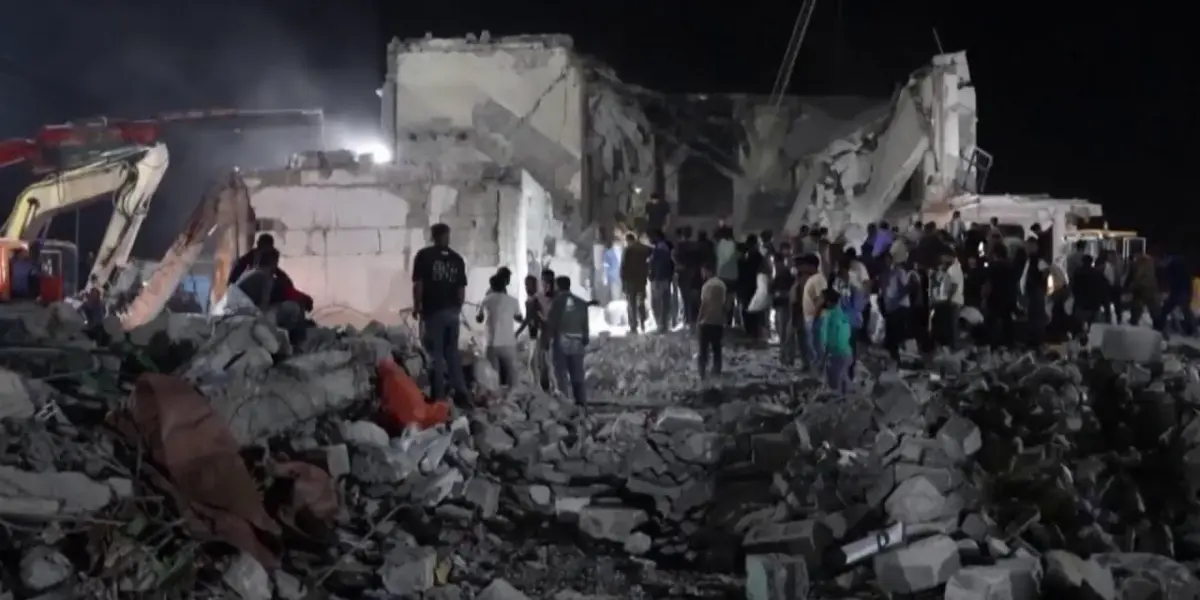
Washington D.C. – The White House has sought to redefine President Trump’s objective of “unconditional surrender” from Iran, a move that comes as U.S. military actions intensify and concerns mount over rising casualties and volatile oil prices. The evolving rhetoric from the administration highlights a complex and potentially protracted engagement, leaving Americans and international observers uncertain about the ultimate endgame.
Intensified Strikes and Mounting U.S. Casualties
Defense Secretary Hegseth announced on Tuesday that the current day would mark the most intense phase of U.S. strikes inside Iran. “Today will be yet again our most intense day of strikes inside Iran. The most fighters, the most bombers, the most strikes, intelligence more refined and better than ever,” Hegseth stated. This escalation coincides with grim reports from the Pentagon indicating that approximately 140 U.S. service members have been wounded since the commencement of “Operation Epic Fury.” The rising number of casualties is reigniting questions about the administration’s long-term strategy and the timeline for U.S. involvement.
Conflicting Messages on War’s Duration
President Trump’s own statements have added to the confusion. While he has described the war as “very complete” and a “tremendous success,” suggesting a swift conclusion, Defense Secretary Hegseth’s remarks point to a prolonged engagement. When pressed on these conflicting messages, President Trump indicated that the war is “the beginning of building a new country” and that the decision on when to escalate or de-escalate rests with him as the elected leader. “He gets to control the throttle. He’s the one deciding. He’s the one elected on behalf of the American people when we’re achieving those particular objectives. And so it’s not for me to posit whether it’s the beginning, the middle or the end,” a White House spokesperson explained.
“President Trump will determine when Iran is in a place of unconditional surrender, when they no longer pose a credible and direct threat to the United States of America and our allies.”
White House Press Secretary Karoline Leavitt further elaborated on the concept of “unconditional surrender,” framing it not as an immediate demand but as a state determined by President Trump when Iran ceases to pose a threat. This redefinition offers the President maximum flexibility in deciding the war’s continuation or conclusion.
Oil Market Volatility and Strait of Hormuz Tensions
The conflict has significantly impacted global oil prices, which have seen substantial fluctuations. Adding to the market’s anxiety, President Trump issued a stark warning via social media: “If Iran does anything that stops the flow of oil within the Strait of Hormuz, they will be hit by the United States of America 20 times harder than they have been hit thus far.” He further threatened “death, fire and fury.” Iran’s Revolutionary Guard responded defiantly, vowing to prevent the export of any oil from the region until U.S. and Israeli strikes cease.
Adding to the confusion, Energy Secretary Chris Wright initially posted a video claiming the U.S. Navy had successfully escorted an oil tanker through the Strait of Hormuz. However, the post was quickly deleted, and White House Press Secretary Leavitt clarified that no such escort had occurred, though it remains an option. “I can confirm that the U.S. Navy has not escorted a tanker or vessel at this time, though of course that’s an option. The President has said he will absolutely utilize if and when necessary at the appropriate time,” Leavitt stated.
Despite the market turmoil, Leavitt expressed confidence that oil and gas prices would decline rapidly once the U.S. mission is accomplished. Currently, oil prices are approximately 25% higher than before the conflict began, with average gasoline prices at the pump increasing by roughly 20%.
Questions Surround Initial Strike and U.S. Missile Possibility
Further complicating the narrative is the ongoing investigation into the strike on an elementary school in southern Iran on the first day of the war. President Trump suggested that Iran might have somehow obtained and used a Tomahawk missile for the attack, a claim not corroborated by other administration officials. NBC News Chief International Correspondent Keir Simmons provided a reality check, stating, “No, we don’t believe they have Tomahawks.” He explained that only a few close U.S. allies possess such missiles, and the U.S. military was operating in the area at the time. Simmons suggested the incident was increasingly likely to have been a U.S. missile, raising critical questions about targeting, intelligence, or a missile malfunction.
Regional Alliances and Divergent Objectives
The conflict’s regional implications are also a significant concern. Senator Lindsey Graham urged Gulf Cooperation Council (GCC) countries to become more involved, a sentiment that may not align with the region’s current stance. Keir Simmons, reporting from the Gulf, noted that while GCC nations host U.S. bases and are indirectly involved, they have historically refrained from offensive actions originating from their territories. These countries are reportedly frustrated with Iran but are also wary of further escalation and a broader regional war. Simmons also highlighted potential divergences between U.S. and Israeli objectives, citing differing ambitions and Israeli strikes on Iranian oil infrastructure that reportedly frustrated the U.S.
Looking Ahead: The Unfolding Endgame
As Operation Epic Fury continues, the White House faces the challenge of projecting clarity and resolve amidst conflicting messages and escalating tensions. The coming days will be crucial in determining whether the administration can effectively manage the military campaign, stabilize oil markets, and articulate a clear, achievable endgame that reassures both the American public and international allies. The potential for further escalation, the impact on regional stability, and the ultimate success of achieving President Trump’s redefined objectives remain critical questions to watch.
Source: White House redefines Trump’s desire for Iran’s ‘unconditional surrender’ (YouTube)

Related Articles

US War with Iran Ignites: Escalation Looms Amidst Uncertainty
The war against Iran, now in its eleventh day, is escalating with US forces targeting key locations. The discussion of potential ground troop deployment and even nuclear weapons raises grave concerns about the future of the conflict and regional stability.
Trump Eyes Iran Victory: A Risky Gambit Amidst Escalation
President Trump appears poised to declare victory in the conflict with Iran, a move that could have far-reaching consequences. Despite ongoing resistance from Tehran and concerns from allies, this strategic pivot may prioritize a swift exit over complete objective achievement.

Trump Eases Sanctions, Oil Prices Plummet; Crypto Markets Watch
Former President Trump's announcement to potentially ease oil sanctions has caused a significant drop in crude oil prices, sparking market optimism. However, analysts caution that geopolitical conflicts are complex, and conflicting signals may prolong uncertainty, impacting both traditional markets and the cryptocurrency sector.