US Ramps Up Military Presence Amid Iran War
The U.S. is accelerating military deployments to the Middle East as the war with Iran continues, despite President Trump's suggestions of an imminent end. A recent missile fragment incident in Jerusalem's Old City has raised fears of further escalation. Meanwhile, a partial government shutdown is causing significant travel delays at U.S. airports.


US Ramps Up Military Presence Amid Iran War
As the conflict with Iran nears its third week, the Pentagon is accelerating the deployment of thousands of Marines and sailors to the Middle East. This comes amid ongoing attacks in the region, including a recent incident in Jerusalem’s Old City. President Trump, however, continues to suggest the war will end soon, stating just moments ago that the U.S. has been hitting Iran “awfully hard.” He expressed optimism that Israel will be ready to end the war when the U.S. is, stating, “We want victory, both of us.” Despite these assurances, the deployment of U.S. service members, seen departing San Diego, indicates a potentially longer conflict.
Unclear Timeline for Conflict’s End
President Trump initially suggested the war would last between 4 to 6 weeks. Now, as the conflict enters its fourth week, he has repeatedly claimed it will conclude soon. “It won’t be long, and we’re going to have a much safer world,” Trump told reporters. He also indicated the U.S. would be leaving the region in the “very near future.” However, White House correspondent Monica Alba noted that it’s unclear what “soon” means to the President, as he has been making similar statements for about 10-12 days. The decision to send additional resources to the region suggests the administration is considering the possibility of a prolonged military operation.
Oil Prices and Economic Concerns
The ongoing conflict has led to rising oil prices, with Iran targeting energy infrastructure in the Gulf. Concerns also remain high regarding the Strait of Hormuz. The President has attempted to project confidence, suggesting oil prices might not be as high as they could be. The Trump administration is reportedly looking at ways to mitigate these price increases, including waiving the Jones Act, a century-old statute. This change aims to make it easier to use other vessels for transporting goods, potentially allowing for more free flow between U.S. ports. Vice President, however, has acknowledged that the coming weeks will be difficult, calling the situation a “temporary blip” and bracing the public for a period before gas prices come down.
Marine Deployment and Strategic Options
The USS Boxer, carrying thousands of Marines and sailors, has departed San Diego and is headed to the Middle East. Senior National Security Correspondent Courtney Kube explained that this amphibious ready group includes about 2,200 to 2,500 Marines specially trained for missions like amphibious landings, seizing ports, and airports. These deployments provide President Trump with more options, including potentially increasing the number of troops on the ground. While escorts for tankers are considered less likely, these forces could help degrade threats in the Strait of Hormuz, such as anti-ship missiles, drones, and fast boats, before any ground operations are considered.
Financial Implications and Congressional Concerns
The administration is reportedly asking Congress for around $200 billion to fund the war. National Security Correspondent Courtney Kube noted that this number could increase if the war continues for weeks more, as the funds are largely for replacing munitions and weapon systems. Iran has reportedly damaged U.S. military hardware, including radar and communication systems, and destroyed expensive drones. The extensive use of munitions during the conflict, described by Secretary of Defense Pete Hegseth as the “most intense day of bombing yet,” comes at a significant cost. Some Republicans on Capitol Hill have expressed hesitation about the price tag, indicating they will scrutinize the request.
Jerusalem Incident Raises Escalation Fears
A significant incident occurred in Jerusalem’s Old City when fragments from an intercepted Iranian missile fell within its walls. Chief Foreign Correspondent Richard Engel reported that the missile was intercepted by an Israeli interceptor over the Old City, breaking apart and causing the warhead to explode. Astonishingly, the explosion occurred in a relatively empty area, and there were no injuries. However, the proximity to highly sacred sites like the Western Wall, the Al-Aqsa Mosque, and the Church of the Holy Sepulcher highlights the extreme danger of the situation. Engel emphasized that such an incident, had it hit a more populated area, could have escalated the conflict into a religious war, underscoring the potential for significant escalation.
Israel’s Goals and U.S. Coordination
Israeli Ambassador to the United States, Dr. Michael Leiter, reacted to the Jerusalem incident, stating he was not surprised and that Iran does not discriminate in where its missiles land. Regarding the U.S. instruction not to hit gas fields, Ambassador Leiter affirmed Israel’s commitment to honoring such requests, emphasizing the collaborative nature of the effort. He clarified that the attack on the gas field was an independent action intended to pressure the Iranian regime, not to spike global oil prices. While intelligence officials have suggested differing objectives between the U.S. and Israel, particularly on regime change, Ambassador Leiter stressed that primary objectives, such as preventing ballistic missiles and nuclear proliferation, are aligned. He believes that regime collapse in Iran is necessary to achieve these goals, but change must ultimately come from the Iranian people.
Concerns Over Hezbollah and Northern Border
Ambassador Leiter also addressed fears of an Israeli ground incursion into Lebanon, stating Israel’s goal is to prevent Hezbollah missiles from being fired into its towns and villages. He highlighted plans by Hezbollah forces to penetrate Israel’s northern border, similar to Hamas’s actions on October 7th. Israel aims to prevent Hezbollah from firing anti-tank missiles into residential buildings. Leiter expressed a desire for peace with Lebanon but stated that Israel cannot allow Hezbollah to dominate the country and launch missiles into Israel. He suggested that if the Lebanese Armed Forces would prevent such actions, Israel would withdraw.
DHS Shutdown Impacts Travel
Separately, the ongoing Department of Homeland Security shutdown is causing significant disruptions at airports across the country. With nearly 10% of TSA officers calling out nationwide, wait times have increased dramatically. In Atlanta, Hartsfield-Jackson Airport experienced wait times of up to two hours, with some travelers expressing frustration. Transportation Secretary Sean Duffy warned that the situation could worsen, potentially leading to the shutdown of smaller airports and a near halt to air travel if the standoff continues. Negotiators are meeting on Capitol Hill, with Tom Homan, a former acting ICE director, engaging with bipartisan negotiators in an effort to find a compromise.
What’s Next?
The coming days will be crucial in determining the trajectory of the Iran conflict and the duration of the DHS shutdown. All eyes will be on further military deployments to the Middle East, any shifts in rhetoric from President Trump regarding the war’s end, and the progress of negotiations in Washington. The potential for escalation in the Middle East, coupled with the ongoing domestic political battles over funding and border security, creates a complex and uncertain outlook.
Source: Meet the Press NOW — March 20 (YouTube)

Related Articles
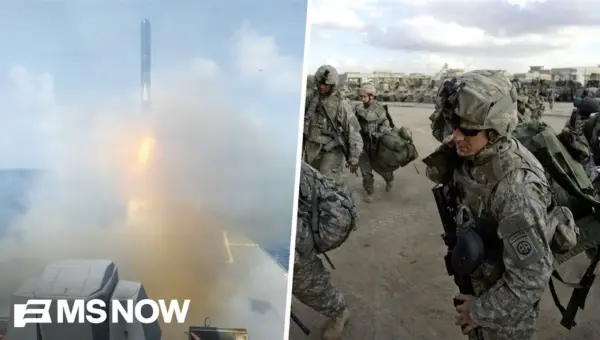
Iran Missile Strikes Injure US Troops, Raise War Concerns
Iranian missile strikes have injured U.S. service members, escalating tensions as the conflict nears one month. The attacks are raising concerns about the effectiveness of U.S. military strategy and the depletion of crucial missile stockpiles. Global oil prices have surged, impacting economies worldwide.


Americans Rally for Democracy Amidst War and Economic Woes
Thousands of Americans are participating in "No Kings" rallies nationwide, demanding accountability from leaders and drawing parallels to historical movements that spurred significant change. The protests occur amidst a controversial war with Iran, economic uncertainty, and a partial government shutdown. Organizers emphasize solidarity, joy, and the power of collective action in defending democracy.
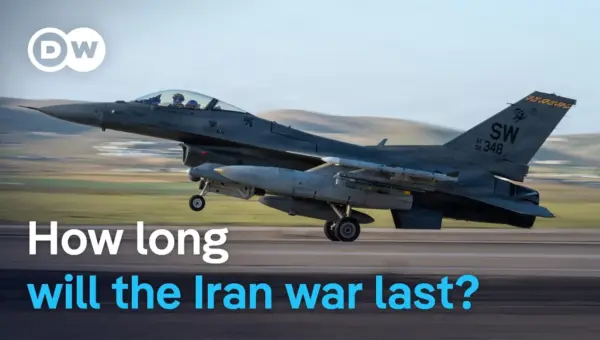
US Official Claims Iran War Could End Soon; Expert Skeptical
Despite US envoy Steve Woff's optimism about imminent talks and a swift end to the conflict with Iran, expert Aaron David Miller expresses significant doubt. Miller argues that a lack of shared urgency and fundamental miscalculations by the US administration make a quick resolution unlikely.