US Power Wanes as Elite Bets on Global Instability
A $950 million bet on falling oil prices hours before a ceasefire signals deep corruption and a decline in US global power. The article argues that elite traders profit from geopolitical events while ordinary Americans struggle, painting a picture of a rigged system and the end of American hegemony.

US Power Wanes as Elite Bets on Global Instability
Massive financial bets placed just hours before a major ceasefire announcement highlight deep-seated corruption and a crumbling global standing for the United States. While the public celebrated potential peace, wealthy traders were allegedly cashing in on predicted market shifts, suggesting a system rigged for the elite.
Traders Profit from Predicted Ceasefire
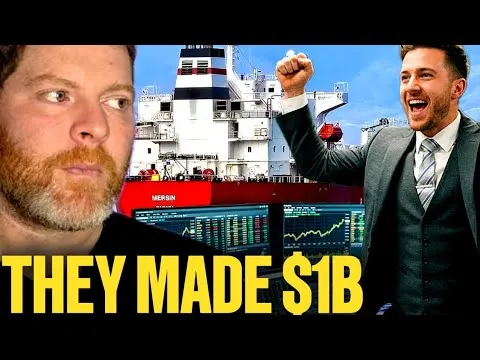
A staggering $950 million was bet on oil prices falling significantly just hours before a ceasefire was announced. This massive wager, reported by the Korea Times, was not a lucky guess. It strongly suggests insider knowledge, pointing to a coordinated effort by traders to profit from impending geopolitical events. This isn’t the first time such a large sum has been wagered ahead of major news. It raises serious questions about who knew what and when, and how these individuals gained access to such sensitive information.
American Empire’s “Extortion Racket”
The article describes the current U.S. system as a brazen extortion racket, operating openly without trying to hide its practices. While ordinary Americans struggle with rising costs, paying high interest rates on credit cards, and worrying about basic needs like groceries, a select few are making vast profits. This stark contrast shows a widening gap between the wealthy elite and the struggling working class. The author calls these everyday concerns “peasant concerns,” implying they are ignored by those in power.
War and Peace as a “Fantasy Football” Game
The financial markets, especially those tied to global conflicts, are being treated like a game. Traders are reportedly betting on war and peace as if it were fantasy football, showing a disturbing detachment from the real-world consequences. The focus is on profit, not on the human suffering in places like the Strait of Hormuz, the stability of energy markets, or the promotion of democracy. The ceasefire, in this view, was not a diplomatic victory but a move to allow VIPs to “cash out” their profitable bets.
Military as a “Logistics Company for Hedge Funds”
The author, a veteran, expresses disillusionment with the current state of the U.S. military. He claims it has become little more than a logistics company for hedge funds. Instead of conducting foreign policy, the U.S. now uses its military might for “corporate acquisition departments with stealth bombers.” This suggests that military actions are driven by financial interests rather than national security or diplomatic goals. The veteran feels that the sacrifices of soldiers are exploited so that wealthy individuals in New York City can play the market.
Iran’s Stance and the “Toll Booth”
Iran is portrayed not as having surrendered or backed down, but as having viewed the American military’s threats with contempt. Instead of being intimidated, Iran allegedly set up a “toll booth,” implying that any U.S. military action would come at a significant cost. Since a full-scale invasion or nuclear strike is not feasible, Washington allegedly chose to “pay the toll.” This implies that the ceasefire was a payment to stabilize energy markets, allowing the boardroom elites to sell their holdings.
Decline of American Hegemony
The article argues that the era of American global dominance is over. The U.S. is described as an “exhausted Mark” at a poker table, unaware that the game has already ended. A recent meeting of 40 nations in the UK, held without U.S. knowledge, to discuss global governance is cited as evidence of this decline. U.S. leaders are accused of being too busy with insider trading to notice these significant shifts in global power. The current situation is called the “estate sale of the American dream,” where everything is being sold off cheaply.
“K-Shaped Economy” and Taxpayer Burden
The “K-shaped economy” is used to describe the current economic reality in America. This means the rich are getting richer while the poor are getting poorer. Wages are stagnant or falling, partly due to job losses from AI and increased competition. The government and corporations, seen as “the house” in this “American casino,” always win. Wartime spending leads to more money being printed and spent, with American taxpayers footing the bill. This money is allegedly funneled upwards to Wall Street elites, while ordinary citizens are left with the debt and the rising cost of living.
Critique of Government and Media
Press briefings from Washington D.C. are dismissed as lies, a circus, and mere entertainment. Politicians are seen as not having the public’s best interests in mind. The author questions how grocery bills are doubling while donors to politicians are buying multiple homes. The FBI, under Cash Patel, is criticized for focusing on “pre-crime” and traditional values rather than investigating massive bets made just before major announcements. The author concludes that the American experiment has failed, characterized by greed, lack of honor, and moral bankruptcy, with the elites cashing out and leaving others with the consequences.
Global Impact
This situation signifies a major shift in the global order. The United States, once seen as an unshakeable superpower, is now perceived as a nation whose financial and political systems are compromised by elite interests. The ability of traders to profit from predicted geopolitical events suggests that international stability is being manipulated for personal gain. This erodes trust in American leadership and institutions, potentially empowering other global actors who are not tied to these perceived corrupt systems. The article suggests that the world is actively seeking new ways to be run, with or without American leadership, indicating a move away from a unipolar world.
Future Scenarios
One likely scenario is a continued decline in American global influence, accompanied by internal economic hardship for the majority of its citizens. This could lead to increased social unrest and a further fracturing of the political landscape. Another possibility is a significant reform movement that tackles corruption and wealth inequality, attempting to restore trust and economic stability. However, given the entrenched nature of the systems described, such reforms face immense challenges. A third scenario could involve other global powers stepping in to fill the vacuum left by a weakened U.S., leading to a more multipolar and potentially unstable world order, where regional powers vie for influence with less oversight.
Source: The $950 MILLION "Coincidence" (The Game is Rigged) (YouTube)

Related Articles
Iranians Face Dilemma: “Human Shields” Amidst Peace Talks
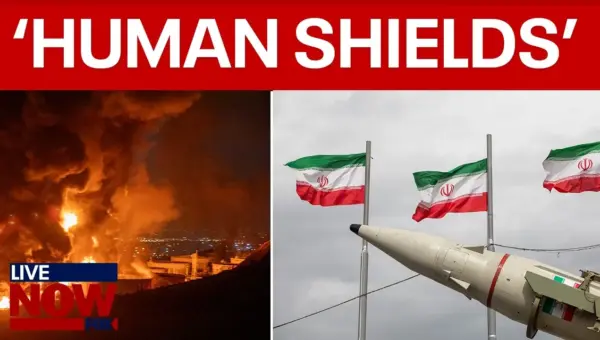
Iranian citizens are reportedly being ordered to serve as "human shields" around critical infrastructure as the U.S. prepares for high-stakes peace talks. Journalist Alina Shirazi highlighted the lack of clear safety guidance for ordinary Iranians, who feel caught between potential military strikes and government directives. The situation unfolds as top U.S. officials head to negotiations aimed at de-escalating tensions.

Iran’s Strait Control Sparks Global Tensions
Iran's actions in the Strait of Hormuz have escalated regional tensions, challenging a fragile ceasefire and raising global concerns about energy security. The debate intensifies over Iran's nuclear program and its ability to control vital shipping lanes, with experts offering conflicting views on the effectiveness of current strategies.
Iran’s Ceasefire Gambit: Global Order Faces New Stress Test
A fragile ceasefire between the US, Israel, and Iran is under strain as Tehran seeks to protect its proxies and control key waterways. The situation highlights regional rivalries, Iran's nuclear ambitions, and challenges to international alliances like NATO, signaling a potential reshaping of the global order.