US Now Officially at War with Iran, Legal Expert States
A legal expert has declared the United States to be officially at war with Iran, asserting that current military actions violate both international and US domestic law due to a lack of congressional approval. The conflict is being framed as an "act of aggression" with limited legal recourse for accountability beyond the ballot box.

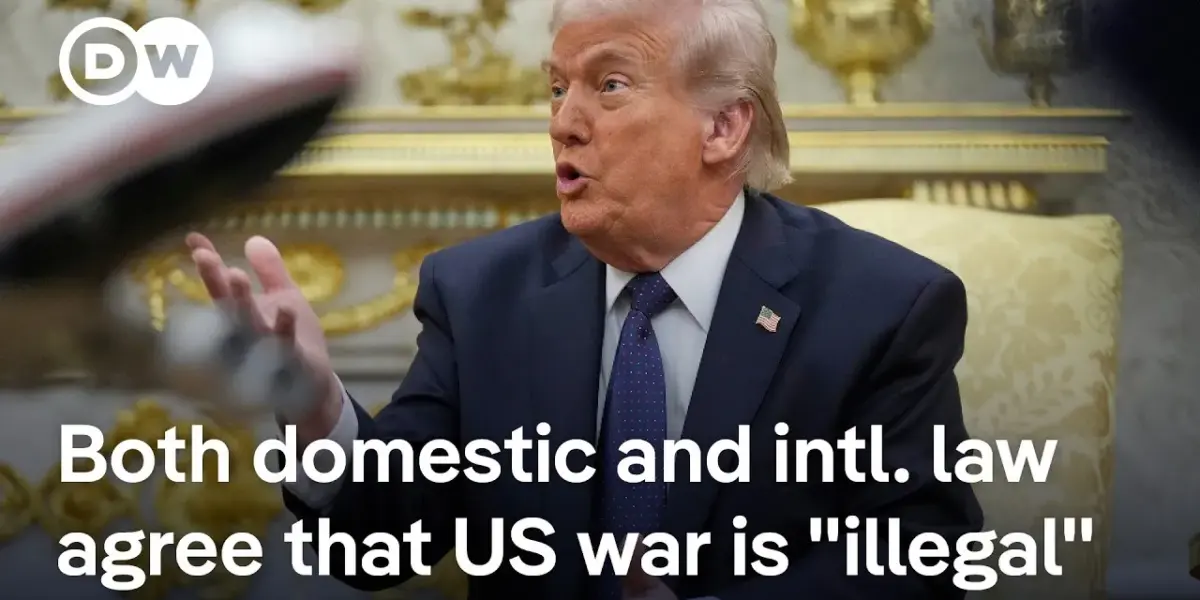
US Declared in State of War with Iran, Citing Legal Violations
The United States is officially at war with Iran, according to retired Air Force Lieutenant Colonel and national security law expert Rachel E. Van Landingham. The conflict, characterized as a “war of choice” by Van Landingham, is currently operating outside the bounds of both US domestic law and international law, as military action has been initiated without explicit congressional approval or clear evidence of an imminent armed attack.
International Law and US Actions: An Aggression
Van Landingham, a professor of law at Southwestern Law School, unequivocally stated that the United States’ use of armed force against Iran constitutes a violation of territorial integrity and is a classic definition of war under international law. She explained that the UN Charter prohibits such force unless sanctioned by the UN Security Council or in self-defense against an imminent armed attack. The US has offered shifting rationales for its engagement, but Van Landingham asserts there has been “zero evidence put forth” to justify the campaign as a necessary and proportional response to an imminent threat.
“Under international law, this is an act of aggression. This is technically an act of aggression no different than the act of aggression that Russia has been perpetrating against the sovereign state of Ukraine since 2022.”
This characterization places the US actions on par with Russia’s ongoing conflict in Ukraine, highlighting a significant breach of international norms.
Domestic Law and Congressional Authority
Under US law, the Constitution divides war powers between the President and Congress, with primary authority vested in Congress as the direct representative of the people. Van Landingham emphasized that while the President has the duty to repel sudden attacks, the current military campaign against Iran does not fall into this category. It is, instead, a “war of choice” that requires consultation with and approval from Congress.
The expert dismissed the argument that briefings provided to select members of Congress, such as the bipartisan “Gang of Eight,” constitute authorization. “A briefing is notification. It’s not approval. It’s not seeking approval ahead of time,” she stated, differentiating it from the parliamentary procedures required for legislative approval.
Congress’s Role: A Catch-Up Game?
The current situation presents a unique challenge, with major combat operations underway without congressional approval. Van Landingham drew a parallel to the Korean War in the 1950s, where President Truman deployed troops without prior congressional consent, forcing Congress to play catch-up.
Congress has several avenues to address the situation, including approving the actions retroactively, cutting off funding for the war, or passing legislation to halt military operations. However, Van Landingham expressed skepticism about Congress’s ability to effectively intervene, citing the current political composition and the likelihood of a presidential veto. She noted that if Congress continues to fund the war and fails to act statutorily, it could be seen as de facto approval.
Sanctions and Accountability: The Ballot Box
When questioned about sanctions against the President for potentially unlawful actions, Van Landingham pointed to the ultimate sanction available in a democratic society: the ballot box. “The ultimate sanction will be by the people of the United States voting this party out by expressing their disapproval this November of this president’s party of the president going against his own promise not to engage the United States in major conflicts overseas.”
Beyond electoral consequences, legal sanctions are exceedingly limited. The UN Secretary-General has condemned both US-Israeli and Iranian retaliatory attacks, but the UN General Assembly’s resolutions are non-binding due to the Security Council’s veto power, which can be exercised by countries like the United States.
Critique of Defense Secretary’s Remarks
Van Landingham strongly criticized remarks made by US Defense Secretary Lloyd Austin, who described the Iran attacks as being “on our terms” and without the “traditional allies who ring their hands and clutch their pearls.” She labeled these comments as “sophomoric, immature, and absolutely ridiculous,” arguing that they do a disservice to US service members and disrespect allies who have fought alongside American forces.
“He’s trying to feminize the law and legal restraints and by ridiculing our partners who shed blood on American behalf… To ridicule their commitment to the rule of law, their commitment to minimizing civilian casualties in war is incredibly offensive.”
She further pointed out the contradiction in Austin’s statements, where he simultaneously claimed precise strikes while dismissing the need to adhere to rules of engagement, which govern crucial aspects like proportionality and civilian casualties.
The Path Forward: A ‘Strange New World’
The current geopolitical and legal landscape surrounding the conflict is described as a “strange new world.” While Iran has issued a stark warning to Europe, threatening to view complicity in US-Israeli operations as an act of war, the international community’s ability to enforce international law is constrained by geopolitical realities, particularly the veto power within the UN Security Council.
Van Landingham’s analysis suggests that the onus is now on the US Congress to assert its constitutional authority. The coming weeks and months will be critical in determining whether Congress will act to reclaim its war powers or effectively ratify the current military actions through continued inaction and funding, thereby shaping the future of executive and legislative power in matters of war.
Source: Why there's "no question" that US is now at war with Iran | DW News (YouTube)

Related Articles
Unpacking Trump’s Iran War: A Constitutional Crisis Unfolds
The US strike on Iran in February 2026 bypassed Congress, leaving the public without clear answers. This analysis delves into the shifting justifications, the constitutional crisis, and the implications for democratic norms and regional stability.


Middle East War Escalates: US Strikes Iran, Global Impact Felt
The Middle East is engulfed in a widening conflict as U.S. forces strike Iran, prompting retaliatory attacks across the region and evacuations of American citizens. The war's economic impact is severe, with oil prices surging and global shipping lanes threatened. Meanwhile, the Epstein investigation continues with new deposition footage, and a major antitrust trial against Live Nation and Ticketmaster could reshape the ticketing industry.

Trump’s Iran Gambit: Legacy of Destruction or Strategic Masterstroke?
The recent US strikes on Iran, justified by an 'imminent threat,' have ignited debate about Donald Trump's legacy. Critics question the legality and shifting justifications, drawing parallels to the Iraq War and warning of potential regional instability. The long-term consequences remain uncertain.