US Navy’s Iran Success: Can It Project Power Against China?
The U.S. Navy's decisive actions against Iran highlight its current capabilities, but the transcript questions whether this success can translate to a confrontation with China. The analysis delves into China's rapidly expanding naval power, U.S. industrial vulnerabilities, and the strategic lessons learned from recent naval engagements.

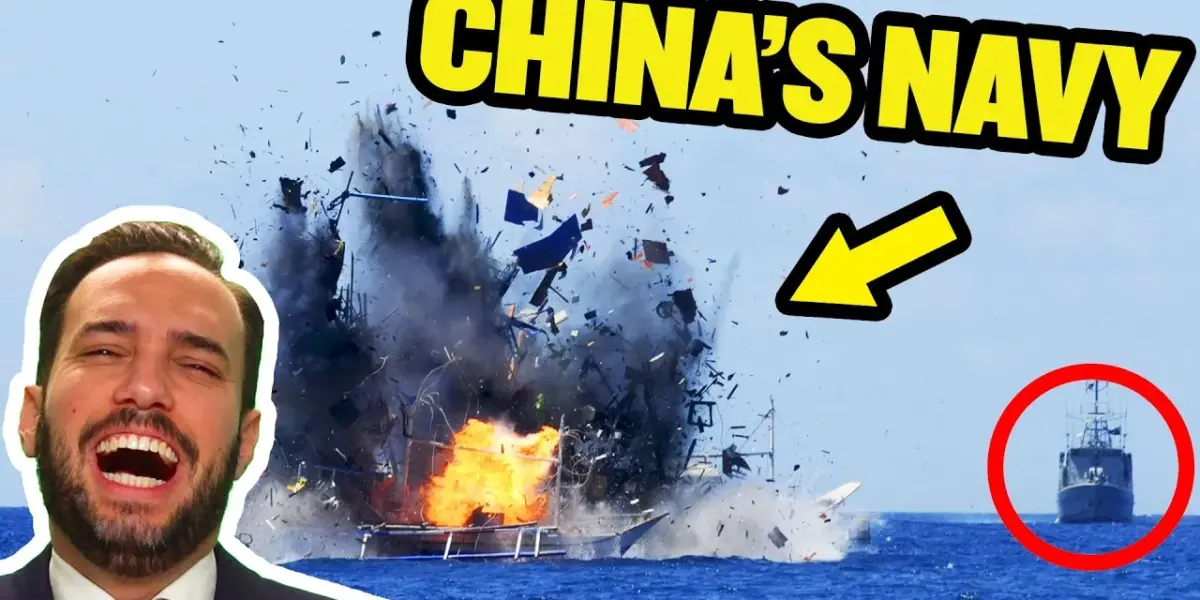
US Naval Prowess Tested: From Iran’s Shores to the South China Sea
Recent events have seen the United States Navy engaged in significant operations against Iran’s naval forces, leading to a decisive and one-sided outcome. These engagements, which have resulted in the destruction of numerous Iranian vessels, including key assets like drone carriers and mine-laying ships, have sparked a critical question: can this demonstrated naval superiority be replicated against a far more formidable adversary like China?
The Iranian Debacle: A Prelude to a Greater Challenge
The effectiveness of the U.S. Navy against Iran has been stark, with the transcript describing it as a “one-sided massacre.” This outcome, while seemingly a testament to American military might, is presented in the context of Iran’s historical military engagements and its current geopolitical standing. Iran, despite its past experiences and perceived war game preparations, appears to have been outmatched, leading to a swift and overwhelming defeat. The narrative suggests that the U.S. was exceptionally well-prepared, executing operations with a level of efficiency that Iran did not anticipate.
The geopolitical implications of these strikes are also noteworthy. The transcript posits that these actions are not merely reactive but a strategic move by the U.S. to counter Iran’s growing military capabilities, often bolstered by support from China. The argument is made that Iran has been in a state of undeclared war with the U.S. since 1979, and allowing its military power to grow unchecked would be a strategic misstep. Furthermore, the disruption of Iran’s military buildup is seen as a significant blow to China’s regional influence and allows the U.S. to pivot its focus more intensely towards the Indo-Pacific, particularly concerning Taiwan.
Lessons Learned: Adapting Tactics for a Peer Competitor
The conflict with Iran, though lopsided, has yielded valuable strategic lessons for the U.S. military. The importance of long-range weaponry has been highlighted, contrasting Iran’s short-range tactical approach with the U.S.’s ability to engage from greater distances. The effectiveness of drones, artificial intelligence, and advanced technologies like lasers has also been underscored. Even sophisticated Chinese-made air defense systems, such as the HQ9B, have reportedly proven insufficient against U.S. strikes.
However, the transcript also acknowledges that Iran, despite its setbacks, retains the capacity to inflict damage and exert influence. Its ability to target sensitive radar sites and its potential to disrupt global oil shipping through threats in the Strait of Hormuz demonstrate a persistent asymmetric threat. The sheer volume of Iran’s affordable weaponry also poses a strain on U.S. inventories, a factor that will be magnified when confronting a nation with China’s industrial capacity.
The China Enigma: A Naval Colossus on the Horizon
The core of the analysis pivots to the monumental challenge posed by China. Unlike Iran, China possesses the world’s largest navy and a vast arsenal of missiles. Its military buildup has been characterized by unprecedented speed and scale, making Iran’s naval ambitions appear almost trivial in comparison. China’s strategic objective appears to be global dominance, extending its influence across supply chains, politics, infrastructure, and data.
A critical area of concern is China’s rapidly expanding submarine fleet. The transcript details China’s significant investment in submarine production, accelerating its output of both nuclear-powered and diesel-electric vessels. Projections indicate a substantial increase in China’s submarine numbers by 2035, with a growing proportion being nuclear-powered and equipped with advanced weaponry capable of reaching large parts of the U.S. from protected waters.
Beyond submarines, China is developing an “undersea great wall” – a sophisticated network of underwater surveillance systems designed to counter U.S. submarine operations. This, coupled with China’s extensive surface combat fleet, its missile forces, cyber warfare capabilities, and potential for gray-zone tactics, presents a multi-faceted threat that dwarfs the challenges posed by Iran.
America’s Industrial Lag: A Critical Vulnerability
A significant portion of the analysis is dedicated to the state of the U.S. naval industrial base. Decades of neglect have led to a severe deterioration of shipbuilding and maintenance infrastructure. The delays in crucial programs, such as the Columbia-class ballistic missile submarines and the SSNX attack submarines, are highlighted as critical vulnerabilities. These delays not only impact the U.S.’s ability to replace aging platforms but also raise serious questions about its capacity to build the necessary fleet to deter or confront China, especially given potential timelines for a conflict over Taiwan.
The transcript contrasts the U.S.’s production rates with China’s accelerating output, noting that the U.S. struggles to produce even two Virginia-class attack submarines per year. This industrial lag, combined with the reliance on foreign manufacturing for essential components, is presented as a shortsighted strategy that could have dire consequences.
Navigating the Future: Diplomatic, Technological, and Industrial Imperatives
The path forward for the U.S. involves a multi-pronged strategy. Diplomatically, the U.S. must work to counter China’s expanding global influence by discouraging partnerships that empower Beijing and by actively defending against its cyber and infrastructure-related activities. Enhancing U.S. surveillance capabilities, particularly its integrated undersea surveillance systems, is crucial for anti-submarine warfare.
Technologically, the U.S. needs to protect its sensitive research and development, preventing the transfer of critical technologies to China, especially from its own universities. The transcript criticizes the practice of Pentagon-funded research that inadvertently benefits the Chinese military.
Industrially, a rapid and significant revitalization of the U.S. shipbuilding and defense industrial base is paramount. This includes not only building new vessels but also ensuring robust maintenance capabilities and securing supply chains for essential components and ammunition. The revival of the U.S. merchant marine force is also identified as critical for logistical support in any major conflict.
Conclusion: A Strategic Reckoning
The comparison between the U.S. military’s engagement with Iran and the potential confrontation with China underscores a profound shift in the global strategic landscape. While the U.S. Navy’s dominance over Iran is evident, it offers little direct precedent for a conflict against a peer competitor like China. The sheer scale of China’s naval expansion, its technological advancements, and the U.S.’s own industrial challenges create a complex and potentially perilous scenario. The future of global security may hinge on the U.S.’s ability to rapidly address its industrial weaknesses and adapt its strategic approach to counter the rising maritime power of China.
Note: This analysis is based on the provided transcript and does not include fabricated quotes or statistics. The transcript also contains a call to action for viewers to subscribe to a website outside of YouTube due to concerns about censorship.
Source: The US Decimated Iran's Navy. Can It Do the Same to China's? (YouTube)

Related Articles

G7 Allies Clash Over Iran War Strategy, Urge Focus on Russia
G7 foreign ministers met in Paris, revealing deep divisions over the U.S. war with Iran. European allies urged the U.S. to pressure Russia, linking its actions to the conflict and fearing support for Ukraine will wane.

Iran Blocks China Ships, Exposing Beijing’s Weak Grip
Iran's recent decision to block Chinese ships at the Strait of Hormuz is exposing the limits of Beijing's influence in the Middle East. This action is causing delays and cancellations for Chinese manufacturers, turning a perceived geopolitical win into an economic strain.
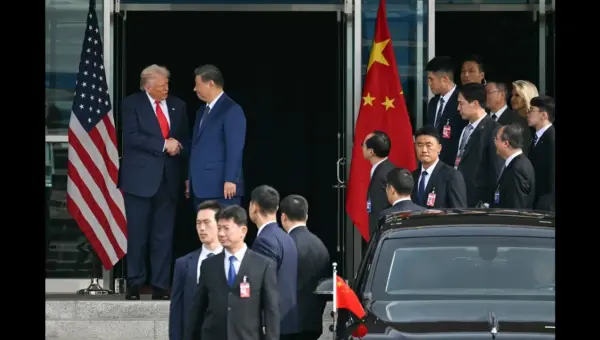
Trump’s “Walk Away” Tactic Signals Tougher Stance on China
Retired Air Force Brigadier General David Stillwell believes President Trump's strategy of being willing to walk away from negotiations puts pressure on China. This tactic, combined with US global actions and strengthened alliances, signals a more assertive American foreign policy.