US Navy Obliterates Iran’s Fleet: A New Era Dawns
The US has launched a devastating offensive against Iran's navy, neutralizing its entire fleet with advanced weaponry. This strategic move, coupled with ongoing air strikes and the potential for a ground operation, signals a significant shift in regional power dynamics and carries profound geopolitical implications.

US Navy Obliterates Iran’s Fleet: A New Era Dawns
In a dramatic escalation of regional tensions, the United States has reportedly executed a devastating series of strikes against Iran’s naval forces, effectively neutralizing its entire fleet. This offensive, characterized by the unprecedented use of Tomahawk cruise missiles, signals a significant shift in US military strategy and carries profound implications for the geopolitical landscape of the Middle East.
The Scale of the Attack
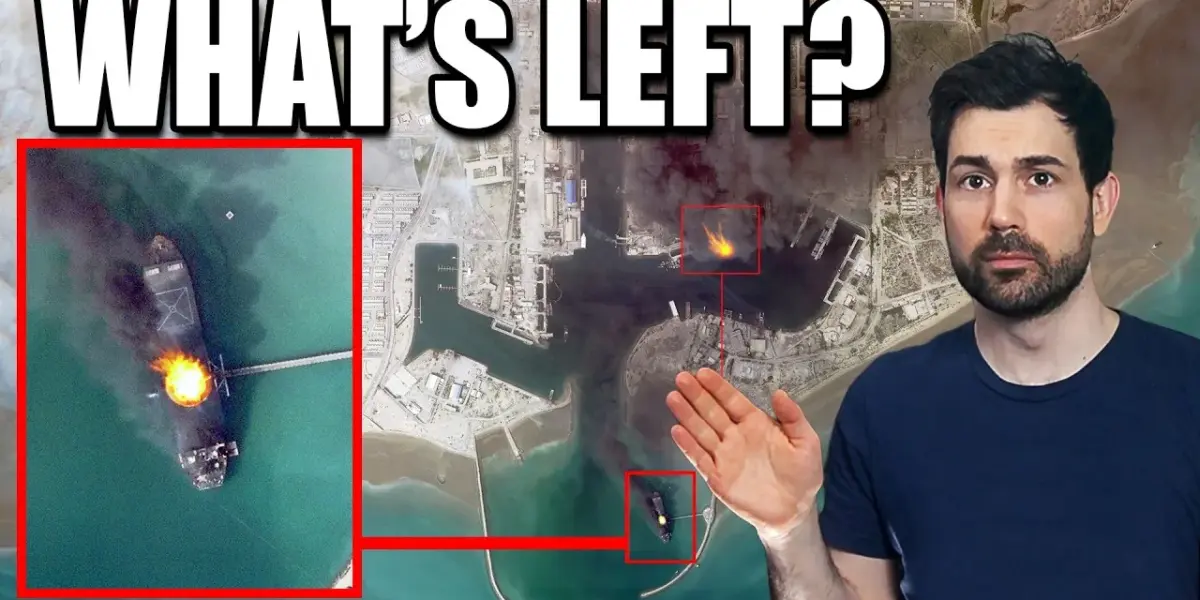
The swift and decisive action saw the destruction of all 11 of Iran’s reported warships and multiple attack submarines. Combat footage released by the US government, distinct from typical training exercises due to its rapid-fire succession of missile launches, visually confirmed the intensity of the operation. This stands in stark contrast to the 1988 Operation Praying Mantis, where anti-ship missiles were the primary weapons. The choice of Tomahawks this time, with their extended standoff range, allowed US forces to strike from hundreds of miles away, negating many of Iran’s anticipated defensive tactics.
Targeting Key Assets
Among the most significant losses was Iran’s INS Macaran, a repurposed oil tanker serving as an expeditionary mobile base for drones and special forces operations. This massive vessel, comparable in size to US aircraft carriers, was transformed into a drone carrier and was only commissioned in 2021. Its primary role was to support operations like laying sea mines and launching speedboats and drones. Its destruction, alongside other naval assets, was confirmed by CENTCOM, which stated, “Two days ago, the Iranian regime had 11 ships in the Gulf of Oman. Today, they have zero.”
Another critical loss was Iran’s Shahid Bagari, described as their version of an aircraft carrier and a mother ship for drones. Its sinking marks a significant event, potentially being the first aircraft carrier sunk since World War II. The destruction extended to Iran’s naval bases in Konarak and Bandar Abbas, which were reportedly engulfed in flames.
Iran’s Strategic Response and Leverage
The US offensive was reportedly a direct response to Iran’s actions, including attempts to blockade and cut off access to the Strait of Hormuz, a vital chokepoint for global oil transit. Iran’s stated intention to fire upon any ship attempting passage predictably sent shockwaves through global markets, with stock markets taking a significant hit. The disruption to maritime traffic through the Strait of Hormuz, through which approximately 30% of seaborne oil travels, has been substantial, with total transits reportedly down by 80%.
Iran’s naval doctrine, reshaped after the 1988 catastrophe, had focused on overwhelming US ships with swarms of fast attack boats and utilizing submarines for ambushes. However, modern surveillance technology, including persistent drone coverage, rendered the fast attack boat strategy obsolete. The IRGC’s attempts to use these tactics were thwarted, as they were unable to get close enough to US vessels without being detected and neutralized. US Naval forces, equipped with assets like the USS Abraham Lincoln’s Hellfire-armed Seahawk helicopters and Littoral Combat Ships, were specifically prepared to counter these swarm threats.
Iran’s Retaliation and Information Warfare
Despite the severe blow to its naval capabilities, Iran has not been passive. The conflict has seen Iran retaliate with drone and ballistic missile attacks. Notably, an unmanned one-way attack drone reportedly hit several commercial ships, resulting in at least one fatality. Furthermore, the IRGC claimed to have struck the USS Abraham Lincoln with ballistic missiles, a claim vehemently denied by the US, which provided video evidence of the carrier remaining operational.
This discrepancy highlights a crucial aspect of the conflict: information warfare. The US suggests Iran’s false claims are intended for domestic consumption, aiming to bolster the regime’s image and maintain internal stability amidst external pressure. The controlled information environment within Iran means such narratives can influence public perception, even if fabricated.
Broader Military Objectives and Ground Operations
Beyond the naval engagement, the US and its allies are pursuing broader objectives, including degrading Iran’s nuclear capabilities, its ability to govern, and its ballistic missile launchers. This has involved extensive air strikes targeting nuclear facilities in Natanz and Isfahan, as well as missile bases and command centers. The targeting of leadership compounds, including the Assembly of Experts in Qom, suggests a deliberate effort to fracture the regime’s command structure and potentially instigate regime change.
There is also increasing evidence of a potential ground operation. US forces have been targeting security centers along Iran’s western border, potentially to facilitate the movement of Kurdish militia groups. Reports indicate that the CIA and Mossad have been supplying weapons to Kurdish fighters, suggesting a coordinated effort to support a ground campaign. President Trump’s reported discussions with Kurdish leaders further bolster this possibility, envisioning a scenario where US special forces assist Kurdish groups in an assault into Iran.
Historical Context and Future Outlook
The current conflict echoes historical patterns of US-Iran confrontations, particularly the 1988 clashes. However, the technological advancements and strategic adaptations on both sides have reshaped the nature of the engagement. Iran’s decades-long effort to fortify its defenses against scenarios like Operation Praying Mantis appears to have been undermined by the US’s sophisticated intelligence, surveillance, and precision strike capabilities.
The destruction of Iran’s navy significantly diminishes its ability to threaten the Strait of Hormuz, a key strategic leverage point. However, the conflict is far from over. Iran’s continued ballistic missile and drone attacks, though perhaps at a slower pace than in previous conflicts, indicate a persistent will to inflict economic pressure and resist external intervention. The focus now shifts to the overland battle, with the stated objectives of dismantling Iran’s nuclear program, crippling its governance, and eradicating its ballistic missile arsenal.
Why This Matters
This conflict represents a critical juncture in Middle Eastern geopolitics. The decisive neutralization of Iran’s naval power, coupled with targeted strikes on its leadership and military infrastructure, could fundamentally alter the regional balance of power. The potential for a US-backed ground operation involving Kurdish forces introduces another layer of complexity, with implications for regional stability and the future governance of Iran. The conflict also underscores the evolving nature of modern warfare, where technological superiority, intelligence gathering, and information operations play increasingly pivotal roles.
Implications and Trends
The effectiveness of advanced missile systems like the Tomahawk, coupled with persistent drone surveillance, has been starkly demonstrated. The vulnerability of conventionally large naval assets to precision strikes is evident. Furthermore, the conflict highlights the enduring strategic importance of maritime chokepoints like the Strait of Hormuz and the lengths to which nations will go to control or influence them.
The alleged involvement of external powers like China and Russia in Iran’s training exercises prior to the conflict suggests a broader geopolitical struggle at play. The war also raises concerns about the depletion of critical air defense stockpiles, such as Patriot and THAAD missiles, which have dual implications for regional security and potential conflicts in other theaters, like the Pacific.
Future Outlook
The immediate future will likely see continued efforts by the US and its allies to degrade Iran’s remaining military capabilities, particularly its ballistic missile program and nuclear infrastructure. The success of any potential ground operation remains uncertain and hinges on the ability of allied forces to clear the way and support local partners. The long-term implications for Iran’s internal political structure, its regional influence, and the broader global energy market will unfold in the coming months and years. The conflict also serves as a stark reminder of the unpredictable nature of international relations and the ever-present potential for rapid escalation.
Source: How the US Just Destroyed Iran's Entire Navy (YouTube)

Related Articles


U.S. Iran Tensions Rise Amid Shifting Alliances
Rising tensions between the U.S. and Iran are creating a volatile geopolitical situation. With conflicting signals on de-escalation and potential shifts in alliances like NATO and U.S.-Israel relations, the path forward remains uncertain. The global economy and regional stability hang in the balance.


Iran Targets US With Cyberattacks, Escalating Digital Warfare
Iran is increasingly using cyberattacks to challenge the U.S., as seen in a recent hack of the FBI director's account. Experts say this is a strategic shift due to Iran's limitations in conventional warfare. The U.S. needs to strengthen its digital defenses, focusing on encryption and cloud computing, rather than solely relying on traditional security measures.


Ukraine Strikes Russian Oil Refinery, Eyes Iran Threat
Ukrainian forces struck a key Russian oil refinery, disrupting Moscow's war capabilities. Meanwhile, Finland's president urged continued U.S. support for Ukraine, as Kyiv shares its air defense expertise globally amid growing geopolitical complexities involving Iran and potential sanctions against Hungary.