US Navy Blockades Strait of Hormuz, Oil Prices Soar
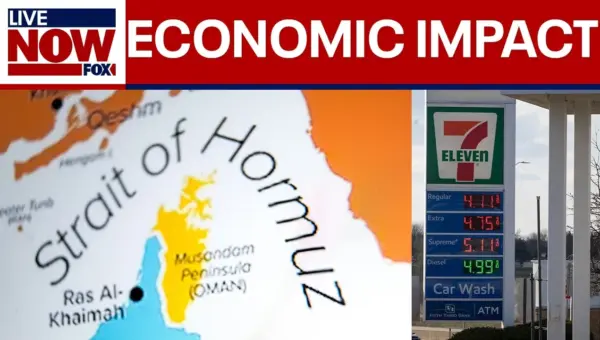
The US Navy has initiated a blockade of the Strait of Hormuz, a critical global oil route. This action is expected to send oil prices soaring and create significant market uncertainty. The effectiveness of the blockade is challenged by Iran's drone capabilities and the threat of naval mines.


US Navy Imposes Strait of Hormuz Blockade, Fueling Oil Price Surge
The United States Navy has begun blockading ships attempting to enter or leave the Strait of Hormuz, a critical global oil transit route. This decisive action, announced as “effective immediately,” aims to cut off ships paying tolls to Iran and prevent the flow of Iranian oil to international markets. The move is expected to significantly impact global energy prices and geopolitical stability.
Naval Strategy and Risks
The US Navy’s strategy involves establishing a “picket line” of ships to control passage through the strait. However, the effectiveness and safety of this blockade are under scrutiny. Iran possesses a significant arsenal of drones, including fiber-optic guided drones manufactured in Russia, capable of launching attacks from coastal mountains up to 30 miles away. This presents a considerable risk to US naval assets, turning them into “sitting ducks” if positioned too close to shore within the strait itself.
Instead of direct engagement within the narrow strait, the US is likely to position larger vessels further out in the Persian Gulf (Arabian Gulf) and the Gulf of Oman. From these safer distances, helicopters, Ospreys, and fighter jets can be launched. The primary goal appears to be limiting Iranian oil exports, particularly to countries like China, while aiming to keep oil prices stable by allowing friendly nations’ tankers to pass.
The Mine Threat
A significant concern is the potential for Iran to deploy naval mines. These can range from “limpet mines,” which divers can attach to ships, to moored or drifting mines designed to detonate upon contact or proximity. Clearing these mines is a complex and time-consuming process. Methods include dragging wires to detonate them or using aircraft and unmanned vehicles to trigger them remotely. This mine threat could halt all shipping traffic, regardless of US naval presence, as insurance companies would likely refuse to cover voyages through a perceived high-risk zone.
Economic and Geopolitical Repercussions
The blockade’s true impact hinges on whether the US can secure the Strait of Hormuz itself, not just control access from the outside. If shipping remains unsafe due to the threat of attacks or mines, global oil prices are predicted to rise sharply, potentially exceeding $100 per barrel and possibly reaching $120 to $150. This surge would be exacerbated by already diminished global oil stockpiles.
The situation also presents a potential learning opportunity for China, which relies heavily on oil from the region. Beijing can observe the US blockade tactics, which could inform future strategies regarding Taiwan. Russia, already benefiting from increased oil prices, also stands to gain from the instability.
Market Impact and Investor Outlook
The immediate market impact is expected to be significant, though perhaps less severe than previous escalations. While the US might be seen as a “cop moderating flow,” the uncertainty surrounding the strait’s safety could lead to a sell-off in risk assets. Stocks, including technology and growth sectors, may face downward pressure. Conversely, investors are showing increased interest in hardware and chip stocks, seen as a relatively safer bet amid broader market volatility and uncertainty surrounding the consumer economy and private credit markets.
The duration of the blockade and the speed at which the Strait of Hormuz can be secured are key factors. Without guarantees of safety, ship traffic is likely to remain disrupted, leading to sustained higher oil prices and increased market uncertainty. This environment is generally unfavorable for risk assets like Bitcoin and growth stocks. The Federal Reserve’s ongoing investigation into private credit woes further suggests prolonged economic uncertainty.
Long-Term Implications
The blockade highlights the vulnerability of global energy supply chains and the strategic importance of chokepoints like the Strait of Hormuz. The situation underscores the complex interplay between geopolitical tensions, energy security, and financial markets. Investors will need to monitor developments closely, as the ongoing uncertainty could shape market performance for months to come. The potential for sustained high oil prices and market volatility remains a significant concern for global economic stability.
“The United States here would be seen almost as like a cop moderating flow, but that’s only flow on the outside. It it doesn’t help the straight open.”
Source: Blockade F**Ks the Strait of Hormuz | VERY BAD. (YouTube)

Related Articles
Trump Orders Strait of Hormuz Blockade, Risks Global Oil Shock
President Trump has ordered the U.S. Navy to blockade the Strait of Hormuz, a critical global oil transit point, sparking fears of soaring energy prices and inflation. This strategic move aims to exert pressure on Iran and China, while also addressing domestic economic concerns ahead of midterm elections.


Iran’s Strait of Hormuz Blockade Shifts Global Oil Power
Iran's control over the Strait of Hormuz, a vital global oil route, is shifting economic power dynamics. As former President Trump declared a U.S. naval blockade, experts highlight Iran's effective use of this physical choke point, challenging U.S. financial leverage and potentially forcing negotiations under duress.


US Tightens Grip, Eyes Regime Change in Iran
John Bolton argues that the recent ceasefire with Iran was a mistake and advocates for a renewed military strategy. His proposal includes reopening the Strait of Hormuz and maintaining a blockade on Iranian oil to pressure the regime, with the ultimate goal of regime change.