US Navy Blockade of Strait of Hormuz: Power Play or Empty Threat?
President Trump has threatened a U.S. Navy blockade of the Strait of Hormuz after failed peace talks with Iran. While the U.S. possesses significant naval power, the narrow strait presents challenges, and Iran could retaliate by threatening oil supplies. The situation is described as dangerous brinkmanship in ongoing negotiations.

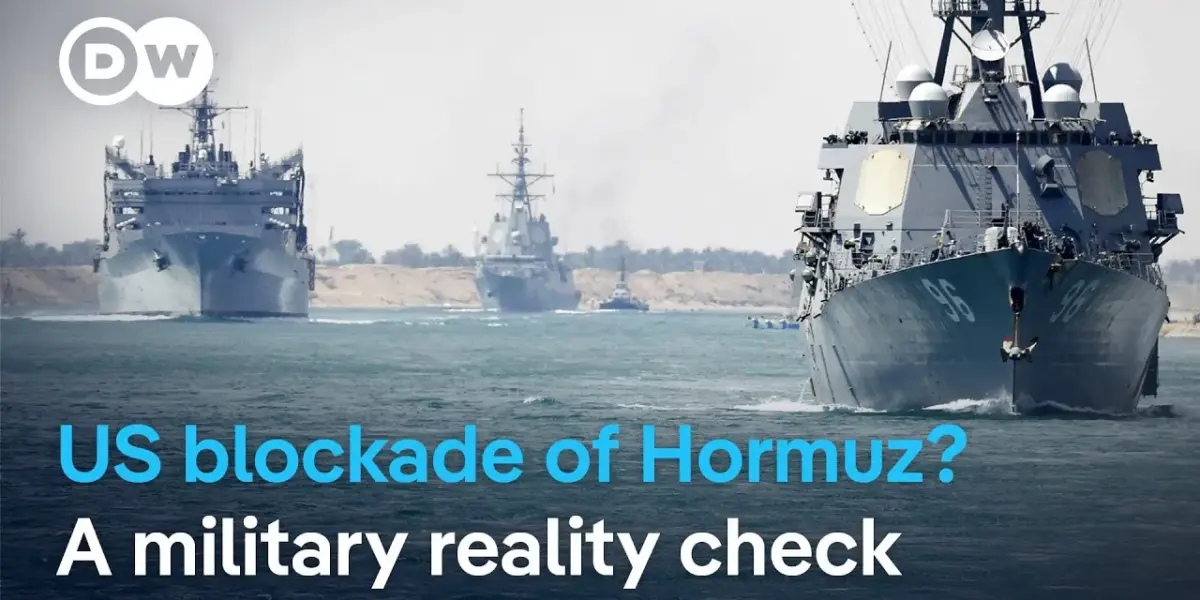
US Navy Blockade of Strait of Hormuz: Power Play or Empty Threat?
President Donald Trump has declared the U.S. Navy will blockade the Strait of Hormuz following failed peace talks with Iran. Trump announced on social media that American warships will stop any ship seeking passage into or out of the Persian Gulf that has paid Iran. He stated these interdictions could happen in international waters. This move comes less than a day after 21-hour face-to-face peace talks with Iran ended without any agreement. Trump cited Iran’s refusal to abandon its nuclear weapons ambitions as the main reason for the talks’ deadlock.
Understanding the Blockade’s Practicalities
Sasha Brookman, an expert on military and security issues from the International Institute for Strategic Studies, explained the potential implications of such a blockade. He noted that while Iran has significant military capabilities near its borders, including artillery, missiles, and drones, the U.S. Navy holds a distinct advantage on the open seas. Trump’s strategy, Brookman suggests, aims to shift the focus away from Iran’s immediate vicinity and towards the broader Indian Ocean. Most Iranian oil, he points out, travels to China, a journey of roughly 6,000 nautical miles. Iran’s ability to project power is largely concentrated near its own borders, especially after its navy has faced significant setbacks.
US Naval Power and the Strait of Hormuz
Brookman elaborated on the U.S. Navy’s formidable strength. He described a typical Carrier Strike Group (CSG), which includes a nuclear-powered aircraft carrier protected by destroyers equipped to shoot down missiles. Often, an attack submarine also accompanies the group to defend against other vessels. Such a CSG, positioned outside the Strait of Hormuz in the Gulf of Oman or the Arabian Sea, would be beyond the reach of most Iranian weaponry. This force, along with its aircraft, would possess more than enough firepower to enforce a blockade. Furthermore, naval forces operating in the broader Indian Ocean fall under the more powerful U.S. Indo-Pacific Command, which currently commands more ships than the U.S. Central Command covering the Middle East.
Geographical Challenges and Political Calculus
Despite the U.S. Navy’s military might, the narrow and heavily trafficked nature of the Strait of Hormuz presents significant geographical challenges. Brookman highlighted that the feasibility of controlling all movement through the strait is not purely a military question but also a political one. Historically, the U.S. interest has been to ensure the continuous flow of oil through the strait, which accounts for about 20% of global oil supply, or roughly 20 million barrels per day. This policy aimed to keep international oil prices stable. Trump’s proposed blockade, however, seems to flip this script. He appears willing to risk disruptions in international oil markets to prevent Iran from establishing what he calls a “toll booth,” potentially charging ships for passage. This counter-blockade is a significant gamble.
Iran’s Potential Response
Brookman assessed Iran’s military capabilities, stating that its conventional navy is largely incapacitated. The Revolutionary Guard Navy relies mainly on smaller speedboats, which are less effective in open waters. He believes the real concern lies not with Iran’s navy but with its potential to escalate the situation into hostilities. If negotiations fail and violence resumes, Iran still possesses missiles and unmanned aerial vehicles (UAVs). While their capabilities are degraded, they could still target GCC states. Iran might threaten global oil supplies, potentially driving prices to $120-$150 per barrel. Critical infrastructure in Saudi Arabia and the UAE, including pipelines that bypass the Strait of Hormuz, could also become targets if conflict erupts.
Brinkmanship in Negotiations
The heated rhetoric and military posturing are occurring while both sides are ostensibly seeking a peaceful resolution. Brookman described the situation as aggressive negotiation or “brinkmanship.” Both the U.S. and Iran are attempting to probe each other’s weaknesses and trigger reactions. The Iranians likely wish to avoid a return to being targeted, and it’s uncertain if the U.S. desires a full-scale conflict. This high-stakes game of “chicken,” as Brookman termed it, involves threats of violence and a potential redefinition of international law. The outcome remains uncertain, making this a dangerous period of geopolitical tension.
Source: Trump vows Hormuz blockade — can the US Navy actually enforce it? | DW News (YouTube)

Related Articles

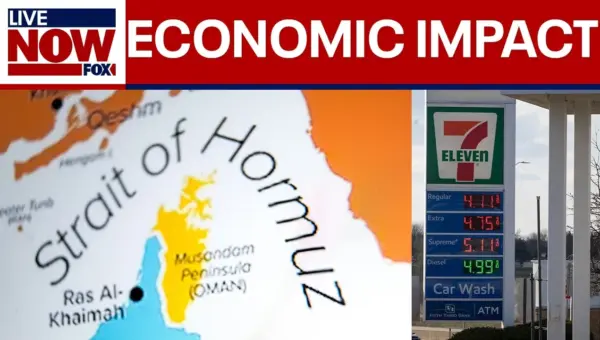
Trump Orders Strait of Hormuz Blockade, Risks Global Oil Shock
President Trump has ordered the U.S. Navy to blockade the Strait of Hormuz, a critical global oil transit point, sparking fears of soaring energy prices and inflation. This strategic move aims to exert pressure on Iran and China, while also addressing domestic economic concerns ahead of midterm elections.


Iran’s Strait of Hormuz Blockade Shifts Global Oil Power
Iran's control over the Strait of Hormuz, a vital global oil route, is shifting economic power dynamics. As former President Trump declared a U.S. naval blockade, experts highlight Iran's effective use of this physical choke point, challenging U.S. financial leverage and potentially forcing negotiations under duress.

US Tightens Grip, Eyes Regime Change in Iran
John Bolton argues that the recent ceasefire with Iran was a mistake and advocates for a renewed military strategy. His proposal includes reopening the Strait of Hormuz and maintaining a blockade on Iranian oil to pressure the regime, with the ultimate goal of regime change.