US Minesweepers Clear Strait of Hormuz Amid Peace Talks
U.S. forces have commenced mine-clearing operations in the Strait of Hormuz, a critical waterway, amid high-level peace talks with Iran in Pakistan. The operation, seen as a positive sign, occurs while diplomats discuss Iran's nuclear program and regional stability. Experts weigh the risks, Iran's strategic leverage, and the complex interplay of international relations, including Israel's ongoing military actions.


US Forces Begin Mine Clearing Operations in Strait of Hormuz
U.S. naval forces have begun clearing mines from the critical Strait of Hormuz, a major move that signals a significant development amid ongoing peace talks. The operation, involving guided missile destroyers USS Frank E. Peterson and USS Michael Murthy, is seen as a positive sign, as Iran did not interfere with the warships’ presence. This action comes as diplomatic efforts are underway, with representatives from the U.S. and Iran meeting in Pakistan to discuss regional stability and Iran’s nuclear program.
Risks and Regional Stability
Retired Army Major General Dana Pittard highlighted the inherent risks involved in such operations, not just for U.S. troops but for the broader stability of the Middle East. However, he also noted the importance of the Strait of Hormuz remaining open for international shipping. “There are risks, but it really is a good sign that the U.S.S. Frank E. Peterson and U.S.S. Michael Murthy… have been allowed to go through the Strait of Hormuz, looking for mines,” Pittard stated. He cautioned Iran against overplaying its hand, noting that the Strait could be taken away from Iran’s control if negotiations fail.
Diplomatic Objectives and Iranian Leverage
Nancy Youssef, a staff writer for The Atlantic, discussed the complex objectives of the ongoing negotiations. She pointed out that Iran’s control over the Strait of Hormuz has become a significant form of leverage, potentially more impactful than its nuclear ambitions. “By taking control of the strait, they found another form of deterrence and leverage because they now have something that the international community really values,” Youssef explained. The talks aim to address Iran’s nuclear program and reopen the Strait, while Iran seeks sanctions relief and economic compensation.
Negotiators and Strategic Moves
The composition of the negotiating teams is also a key focus. Youssef noted that Iran specifically requested Senator J.D. Vance, suggesting a strategic move to involve a potential presidential candidate who has opposed the war. “I think Iran is trying to set the terms and has done so in some ways by allowing or being allowed to name who the negotiators are,” she said.
On the U.S. side, the delegation includes experts and officials from the National Security Council, State Department, and Pentagon. The White House confirmed this, indicating a serious commitment to the talks. General Pittard emphasized the significance of Vice President Vance leading the delegation, calling it “A BIG DEAL.” He noted that Vance is the highest-ranking U.S. official to meet with Iranian officials in over 47 years.
Rhetoric vs. Reality: Iran’s Military Capabilities
Despite assurances from U.S. officials about the destruction of Iran’s military assets, concerns remain. The Wall Street Journal reported that Iran still possesses thousands of missiles. While Defense Secretary Hegseth stated that over half of Iran’s missile launchers have been destroyed or damaged, many can be repaired or accessed from underground complexes. General Pittard suggested that the “chest beating” from Secretary Hegseth has not been helpful. “We have not completely destroyed Iran’s capabilities, military nuclear capabilities,” he warned, citing Iran’s continued possession of ballistic missiles, drones, and underwater drones capable of disrupting shipping.
Israel’s Role and Regional Tensions
Adding another layer of complexity, Israel’s ongoing military operations in Lebanon are a point of contention. Lebanon has scheduled talks with Israel in Washington, but the conflict continues. Youssef explained that Iran has been unwilling to open the Strait of Hormuz due to these strikes, which the U.S. claims were not part of the agreement. “We’ve already seen that fissure,” Youssef stated, referring to the disagreement over the hostilities in Lebanon.
Israel views Iran as a persistent threat, primarily through proxies like Hezbollah in Lebanon. While Lebanon seeks an end to the hostilities, Israel has indicated it will not stop fighting. This divergence in approach, particularly between the U.S. and Israel regarding Iran’s actions, could influence the broader diplomatic landscape. “That sort of divide between the United States and Israel going forward could be a factor,” Youssef observed.
Looking Ahead
The coming days will be crucial in determining the outcome of these high-stakes negotiations. Both sides appear motivated to reach a deal, but the extent to which Iran will push its leverage regarding the Strait of Hormuz and potential divisions between the U.S. and Israel remains to be seen. The management of these talks and the concessions made will offer significant insights into the future of regional security and Iran’s international standing.
Source: U.S. forces start removing mines from Strait of Hormuz amidst peace talks in Pakistan (YouTube)

Related Articles

Trump’s Pakistan Deal Collapses, Media Confrontation Erupts
Negotiations in Pakistan involving Iran have reportedly collapsed, leading to a heated exchange between Donald Trump and the media. The breakdown raises questions about U.S. foreign policy effectiveness and the accuracy of political claims regarding the conflict with Iran.

Iran Scrambles Drones, U.S. Warships Face Threats
Iran allegedly scrambled drones at U.S. warships in the Strait of Hormuz amidst tense negotiations. Reports also hint at potentially captured Iranian pilots in U.S. custody, adding another layer of intrigue to the volatile regional dynamics.

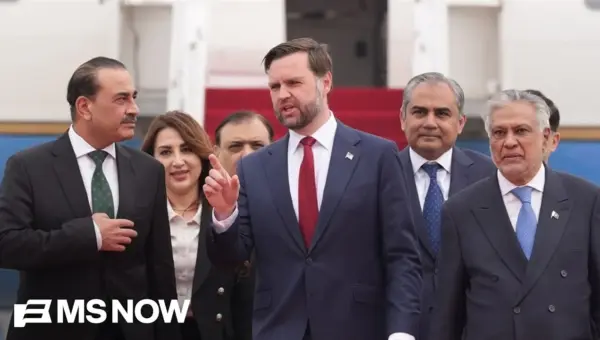
Iran Nuclear Deal Expert Warns Against Quick Deal Expectations
Robert Malley, a key negotiator of the 2015 Iran nuclear deal, warns against expecting a quick or easy resolution in current U.S.-Iran peace talks. He stresses that any agreement will require compromise from both sides, not surrender. Malley suggests the current talks may focus on immediate steps like reopening the Strait of Hormuz and sanctions relief, laying groundwork for future, more comprehensive discussions.