US Military Unleashes ‘Devastating’ Kinetic Strikes Against Narco-Terrorists, Signaling Escalation in War on Drugs
The United States military has significantly escalated its campaign against drug cartels, dubbed "narco-terrorists," conducting a series of "devastating" kinetic strikes that have eliminated trafficking vessels and personnel in the Eastern Pacific and Caribbean. This aggressive posture, enabled by expanded authorities and a declaration to treat cartels as foreign terrorist organizations, marks a stark shift in the ongoing battle against transnational crime, with officials vowing relentless pursuit and "no survivors" for those threatening US communities.


A New Era of Aggression: US Military Unleashes ‘Devastating’ Strikes on Narco-Terrorists
In a significant escalation of its campaign against transnational criminal organizations, the United States military has announced a series of what it describes as the most devastating kinetic strikes yet against drug cartels, now frequently referred to as "narco-terrorists." The operations, primarily conducted by Joint Task Force Southern Spear under the direction of US Southern Command (SOUTHCOM), have targeted vessels engaged in illicit drug trafficking across the Eastern Pacific and Caribbean, delivering a stark and uncompromising message: the pursuit of those poisoning American communities will be relentless, with "no survivors" among the targeted individuals.
The latest revelations, made public on February 17th, detail a brutal efficiency that underscores a profound shift in Washington’s approach to the "War on Drugs." The released footage, described as "unbelievable," serves as a chilling reminder to criminal enterprises that the US military possesses an expanded "tool chest" and an unwavering resolve to bring justice to those deemed threats to national security and public health.
Precision and Lethality: The February 16th Operations
The centerpiece of the recent announcements focuses on three lethal kinetic strikes executed late on February 16th. Under the command of General Francis Donovan, Joint Task Force Southern Spear engaged three distinct vessels, each confirmed by intelligence to be operated by Designated Terrorist Organizations (DTOs) and actively involved in narco-trafficking operations along established routes.
- Eastern Pacific Engagement One: A vessel in the Eastern Pacific, off the coast of Mexico, was struck, resulting in the elimination of four male narco-terrorists.
- Eastern Pacific Engagement Two: Another vessel in the same region of the Eastern Pacific suffered a direct hit, leading to the death of four additional male narco-terrorists.
- Caribbean Engagement: A third vessel in the Caribbean was targeted, with three male narco-terrorists killed during the action.
Crucially, the US military confirmed that no American forces were harmed during these highly successful operations. The released footage showcased massive explosions, burning wreckage, and the visible destruction of the vessels, some laden with illicit drugs and equipped with multiple high-powered motors, indicative of sophisticated trafficking operations. The explicit declaration of "zero survivors, not a single survivor" from these engagements highlights a tactical and rhetorical shift towards absolute incapacitation of the enemy.
The Strategic Shift: Redefining the Enemy and Expanding the Arsenal
This aggressive posture is rooted in a significant policy framework that has redefined the nature of the threat posed by drug cartels, elevating them from mere criminal enterprises to designated terrorist organizations. This reclassification has profound implications for the operational capabilities of the US military and intelligence agencies.
Designating Cartels as Foreign Terrorist Organizations (FTOs)
The strategic foundation for these kinetic strikes is deeply intertwined with the policy advocacy of figures like former President Donald Trump, who, during his previous term and in subsequent public statements, has championed the classification of drug cartels as Foreign Terrorist Organizations (FTOs). While the exact timeline of such a formal designation and its implementation can be complex and subject to political debate, the sentiment articulated in the transcript – "President Donald Trump upon returning to office declared the cartels foreign terrorist organizations" – underscores a policy direction that provides the United States government and its military a "deeper tool chest" to combat these groups.
An FTO designation is not merely symbolic. It unlocks a broader array of tools for the US government, moving beyond traditional law enforcement and interdiction efforts. These tools include:
- Military Action: Allows for direct military engagement and the use of lethal force against FTOs, similar to operations against groups like ISIS or al-Qaeda, where such actions might otherwise be legally constrained.
- Intelligence Gathering: Facilitates more extensive intelligence collection and sharing with allies, treating cartels as national security threats rather than solely criminal concerns.
- Financial Sanctions: Enables the freezing of assets, prohibition of financial transactions, and other economic measures designed to cripple the funding networks of these organizations.
- Legal Prosecution: Broadens the scope for prosecuting individuals associated with these groups under anti-terrorism statutes, both domestically and internationally.
The sentiment expressed in the transcript, "This should have been done a long time ago," reflects a frustration with previous, perhaps less aggressive, strategies and a belief that the FTO designation provides the necessary legal and operational latitude to "smash these terrorists into oblivion."
The Role of US Southern Command (SOUTHCOM)
At the forefront of these operations is US Southern Command (SOUTHCOM), one of the eleven unified combatant commands of the US military. SOUTHCOM is responsible for providing contingency planning, operations, and security cooperation in its assigned area of responsibility, which includes Central America, South America, and the Caribbean. Its mission is critical to countering transnational criminal organizations, which pose significant threats to regional stability and US national security interests.
General Francis Donovan, the commander of SOUTHCOM, plays a pivotal role in directing these kinetic strikes. His leadership underscores the military nature of the current campaign. These operations are not merely drug busts; they are strategic engagements aimed at dismantling the infrastructure and leadership of organizations deemed hostile entities, utilizing military assets and intelligence capabilities to achieve decisive outcomes.
A Relentless Campaign: A Chronology of Recent Engagements
The February 16th strikes are not isolated incidents but rather part of a sustained and escalating campaign that has seen multiple successful interdictions and eliminations of cartel assets over recent weeks and months. The US military has clearly demonstrated its commitment to "not taking its foot off the gas."
Beyond February 16th: Sustained Pressure
The transcript highlights several other significant operations, demonstrating a pattern of aggressive engagement:
- February 13th: Just days before the major strikes, Joint Task Force Southern Spear conducted another lethal kinetic strike in the Caribbean. This operation targeted a DTO vessel, with intelligence confirming its involvement in narco-trafficking. Three narco-terrorists were killed in this action, and footage suggested the target might have been a submersible vessel, indicating the sophistication of the cartels’ methods and the military’s advanced detection and response capabilities.
- February 9th: Earlier in the month, an operation involved a two-stage strike. The initial engagement targeted and disabled the engines of a trafficking vessel, followed by a secondary strike to ensure its complete incapacitation and destruction. This tactic, potentially executed by an aircraft like a C-130 Ghostrider, demonstrates precision and methodical elimination.
- February 5th: Another vessel attempting to evade detection was engaged and destroyed in a "good hit," with the target confirmed as "destroyed."
- January 23rd: Footage from an earlier operation in January depicted a vessel loaded with drugs and equipped with multiple motors attempting to escape before being completely destroyed and sunk.
These sequential operations paint a clear picture of an intensified and continuous effort to disrupt the flow of illicit drugs, showcasing the military’s ability to locate, track, and neutralize targets across vast maritime territories.
Operational Tactics and Targets
The footage and descriptions reveal key aspects of the operational tactics being employed:
- Precision Strikes: The use of missiles and bombs, often with significant destructive power (e.g., "500lb warhead"), indicates precision targeting to ensure the complete destruction of vessels and their contents.
- Diverse Targets: The military is engaging a variety of vessels, from fast-moving speedboats to potentially semi-submersible or fully submersible craft, which are notoriously difficult to detect and intercept.
- Overwhelming Force: The "no survivors" outcome underscores a strategy of applying overwhelming force to eliminate the immediate threat and personnel, rather than merely apprehending them.
The strategic rationale behind these kinetic strikes extends beyond simply seizing drugs. It aims to degrade the cartels’ operational capacity, deter future trafficking attempts, and send an unequivocal message that their activities will be met with severe and lethal consequences. By targeting the vessels and personnel, the US military seeks to inflict direct costs on these organizations, disrupting their supply chains and financial networks.
Regional Cooperation and Broader Implications
The fight against narco-terrorism is not solely a unilateral American effort. It relies heavily on intelligence sharing and operational cooperation with regional partners, whose contributions are vital to overall success.
El Salvador’s Critical Contribution
A notable example of this international partnership comes from El Salvador, where President Nayib Bukele (referred to as "Boule" in the transcript) announced what was described as the "biggest drug bust in history." Such interdictions by partner nations are invaluable, preventing colossal amounts of drugs from ever reaching their intended destinations, including the United States.
The US Department of State highlighted the difficulty in quantifying the lives saved by such operations, emphasizing that El Salvador’s "contributions to regional security such as this anti-narcotics operation strike a blow against transnational crime and make the hemisphere safer." This underscores the interconnectedness of regional security and the shared responsibility in combating the scourge of drug trafficking.
The Geopolitical Landscape of Drug Trafficking
The locations of these strikes – the Eastern Pacific off Mexico and the Caribbean – highlight the vast and complex network of drug trafficking routes. These maritime corridors are critical pathways for illicit substances, including cocaine, heroin, and increasingly, synthetic opioids like fentanyl, originating from South America and destined for North American and European markets.
The transnational nature of these criminal organizations means that a comprehensive strategy must involve not only interdiction at sea but also efforts to disrupt production, dismantle land-based networks, and address the underlying socio-economic factors that fuel the drug trade. The US military’s kinetic strikes represent a potent component of this multi-faceted approach, focusing on interdiction at a critical choke point in the supply chain.
Analysis and Debate: The Efficacy and Ethics of Kinetic Warfare
While the recent strikes demonstrate a powerful and decisive military capability, they also ignite broader discussions about the effectiveness, legality, and long-term implications of employing such aggressive tactics in the "War on Drugs."
Is the Strategy Working? Measuring Impact and Deterrence
Proponents of this kinetic approach argue that it delivers immediate, tangible results: the destruction of drug shipments, the elimination of operational assets, and the neutralization of cartel personnel. The "no survivors" outcome is seen as a strong deterrent, sending an unequivocal message that the costs of engaging in narco-trafficking will be existential.
However, critics often raise concerns about the "whack-a-mole" nature of such interdiction efforts. They argue that as long as there is demand for drugs and the economic incentives for trafficking remain high, cartels will adapt, find new routes, replace lost personnel, and innovate their methods. The true measure of success, they contend, should be a reduction in drug availability, addiction rates, and cartel power, which kinetic strikes alone may not achieve.
Moreover, quantifying the "lives saved" from interdicted drugs remains a complex challenge, making it difficult to definitively assess the long-term impact of these operations on public health outcomes.
The "No Survivors" Policy: Legal and Ethical Considerations
The explicit mention of "no survivors" raises significant legal and ethical questions. When drug cartels are designated as FTOs, they are treated as combatants, which broadens the military’s authority to use lethal force. However, the application of military force against non-state actors operating in international waters or sovereign territories (with permission) still operates under specific rules of engagement, including principles of necessity and proportionality.
The strong, visceral language used in the transcript – "kick your ass," "mercked on the open waters" – reflects a highly aggressive stance. While this rhetoric resonates with those frustrated by the drug crisis, it also prompts scrutiny regarding the boundaries of military action and the potential for unintended consequences. Questions of accountability and oversight for operations resulting in zero survivors are paramount, even when targeting designated terrorist organizations.
The Long Game: Sustainable Solutions vs. Kinetic Force
While kinetic strikes offer a powerful immediate response, a sustainable solution to the drug crisis necessitates a comprehensive, multi-pronged strategy. This includes:
- Demand Reduction: Addressing drug addiction and abuse within consuming nations through public health initiatives, treatment programs, and education.
- Economic Development: Investing in alternative livelihoods in drug-producing regions to reduce reliance on illicit crops.
- Judicial and Institutional Reform: Strengthening law enforcement, judicial systems, and anti-corruption measures in partner nations.
- Intelligence Sharing and Law Enforcement Cooperation: Enhancing international collaboration to dismantle cartel networks from within.
Relying solely on kinetic force, without addressing these underlying factors, risks a perpetual cycle of violence and adaptation by criminal organizations, potentially leading to an escalation of violence and destabilization in affected regions.
The War on Drugs: A Historical Context and Evolving Threat
The current aggressive stance is not an isolated phenomenon but rather the latest evolution in a decades-long struggle known as the "War on Drugs."
Decades of Struggle: From Interdiction to Counter-Terrorism
Initiated in the 1970s, the US "War on Drugs" has seen various strategies, from crop eradication and interdiction efforts to targeting kingpins and disrupting financial flows. Early efforts often focused on source countries and border control. Over time, as cartels grew in power and sophistication, their operations became more akin to insurgencies or terrorist groups, prompting a re-evaluation of how to combat them.
The shift towards designating cartels as FTOs signifies a recognition of their evolving threat profile – their use of extreme violence, their control over vast territories, their corruption of state institutions, and their direct challenge to national sovereignty and security.
The Fentanyl Crisis and the Urgency of Action
The urgency behind the current aggressive campaign is undoubtedly amplified by the devastating impact of the opioid crisis, particularly the influx of synthetic opioids like fentanyl. Fentanyl, often illicitly manufactured in Mexico using precursor chemicals from Asia, is responsible for tens of thousands of overdose deaths in the United States annually, making its interdiction a critical national security imperative.
From this perspective, drug cartels are not just criminals; they are direct contributors to a public health catastrophe, making the "narco-terrorist" label and the robust military response seem justified to those advocating for a more forceful approach.
A Message Delivered: Unwavering Resolve
The message from the United States military and its political leadership is clear and unambiguous: "If you threaten this country, if you threaten our people, there is nowhere on this earth you can hide." The recent "devastating" kinetic strikes represent a potent demonstration of this resolve, showcasing an unparalleled commitment to finding and neutralizing those who seek to profit from the suffering caused by illicit drugs.
While the long-term efficacy and broader implications of such an aggressive, kinetic-focused strategy will continue to be debated, the immediate impact is undeniable. The "days of the drug pushers" are, according to this narrative, meant to be over, and the US military stands ready to ensure that message is delivered with decisive force on the open waters and beyond. The campaign against narco-terrorism has entered a new, more lethal chapter, with an unwavering commitment to relentless pursuit and uncompromising justice for those deemed enemies of the state.
Source: Trump SMASHES Cartel Target In Brutal Fashion – No Survivors (YouTube)

Related Articles

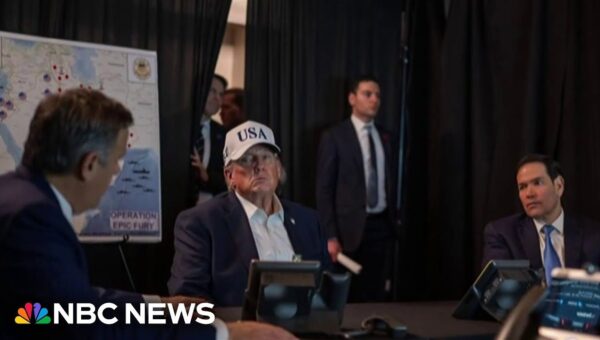
Trump: Iran Strikes Ahead of Schedule, Expects ‘Great Deal for World’
Three U.S. service members have been killed amid escalating conflict with Iran, President Trump confirmed. He stated that strikes are ahead of schedule, with senior Iranian leaders killed, and expressed optimism for a "great deal for the world" despite ongoing talks with Iranian officials.


US Launches War on Iran: Supreme Leader Killed
The United States and Israel have launched major military operations against Iran, reportedly killing Supreme Leader Ayatollah Ali Khamenei and a significant portion of the nation's leadership. While proponents hail the action as a necessary blow against terrorism, critics raise concerns about the lack of a clear strategy and the potential for a wider conflict.

US Service Members Killed in Strikes Against Iran
Three U.S. service members were killed and five wounded in "Operation Epic Fury" airstrikes targeting Iran. The incident, which involved shrapnel injuries and concussions, underscores the ongoing risks in the volatile Middle East. U.S. Central Command is investigating the exact location and circumstances of the casualties.