US Military Trains for Survival After Jets Downed
Two U.S. military aircraft, an F-15E and an A-10, were shot down in separate incidents, prompting immediate search and rescue operations. This event highlights the critical importance of the military's Survival, Evasion, Resistance, and Escape (SERE) training for pilots operating in hostile environments. The incidents occur as the U.S. proposes a record $1.5 trillion defense budget.

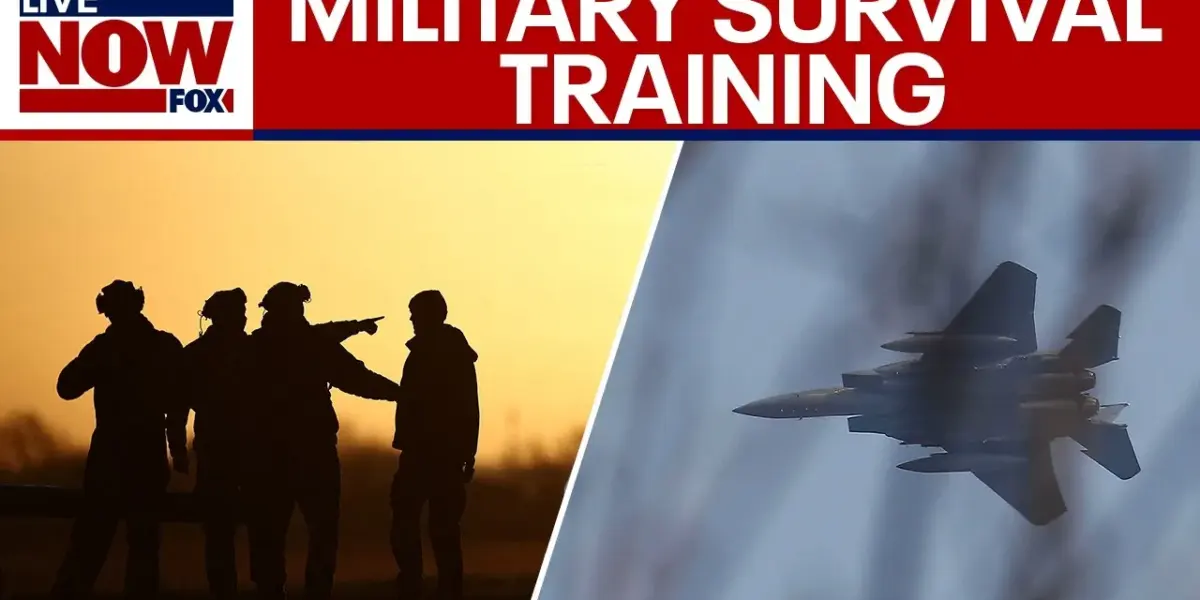
US Military Trains for Survival After Jets Downed
In a tense Friday evening, the U.S. military is grappling with the loss of two aircraft, an F-15E Strike Eagle and possibly an A-10 Warthog, downed in separate incidents. One pilot was rescued, but at least one crew member remains missing. This marks the first time U.S. aircraft have been lost in the current conflict, raising questions about Iran’s air defenses and the military’s readiness to protect its personnel in hostile territory.
Massive Defense Budget Proposed Amidst Conflict
Adding to the day’s significant news, President Trump has proposed a $1.5 trillion defense budget for 2027, the largest in decades. Retired Marine intelligence officer Hal Keer described this as a massive increase, noting that such large budget jumps typically only occurred during major conflicts like the Korean or World Wars. Keer explained the proposed spending is driven by several factors. These include the development of a large missile defense shield, dubbed the “Golden Dome,” designed to protect North America from various threats like ballistic and cruise missiles and drones. Another key reason is the need to replenish ammunition stockpiles, depleted by support for Ukraine, Israel, and other operations. The budget also addresses critical equipment needs, such as acquiring more mine sweepers for the Strait of Hormuz and increasing the number of amphibious ships to support Marine expeditionary units.
Iran’s Air Defenses Under Scrutiny
The downing of the F-15E and A-10 has put Iran’s air defense capabilities under a spotlight. While Keer noted that U.S. forces generally maintain air dominance, he acknowledged reports of advanced air defense weaponry being supplied to Iran. He cautioned against jumping to conclusions, suggesting that even with depleted enemy defenses, a “lucky shot” can occasionally bring down an aircraft. Keer also raised the possibility of mechanical error, though evidence suggests the aircraft were hit.
The F-15E Strike Eagle typically operates at higher altitudes for strike missions, while the A-10 Warthog, known for its powerful 30mm Gatling gun, flies lower for close air support. Neither aircraft is stealth, making them detectable by radar. The fact that both were hit suggests different scenarios may be at play, potentially involving more than one type of air defense system or even ground fire.
Survival, Evasion, Resistance, and Escape (SERE) Training
In the face of such risks, the U.S. military places a strong emphasis on SERE training for all aircrews. This rigorous program teaches personnel how to survive, evade capture, resist interrogation, and escape if downed in enemy territory. Keer, who has undergone SERE training himself, described it as tough but essential. Participants learn to live off the land, evade enemy forces, and resist questioning if captured. This training is constantly reinforced through formal programs and is a critical component of mission planning.
“They are trained. This is not something they don’t know how to do. This is something they very much know how to do.” – Hal Keer, Retired Marine Intelligence Officer
Combat Search and Rescue Operations Underway
Following the incidents, combat search and rescue (CSAR) operations were immediately launched. C-130 aircraft and helicopters have been actively searching for the missing crew member. Keer highlighted the inherent risks involved in such missions, which often involve inserting teams behind enemy lines. Despite the dangers, these operations have a history of success, with notable rescues during the Kosovo conflict and other operations. Air Force pararescuemen, known as PJs, are particularly renowned for their expertise in these life-saving missions.
The Pentagon has indicated the aircraft went down in southwest Iran. However, satellite imagery revealed significant cloud cover in the region, which could be hindering search efforts. As of the report, an official statement from the White House or the Trump administration was still pending.
What to Watch Next
The focus now shifts to the ongoing search for the missing crew member and the official investigation into what caused the aircraft to be downed. The military will undoubtedly analyze the effectiveness of Iran’s air defenses and assess any new threats to U.S. air operations. Furthermore, the proposed defense budget signals a significant shift in U.S. military strategy and investment, the full implications of which will unfold in the coming years.
Source: F-15E fighter jet shot down: How U.S. military is trained to survive (YouTube)

Related Articles


Iran Shoots Down US Jets, Pilot Missing Amid Escalating Conflict
U.S. forces are conducting search and rescue operations for a missing pilot after an F-15 fighter jet was shot down over Iran. A second U.S. aircraft, an A-10 Warthog, was also downed, though its pilot was rescued. The incidents highlight Iran's military capabilities despite President Trump's claims of its "decimation." The escalating conflict is raising concerns about civilian infrastructure, international law, and economic stability.


US Air Power Crushes Iran: One Jet Down in 13,000 Missions
Experts analyze the US air campaign over Iran, highlighting American air dominance despite one F-15E being shot down. The incident is viewed within the context of thousands of successful missions, with a focus on pilot rescue and distinguishing propaganda from reality.
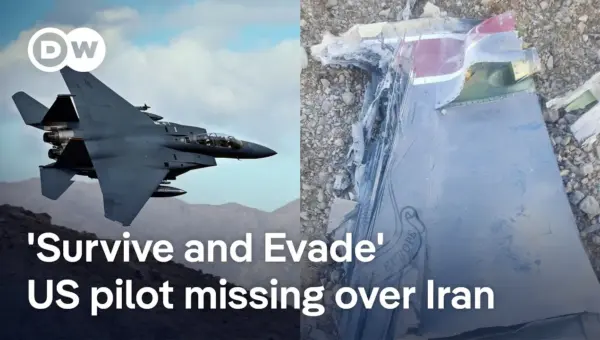
US Pilot Missing After Jet Shot Down Over Iran
A U.S. combat jet reportedly shot down over Iran has left one pilot missing, sparking a complex search and rescue operation. The incident highlights the extreme dangers faced by downed aviators and the high-stakes missions to bring them home. Reports of a bounty on the pilot's head further complicate the situation.