US Military Production Strained by Iran Conflict, Ukraine Aid
The U.S. faces a critical juncture as potential conflict with Iran strains military munitions, impacting vital aid to Ukraine. Experts question the clarity of strategic objectives and the nation's capacity to sustain prolonged engagements.

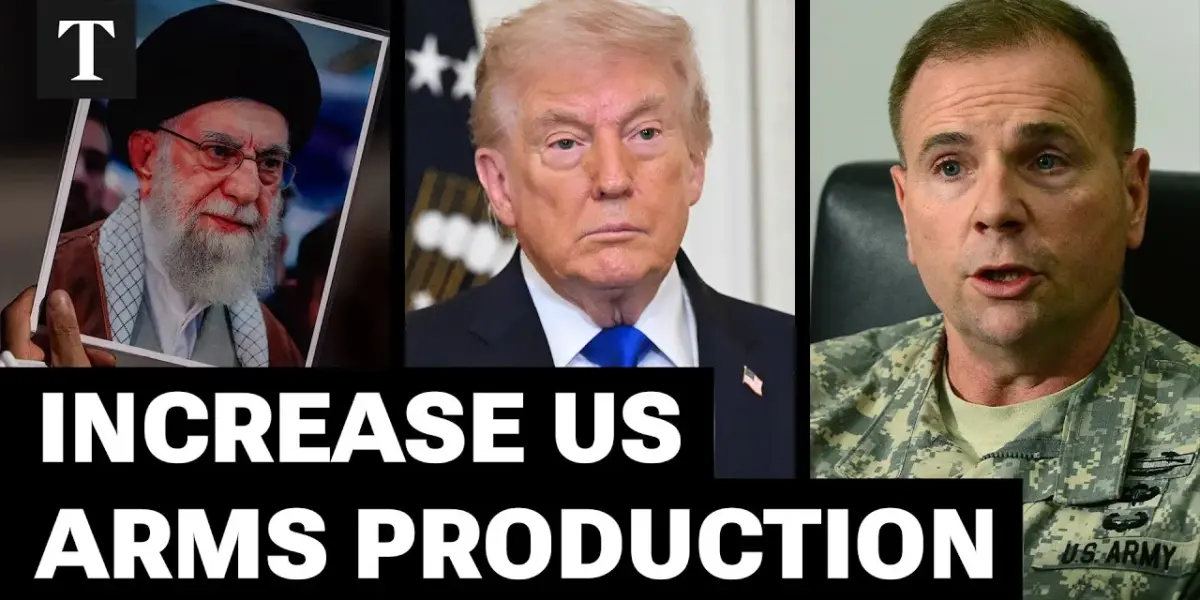
US Faces Munitions Strain Amid Iran Conflict and Ukraine Support
The United States is confronting a complex geopolitical challenge, balancing military operations against Iran with its commitment to supporting Ukraine. The potential for a prolonged conflict with Iran, as suggested by President Trump’s statements, raises significant concerns about the U.S. military’s munitions capacity and the ripple effects on global arms supplies, particularly for Ukraine.
Unclear Strategic Objectives Fuel Debate
Following recent military actions in Iran, a debate has emerged regarding the clarity of the U.S. administration’s strategic objectives. Former Commanding General of the U.S. Army in Europe, Ben Hodges, noted that the administration has not clearly articulated the overarching goal of the operations. “The problem all along has been that the administration has not clearly identified the strategic objective,” Hodges stated, pointing to shifting justifications for the actions and a lack of comprehensive briefings to Congress and the American public. This ambiguity, he suggested, may have contributed to allies’ initial reluctance to offer support.
Questions Surrounding Imminent Threat and International Law
A key point of contention has been whether the U.S. strike was justified by an imminent threat. Hodges expressed skepticism, stating, “I have not seen any compelling evidence in open source or heard it from the White House that would make me believe that there really was an imminent threat.” He highlighted that Congress has historically insisted on consultation before such attacks, and the lack of clear evidence for an impending danger has fueled discussions about the legality of the action under international law. “Certainly a violation of the UN charter about attacking another state when it’s not in the in self-defense. You could make that argument that this was illegal,” Hodges commented, while acknowledging that the administration’s national security strategy suggests they may not feel strictly bound by such international norms.
“I have not seen any compelling evidence in open source or heard it from the White House that would make me believe that there really was an imminent threat.”
Ben Hodges, Former Commanding General of the U.S. Army in Europe
Munitions Capacity and the Ukraine Connection
The potential duration of a conflict with Iran, estimated by President Trump to be several weeks, brings into sharp focus the U.S. military’s stockpile of precision weapons and interceptors. Reporting suggests that military planners have expressed concerns about available quantities. Hodges elaborated on the implications: “There’s been quite a bit of reporting over the last few weeks that the military planners had concerns about how much they have available in terms of precision weapons, Patriot interceptors, those sorts of things.”
This concern extends directly to the ongoing support for Ukraine. If U.S. munitions are significantly depleted by a conflict with Iran, it could create shortages that affect the supply chain for weapons being sent to Ukraine. “Yeah, without a doubt,” Hodges affirmed when asked about a potential knock-on effect. “At some point, of course, the White House will or the Pentagon would say we’re not going to sell anymore here because it’s needed over here.”
Underinvestment in Production Capacity
A critical underlying issue, according to Hodges, is the insufficient urgency shown by successive administrations in increasing the production capacity for essential munitions. He emphasized the complex and time-consuming nature of manufacturing items like Patriot interceptors, Tomahawks, and Hellfires. “Producing Patriot interceptors or tomahawks or hellfires, these kinds of things, these are not hammers that you just, you know, can crank out hundreds a day. Very time-consuming and expensive process,” he explained. Hodges warned that the failure to adequately scale up production is a significant mistake, especially given known increases in global demand, even without considering China’s role.
Broader Implications and Future Outlook
The situation underscores a broader concern about the thoroughness of strategic planning within the U.S. administration. The potential for a protracted conflict, the justification for military action, and the capacity to sustain multiple global commitments simultaneously are all under scrutiny. As the situation evolves, the focus will remain on the administration’s ability to articulate clear objectives, manage its military resources effectively, and maintain the confidence of its allies amidst a complex and volatile international landscape. The long-term implications for global security architectures and the industrial defense base are significant and will require sustained attention.
Source: US Must Increase Military Production To Fight Iran And Still Sell Weapons To Ukraine | Ben Hodges (YouTube)

Related Articles

US Strikes Iran-Linked Targets Amid Escalating Tensions
The U.S. military has released footage of airstrikes on facilities in Iraq and Syria linked to Iran and its affiliated militias. These strikes are a response to repeated attacks on U.S. forces in the region amid escalating Middle East tensions.

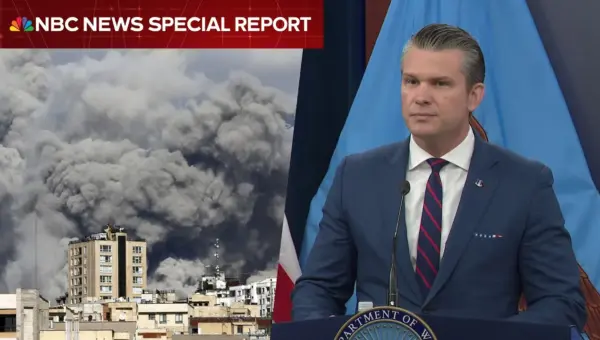
Pentagon Briefs on ‘Operation Epic Fury’ Amid Global Tensions
Pentagon officials held a live briefing today to provide an update on the significant military initiative, 'Operation Epic Fury.' The operation signals the U.S.'s commitment to global security amidst rising international tensions. Details remain undisclosed, but the initiative is expected to play a key role in deterrence and regional stability.


US Details ‘Epic Fury’ Operation Against Iran Threats
U.S. Defense Secretary Pete Hegseth and General Dan Caine detailed 'Operation Epic Fury,' a new military initiative designed to counter threats from Iran. The operation aims to deter aggression through an enhanced U.S. military presence and coordinated exercises with regional partners.