US Military Mounts Daring Rescue of Airman Behind Enemy Lines
U.S. special forces conducted a high-risk rescue mission to save an airman who ejected over hostile territory in Iran. The operation, involving hundreds of troops and dozens of aircraft, successfully retrieved the airman who had evaded capture for nearly two days, reinforcing the military's 'no man left behind' principle.

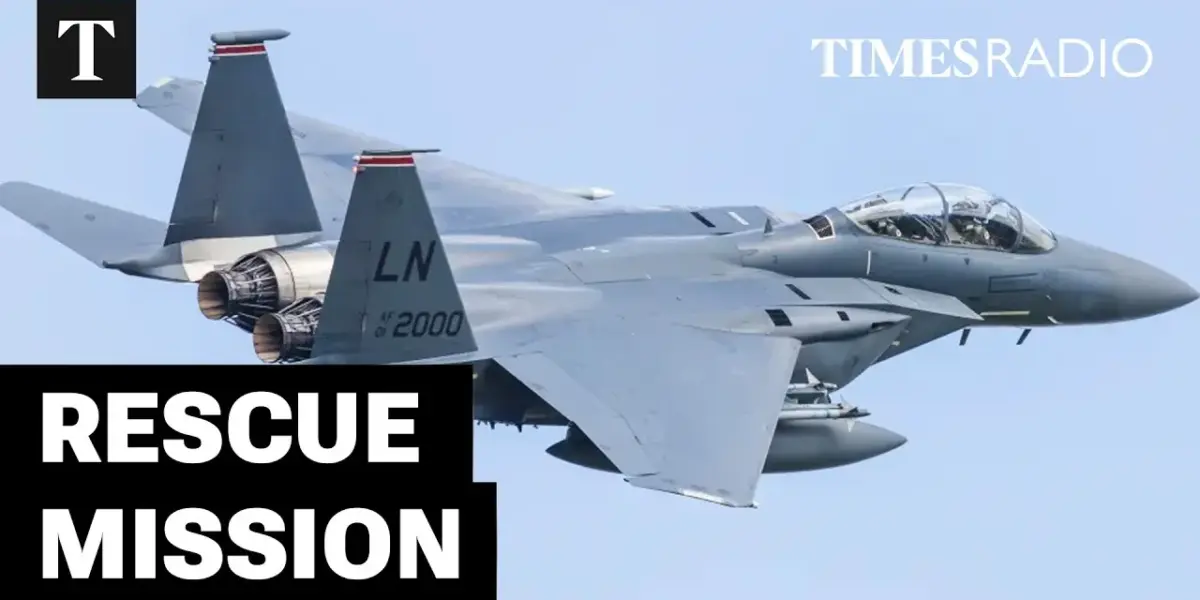
US Military Mounts Daring Rescue of Airman Behind Enemy Lines
In a dramatic operation that underscores the U.S. military’s commitment to its personnel, hundreds of special forces, supported by dozens of fighter jets and helicopters, executed a high-stakes rescue of an aircrew member who ejected over hostile territory. The mission, which saw a transport plane and two helicopters destroyed, successfully retrieved the airman who had been evading capture for nearly two days. This daring operation highlights the military’s long-standing principle of leaving no one behind, a tradition dating back to the mid-18th century.
The ‘No Man Left Behind’ Principle
The core motivation behind such extensive rescue efforts is the deeply ingrained military principle of “no man left behind.” Major General Tim Cross, a retired British Army officer and military logistics expert, explained that this principle offers a significant psychological boost to service members. However, it’s more than just morale; it’s a critical strategic consideration. “Iran could have used this man for propaganda if he’d been captured,” Cross stated, drawing a parallel to a past incident where an airman was paraded on television by Iraqi forces, a clear violation of international conventions. The fear was that Iran would have done the same, turning a downed airman into a propaganda asset.
Lessons from Past Operations
Military planners were acutely aware of the risks involved, particularly recalling the failed 1979 rescue attempt of embassy staff in Iran. That mission ended tragically with two helicopters crashing, serving as a stark reminder of how such operations can go terribly wrong. “When you plan these things, you have to plan on worst-case scenarios,” General Cross emphasized. “You have to put in sufficient combat power to ensure that you can get yourself out of this if you run into trouble.” The success of this recent mission demonstrated that adequate resources were indeed deployed to mitigate potential disasters.
Air Supremacy and Monitoring
The operation began with the U.S. military establishing a significant level of control over the airspace, a concept known as air supremacy. This allows forces to operate with greater freedom, though complete control is never guaranteed. “There’s always the danger of shoulder-launched anti-aircraft missiles and of course small arms fire,” General Cross noted. Monitoring all air traffic is handled through an air operations center. In this case, the airman ejected and was injured, possibly from the ejection itself, which can be a painful and damaging process. He managed to find refuge in a mountain crevice while Iranian forces, using helicopters and drones, searched for him. His locator beacon was crucial in pinpointing his position for the rescue team.
Information Flow and Media Management
The timing and management of information surrounding the rescue were complex. President Trump mentioned that the initial rescue of the pilot was downplayed to avoid alerting Iranian forces to the presence of a second crew member. General Cross acknowledged the challenges of operating in today’s media environment, where instant communication is the norm. “The reality is that’s not the world we live in,” he said, referring to the ideal scenario of a quiet, successful operation followed by a public announcement. He stressed the importance of strategic communication and psychological operations for any military headquarters. “My first tour in the Gulf campaign, you just could not communicate with anybody,” he recalled, contrasting it with today’s interconnected world. “The media will latch on to these things for understandable reasons… So how you manage your communications… is a big issue.”
A Victory and a Reinforcement of Values
The successful recovery of the airman is seen as a significant victory for the U.S. military, reinforcing its capabilities and its commitment to its personnel. It also provided a boost to public confidence in the military’s effectiveness. The operation served as a powerful, real-world example of the “no man left behind” ethos in action. As General Cross put it, “It’s great news that he’s got out and we should celebrate that fact.” The successful mission, despite the loss of aircraft, ultimately affirmed the military’s resolve and competence in critical situations.
Looking Ahead
The successful rescue is likely to be studied for its tactical execution and lessons learned in information management. As geopolitical tensions remain, the U.S. military’s ability to conduct complex, high-risk operations will continue to be a critical component of its global posture. The emphasis on planning for worst-case scenarios and ensuring sufficient combat power will remain paramount in future missions, alongside the ongoing challenge of managing public and media attention in an increasingly connected world.
Source: Inside The US Military Operation To Rescue Missing Airman From Iran (YouTube)

Related Articles


Trump Threatens Iran’s Infrastructure in Hormuz Standoff
President Trump has threatened to cripple Iran's infrastructure, including bridges and its power grid, if it continues to harass shipping in the Strait of Hormuz. Former Congressman Bob McEwen explained this strategy aims to force Iran to negotiate by severely damaging its operational capacity. The discussion also addressed the potential for such actions to be considered war crimes, with McEwen distinguishing between infrastructure attacks and the targeting of civilians.


Trump’s Rhetoric and Health Concerns Fuel Global Unease
Recent public appearances by Donald Trump have fueled concerns about his health and the aggressive nature of his rhetoric. His threats towards Iran, coupled with puzzling public statements and a focus on unusual topics, raise significant questions about his fitness for office and the potential impact on global stability and domestic policy.


Trump’s Iran Threat Looms as Artemis II Reaches New Space Heights
Former President Trump issued a stern warning to Iran regarding a potential deal, while the Artemis II mission achieved a new distance record in space. The Education Department also announced it is rescinding Title IX agreements related to gender identity policies.