US Military Might Shines in Rescue, But Iran Strait Threat Lingers
A former US Navy captain analyzes a successful American airman rescue, showcasing US military might. However, he warns that Iran's threats to control the Strait of Hormuz remain its key leverage, posing a persistent challenge to global stability and energy markets.

US Military Power on Full Display
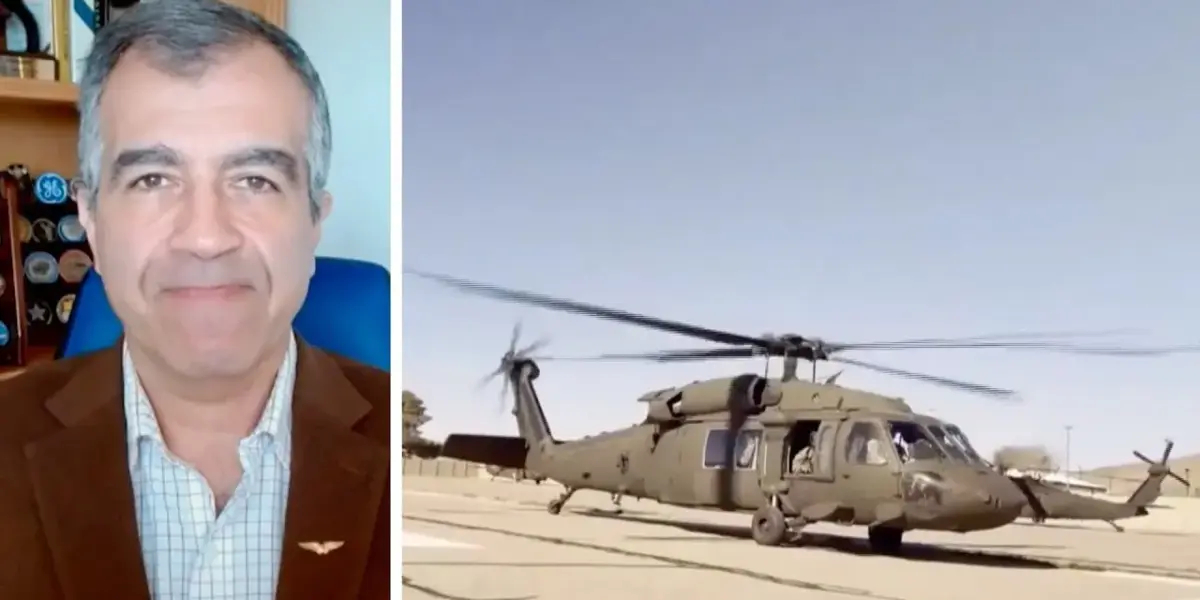
The United States military recently conducted a daring rescue mission, saving an American airman behind enemy lines. Retired US Navy Captain Armen Kurdian highlighted this operation as proof of America’s unmatched logistical and tactical abilities. He pointed out that even close allies like France and Britain have significantly reduced naval forces, making such operations impossible for them.
Kurdian explained that while the cost of defense spending is often debated, massive investment during peacetime is crucial. This allows the US to possess the necessary capabilities for brief, high-stakes moments. The rescue involved coordinating numerous assets, from special operations forces to air refueling and electronic warfare, all while ensuring secure communications and making split-second decisions. This complex effort avoided the mistakes of past rescue attempts, like the failed Desert One mission during the Iran hostage crisis.
The Ethos of ‘No One Left Behind’
Beyond just capability, the rescue mission also showcased the core values of the US military. Kurdian compared it to civilian search and rescue efforts, where the primary focus is saving lives. In a military context, this is amplified by the inherent risks and the presence of hostile forces. The training and dedication of hundreds of thousands of service members, supported by advanced technology and intelligence efforts, made the operation a success.
He noted that even though Iran has faced setbacks, it can still pose threats. The military understands these risks but proceeds with confidence, knowing that various units are working together to protect them. The successful operation likely caused significant embarrassment for the Iranian regime.
Strait of Hormuz: A High-Stakes Chess Game
The conversation then shifted to the ongoing tensions surrounding the Strait of Hormuz, a vital waterway for global oil transport. President Trump has set a firm deadline for Iran to comply with certain demands, threatening severe action against Iranian infrastructure if they fail to do so.
Kurdian expressed skepticism about the effectiveness of targeting Iranian power plants and bridges to force Iran’s hand in opening the Strait. He suggested that focusing on targets directly related to Iran’s ability to threaten shipping, such as missiles and boats used for attacks, would be more strategic. This approach aims to directly address the threat to the Strait rather than imposing general economic pressure.
Iran’s Motivations and Strategy
When asked about Iran’s willingness to negotiate, Kurdian suggested that the Iranian regime’s primary goal is survival and the continuation of its Islamic Revolution. He described the leadership as fanatics driven by a mix of ideology and irrationality. Their aim is to maintain influence through proxy groups like Hezbollah and Hamas, and to continue their regional activities.
A significant part of Iran’s strategy, according to Kurdian, might be to simply wait out President Trump’s term. They observe the political climate, including potential opposition within the US Congress to prolonged military engagement or further financial support. Patience has served Iran and other nations, like China in the Western Pacific, in the past.
The Strait of Hormuz: Iran’s Last Leverage
Iran has repeatedly threatened to block the Strait of Hormuz, a threat Kurdian believes is a significant point of leverage for them. While Iran would also suffer economically from such a blockade, they possess the ability to disrupt global shipping for an extended period. This could involve not just attacking individual tankers but potentially causing environmental disasters that physically block the waterway.
Historically, the US and its allies could have invested more in infrastructure, like pipelines, to reduce reliance on the Strait. Building pipelines from the eastern coasts of Saudi Arabia and other Gulf nations to the Red Sea would offer a safer alternative. However, such projects take years to complete. Kurdian stressed the importance of keeping the Strait open and suggested that the US should allocate more resources to counter Iran’s missile capabilities and punish them for attempting to control this vital passage.
Potential Endings to the Conflict
Looking ahead, Kurdian outlined several potential ways the current conflict or tensions could conclude:
- Iran runs out of viable targets to attack or retaliate against.
- Iran capitulates to the demands made upon it.
- An internal coup occurs within Iran, bringing more moderate elements to power.
- President Trump declares a unilateral victory, having achieved certain objectives and weakened Iran’s influence.
Regardless of the specific path, Kurdian noted that there is increasing pressure, both internationally and domestically within the US, to find a resolution. Public appetite for a prolonged conflict is waning, especially given economic concerns like rising gas prices. President Trump also operates under his own timelines, adding another layer of pressure to resolve the situation.
Why This Matters
The successful rescue mission highlights the incredible power and precision of the US military, a testament to years of investment and training. However, the persistent threat posed by Iran regarding the Strait of Hormuz underscores the complex geopolitical challenges in the Middle East. The Strait’s critical role in global energy markets means any disruption has far-reaching economic consequences worldwide.
Iran’s strategy of leveraging its position in the Strait appears to be its primary means of asserting influence and resisting external pressure. Understanding Iran’s motivations, whether driven by ideology, a desire for regime survival, or a calculated waiting game, is key to navigating this volatile situation. The potential for miscalculation on either side remains high, making de-escalation and strategic diplomacy paramount, even as military capabilities are showcased.
Implications and Future Outlook
The situation suggests a continued period of high tension in the Persian Gulf. Iran’s ability to disrupt shipping, even if it harms itself, means the threat to the Strait of Hormuz remains. The US will likely continue to prioritize keeping the Strait open, potentially increasing its military presence or focusing on degrading Iran’s capabilities to do so.
The effectiveness of sanctions and diplomatic pressure versus military threats remains a central question. Iran’s apparent willingness to endure significant pressure while seeking to outlast political adversaries suggests a long-term strategic approach. For the US and its allies, finding a stable resolution that ensures freedom of navigation without escalating into a wider conflict will be a delicate balancing act.
The reliance on the Strait of Hormuz also points to a need for long-term strategic planning, such as developing alternative energy transport routes. While costly and time-consuming, such measures could reduce the leverage Iran holds over the global economy.
Source: 'That’s All They Have Left': Retired US Navy Captain Says of Iran’s Grip of Hormuz Strait (YouTube)

Related Articles
US Strikes Iran’s ‘Mosquito Fleet’ to Secure Oil Lanes
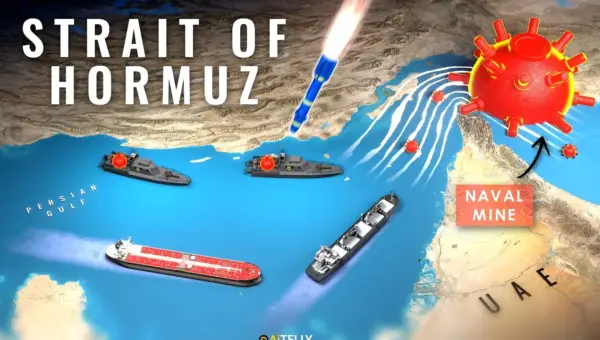
Iran's use of naval mines and fast attack boats in the Strait of Hormuz prompted a decisive US response. The US employed a preemptive strategy, striking mine-laying ships and storage facilities with precision-guided missiles and bombs.


US Replicates Iran’s Deadly Drone, But Makes It Smarter
The US has reverse-engineered Iran's Shahed drone, creating its own Lucas version. While externally similar, the Lucas boasts advanced terrain-matching navigation, allowing it to strike with pinpoint accuracy even without GPS. This highlights a trend towards affordable, high-tech drone warfare.
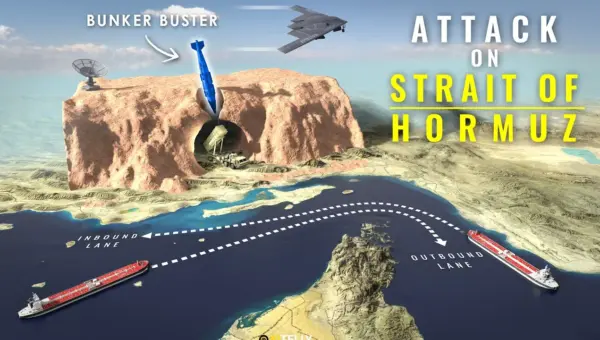
Iran’s Strait of Hormuz Trap: How the US Fights Back
Iran's strategy to control the Strait of Hormuz involves using islands as bases for anti-ship missiles and launching swarm attacks with small boats. The US counters with advanced defense systems, surveillance drones, and powerful bunker-buster bombs, highlighting the ongoing tension in this vital global shipping lane.