US Marines Deploy to Iran as Tensions Escalate in Strait of Hormuz
US Marines have been deployed to the Middle East in a significant escalation aimed at countering Iranian threats to shipping in the Strait of Hormuz. The move comes as allies face pressure to bolster naval escorts, highlighting the limited capacity of the Royal Navy and the complex geopolitical challenges ahead.

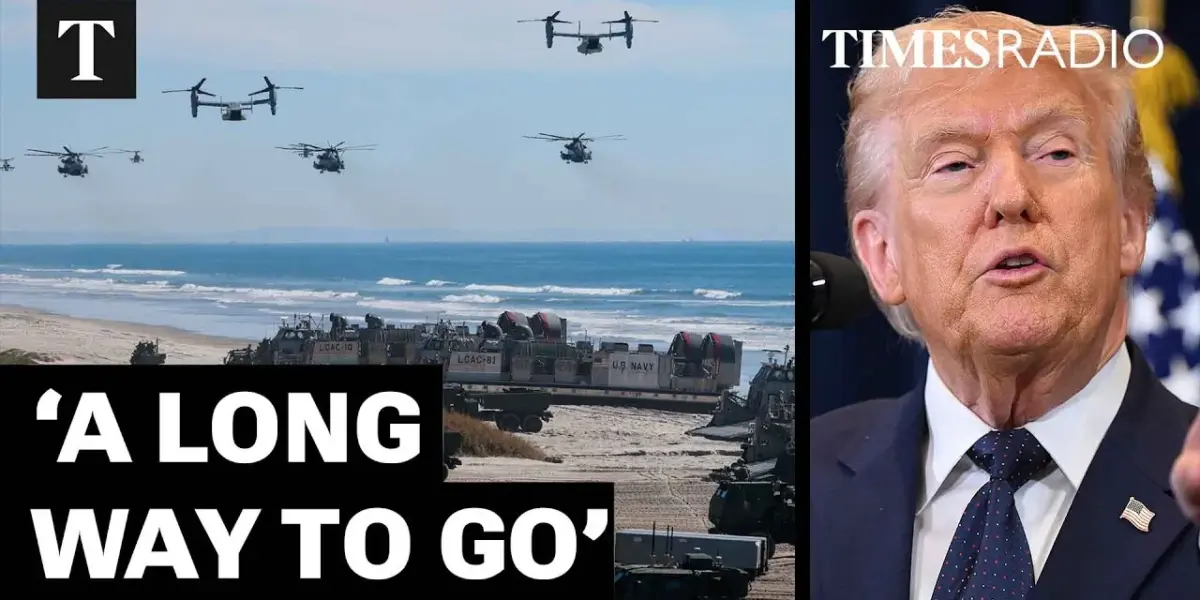
US Marines Deploy to Iran as Tensions Escalate in Strait of Hormuz
In a significant escalation of Middle East tensions, the United States has deployed approximately 2,500 Marines to the region, a move analysts suggest is aimed at directly confronting Iranian forces responsible for attacking commercial shipping. The deployment comes amid ongoing threats to global oil supplies transiting the Strait of Hormuz and increasing pressure on allies, including the UK, to bolster naval escorts for tankers and cargo vessels.
Naval Operations and Allied Pressures
Speaking on the unfolding situation, former defense editor of The Times, Mike Evans, indicated that the deployment of Marines signals a more assertive U.S. strategy. “I think if you send Marines, they’re there to do a job and that will be to try and clear all these coastal lines and little islands from where the IRGC are launching these little speedboats and drones etc. which are attacking the tankers every single day,” Evans stated. He emphasized that without a successful sweep of these Iranian Revolutionary Guard Corps (IRGC) units, the attacks on shipping are likely to persist.
The U.S. initiative follows a call from former President Donald Trump for allies, including the UK, to assist in escorting convoys through the contested waters. However, the response from European allies has been cautious. UK Labour leader Keir Starmer has reiterated a stance against deeper involvement in the conflict, advocating for de-escalation talks between the U.S. and Iran. Evans noted the practical difficulties for the UK in contributing significant naval assets, stating, “we are being dragged into the war in the sense that we are playing an active defensive role in trying to shoot down Iranian inter missiles and drones etc. So, we are engaged in the war. We can’t escape it.”
Royal Navy’s Limited Capacity
Concerns have been raised about the current state of the Royal Navy, which is reportedly at its smallest in terms of ship numbers since the English Civil War. Evans highlighted the logistical challenge, quoting a former First Sea Lord: “you can’t have one warship in two places at the same time.” While HMS Dragon is en route to Cyprus to play a defensive role, its capacity is limited. Diverting it for convoy escort duties would compromise its ability to defend other regional assets, illustrating the strain on naval resources.
Furthermore, a significant portion of the Royal Navy’s fleet is currently engaged in Arctic warfare exercises, a strategic focus aligned with the government’s defense review prioritizing Russia and the Arctic region over the Middle East. The deployment of the carrier HMS Prince of Wales, accompanied by a destroyer and frigate, to the Arctic underscores this strategic pivot, leaving limited assets available for Middle East operations beyond defensive measures.
Strategic Realignments and Economic Impact
The situation presents a complex challenge for the current UK Prime Minister, who is focused on domestic issues like the cost of living. Evans pointed out the interconnectedness of the Gulf crisis and the British economy: “if the Strait of Hormuz remains choked and he can’t and oil tankers can’t get through that will have a huge impact is already having an impact on the cost of living.” Therefore, a passive approach to the Middle East conflict is not a viable option, despite the government’s commitment to supporting Ukraine.
There is a palpable concern within the British defense establishment that the U.S. may be losing focus on the war in Ukraine, with former President Trump reportedly pushing for Europe to assume a greater role. Evans suggested that Trump’s primary focus appears to be the Middle East, potentially diminishing attention on the conflict in Eastern Europe.
The IRGC Factor and Future Outlook
A central concern for defense analysts is the role of the IRGC, described as a major player in Iran’s government, politics, and security apparatus. Evans warned that the IRGC seems to have been granted significant latitude to act against perceived threats, stating, “They are the big players and they are being given cart launch to do whatever they think needs to be done to protect Iran and to attack tankers and cargo vessels and any UK or US bases they think in the Gulf and that’s what they’re doing.”
The successful interdiction of IRGC operations in the coastal areas and islands from which attacks are launched is seen as crucial. “Unless they can sweep that area of all these IRGC units, this is going to carry on for weeks and weeks,” Evans asserted. The effectiveness of the Marine deployment in achieving this objective will be a critical factor in de-escalating the maritime threat.
Lebanon’s Precarious Position
The discussion also touched upon the escalating situation in Lebanon, which is facing a worsening humanitarian crisis amidst Israeli military actions targeting Hezbollah. Evans described the political landscape in Lebanon as inherently complex, with Hezbollah operating as a powerful entity within the government structure but maintaining de facto independence. “They are a state within a state as people say and that’s true and therefore they have their own military force. They have their own security. They have their own social welfare system,” he explained.
The Lebanese government’s official stance against Hezbollah’s Iranian backing and its military actions creates an untenable situation, especially given Hezbollah’s significant parliamentary and ministerial presence. Evans concluded that Hezbollah’s primary loyalties lie with Iran, suggesting their interest in Lebanon’s national prosperity is secondary to their strategic alignment against Israel and their reliance on Iranian support for arms and finance.
Looking Ahead
The deployment of U.S. Marines marks a critical juncture in the escalating conflict in the Strait of Hormuz. All eyes will be on the effectiveness of this operation in neutralizing IRGC threats and securing vital shipping lanes. The international community, particularly allies like the UK, will continue to navigate the delicate balance between supporting U.S. efforts, managing domestic priorities, and avoiding broader military entanglement, all while monitoring the cascading geopolitical and economic consequences.
Source: US Marines Have Been Sent To Iran ‘To Do A Job’ | Mike Evans (YouTube)

Related Articles

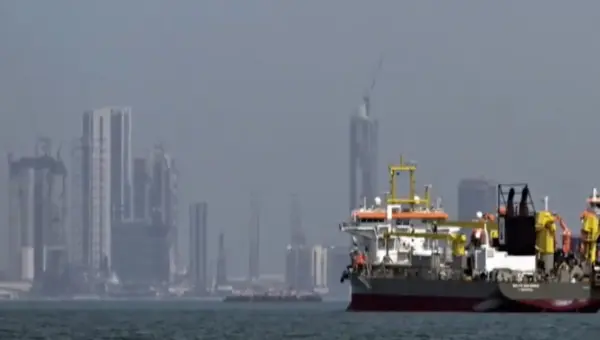
Iran Blocks China Ships, Exposing Beijing’s Weak Grip
Iran's recent decision to block Chinese ships at the Strait of Hormuz is exposing the limits of Beijing's influence in the Middle East. This action is causing delays and cancellations for Chinese manufacturers, turning a perceived geopolitical win into an economic strain.
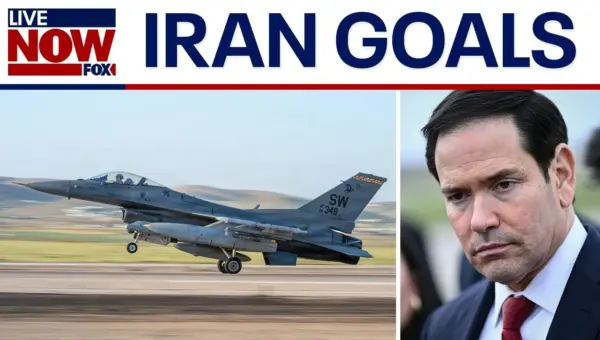
Rubio: US Can Achieve Iran War Goals Without Troops
Senator Marco Rubio outlined a strategy to counter Iran without deploying U.S. ground troops, focusing on weakening the regime and enhancing maritime security. He also criticized Cuba's economic system and expressed concerns about West Bank violence.


Israel Escalates Iran Strikes, Warns of Wider War
Israel has launched significant strikes inside Iran following continued missile fire, warning of further escalation. The conflict risks wider regional instability and economic disruption, especially concerning the Strait of Hormuz.