US Launches “Operation Epic Fury” Against Iran
The United States has launched "Operation Epic Fury" against Iran, targeting its ballistic missile capabilities in a major escalation of regional conflict. Officials cite preventing Iran's nuclear ambitions and terror sponsorship as key drivers, but uncertainty looms over the conflict's duration and the potential deployment of ground troops.


US Launches “Operation Epic Fury” Against Iran Amid Escalating Regional Conflict
In a dramatic escalation of Middle Eastern tensions, the United States has launched a significant military operation, dubbed “Operation Epic Fury,” targeting Iran’s ballistic missile capabilities. The strikes, conducted in conjunction with Israel, began early Saturday morning and have already resulted in the deaths of senior Iranian leaders and at least six U.S. service members. The operation, which Secretary of State Marco Rubio stated aims to “destroy Iran’s ballistic missile capabilities,” has plunged the region into a full-blown war, raising critical questions about the duration of U.S. involvement and the potential need for ground troops.
Administration’s Rationale: Preventing Nuclear Ambitions and Terror Sponsorship
Administration officials, including Secretary of State Rubio and Defense Secretary Pete Hegseth, have repeatedly emphasized the strategic imperative behind the strikes. Secretary Rubio explained that Iran’s pursuit of ballistic missile capabilities serves as a “shield” to protect its nuclear program and ambitions. “That is what they were trying to do, is put themselves in a place of immunity, where the damage they could inflict on the region would be so high that no one can do anything about their nuclear program or their nuclear ambitions,” Rubio stated.
President Trump, speaking to CNN, indicated that the initial strikes were merely a prelude to more significant action. “We haven’t even started hitting Iran hard. The biggest wave hasn’t even happened. The big one is coming soon,” Trump said. He outlined the administration’s military objectives: destroying Iran’s missile capabilities and navy, preventing Iran from obtaining nuclear weapons, and ending its support for terrorist organizations.
Uncertainty Over Duration and Ground Troops
While the administration projects a timeline of 4 to 5 weeks for key objectives, officials acknowledge the inherent unpredictability of military operations. Defense Secretary Hegseth assured that the U.S. is not engaged in an “endless war” and that ambitions are “realistic, scoped to our interests and the defense of our people and our allies.” However, both Hegseth and President Trump have stopped short of ruling out the possibility of U.S. boots on the ground, with Trump stating, “I don’t say it. I say probably don’t need them. Or if they were necessary.” This contrasts with previous presidential rhetoric about avoiding ground deployments.
The urgency behind the operation, according to Secretary Rubio, stemmed from intelligence suggesting an “imminent threat” to U.S. interests and personnel in the region, potentially involving mass casualties in retaliation for an anticipated Israeli strike. “That is what led the president ultimately to hit the green light and say this needed to be done in a more preemptive fashion because it was unclear,” Rubio elaborated.
Regional Impact and International Concerns
The conflict has already reverberated across the Middle East, with Iran carrying out retaliatory strikes against targets in Qatar, Dubai, Israel, and Bahrain. U.S. cities and federal law enforcement have heightened security measures amid concerns of potential terrorist acts. Notably, a recent shooting in Austin, Texas, is being investigated as a potential act of terrorism, with the gunman reportedly displaying symbols associated with Iran.
Internationally, the head of the International Atomic Energy Agency (IAEA), Rafael Grossi, indicated that the strikes thus far have not targeted Iran’s nuclear facilities. This observation adds a layer of complexity to the administration’s stated goals and the broader implications for regional stability and global non-proliferation efforts.
Economic Fallout: Oil Prices Surge, Markets Stabilize
The immediate economic impact has been a significant jump in oil prices, exceeding 8%, due to concerns over potential disruptions to shipping lanes, particularly the Strait of Hormuz. A senior commander in Iran’s Islamic Revolutionary Guard Corps warned that any vessel attempting to traverse the strait would be targeted. Despite the oil price surge, Wall Street staged a partial comeback, with major indices closing mostly flat on the first day of trading since the war began, suggesting traders may be factoring in existing volatility.
Gas prices have already begun to tick upward, with further increases anticipated if the Strait of Hormuz remains threatened. The economic ramifications are expected to be closely monitored as the conflict unfolds.
Looking Ahead: A Protracted Conflict or Swift Resolution?
As U.S. officials brief congressional leaders, the nation watches closely for further developments. The key questions remain: How long will “Operation Epic Fury” last? Will U.S. ground troops be deployed? And can the administration achieve its objectives without triggering a wider, more protracted regional war? The coming days and weeks will be critical in determining the trajectory of this escalating conflict and its far-reaching consequences.
Source: Meet the Press NOW — March 2 (YouTube)

Related Articles


Iranians Rejoice as US Strikes Target Regime, Not Nation
In a significant development in March 2026, the U.S. and Israel launched joint military strikes in Iran, reportedly assassinating Supreme Leader Ali Khamenei. While condemned by some, the operation has ignited widespread celebrations within Iran, with many citizens viewing it as a blow against the oppressive regime rather than their nation.

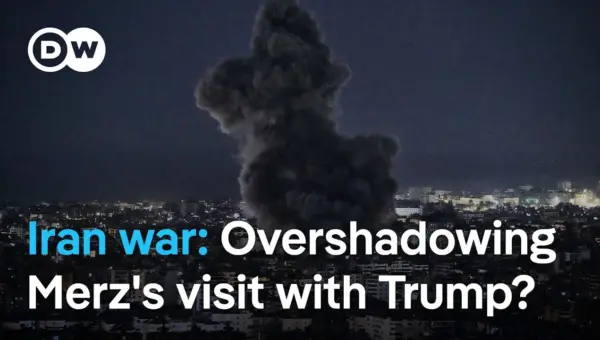
Germany Weighs Mideast Conflict Amid Trump-Merz White House Summit
German Chancellor Friedrich Merz meets President Trump in Washington amid escalating U.S.-Israeli military actions in Iran. The talks will focus on regional security, Germany's cautious stance, and potential implications for European stability and trade.

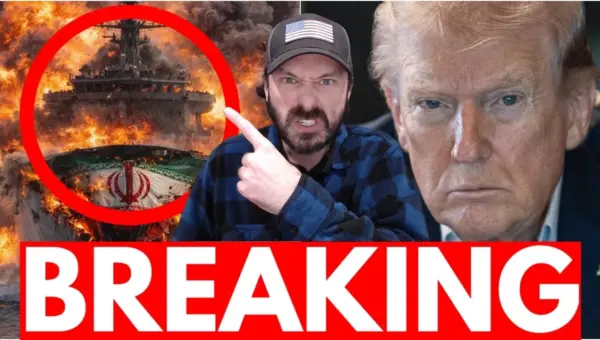
US Forces Decimate Iran’s Navy, Strike Deep Within
The United States military has announced the sinking of Iran's key drone carrier and released footage of its navy being obliterated. Ongoing air and missile strikes, including deep strikes into Iran, signal a significant escalation in regional conflict.