US Launches Iran Operation Alone as Allies Distance Themselves
The United States has launched a major military operation in Iran, "Operation Epic Fury," without the backing of NATO allies, who have publicly distanced themselves. Critics argue this unilateral action highlights America's growing international isolation and economic instability, while ordinary citizens face increasing domestic hardship.

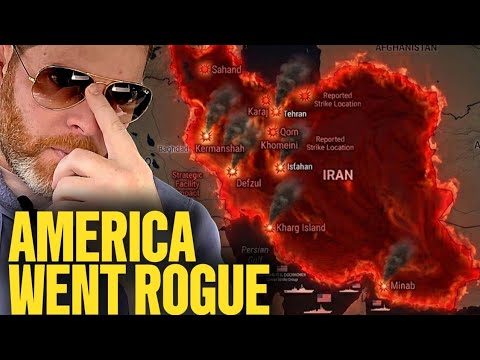
US Initiates Major Middle East Operation Amidst Global Isolation
In a move that has reportedly left the United States acting as a rogue nation on the global stage, a joint military operation with Israel, dubbed “Operation Epic Fury,” has been launched against Iran. This significant escalation in the Middle East marks a critical juncture, as traditional allies, including NATO members, have publicly distanced themselves from the U.S. action, signaling a profound shift in international alliances and a departure from historical precedent in U.S.-led military engagements.
Allies Refuse Support, Citing U.S. Economic and Political Instability
For the first time in recent history, the United States is reportedly entering a major conflict without the explicit backing of NATO. A joint statement from the United Kingdom, France, and Germany indicates a clear refusal to participate, with these key allies “washing their hands” of the operation. Sources suggest that NATO as an organization is not involved offensively, confining its activities to defensive patrols to mitigate potential spillover. This collective withdrawal of support is attributed by critics to a perception of the United States as a nation burdened by massive debt, unable to address its own domestic challenges, and increasingly isolated on the world stage.
“Our closest allies look at the United States now and see it for what it truly is. A nation under massive debt. A nation that can’t fix itself. a nation where its people are struggling to just make ends meet. It sees a nation begging for a new war and it slowly backs out the front door.”
Economic Hardship at Home Contrasted with War Funding
The timing of this military escalation has drawn sharp criticism, particularly in light of the economic struggles faced by ordinary Americans. The narrative emerging from Ohio highlights concerns over the rising cost of basic necessities, such as diapers and pet food, while billions of dollars are allocated to fund extensive military operations in the Middle East. This stark contrast is being characterized as a “sociopathic grift,” where funds unavailable for domestic infrastructure, like road repairs, are readily deployed for overseas conflicts. The recent allocation of an additional $500 billion to the defense department is cited as evidence of where these funds are directed, fueling accusations that the war serves as a distraction from pressing domestic economic issues.
Details of the Conflict and Iranian Retaliation
The operation, which targeted Iranian facilities including the Kani compound, military installations, and nuclear sites, reportedly resulted in significant collateral damage. A particularly tragic outcome cited is the hitting of an elementary school, resulting in the deaths of 57 young girls. In response, Iran is reported to have retaliated by striking bases in the UAE, Qatar, and Bahrain, including a facility previously visited by the speaker. The lack of NATO participation is seen as concrete evidence of a growing “hedge America” movement, underscoring the nation’s increasing international isolation.
Geopolitical Consequences and Financial Burden on Americans
The U.S. administration has framed the operation as a necessary response to an “imminent threat” from Iran, referencing concerns about the development of intercontinental missiles capable of delivering nuclear weapons to American soil. However, critics argue that this justification has been a long-standing talking point used for decades to justify action against Iran. The broader implication is that this conflict will disproportionately fall on the shoulders of the American people, who will not only face the potential loss of life through military service but also bear the economic brunt through increased defense spending and the impact on international markets. Tariffs are also mentioned as a burden largely passed on to American consumers, further exacerbating economic pressures.
The Military-Industrial Complex and Main Street vs. Wall Street
A central theme of the critique is the benefit derived by the military-industrial complex, defense contractors, and Wall Street from such conflicts, while “Main Street” is left to suffer. The war is framed as an “economic bonanza” for these sectors at the expense of civilian casualties and the economic well-being of the average American. The narrative suggests that the fear generated by such conflicts is deliberately cultivated to justify military action and distract from economic realities, such as the inability of younger generations to afford homes or the burden of tariffs on everyday citizens.
Global Market Impacts and a Nation in “Delusion”
The conflict is expected to have significant repercussions on global markets, particularly the oil market. Concerns are raised about the potential closure of the Strait of Hormuz, which could severely disrupt global oil supply and lead to a substantial decline in the global standard of living. The broader commentary suggests that the U.S. has become a “rogue actor” and a “mad nation,” quarantined by the world. The perceived ignorance of the American public, who may be unaware of or indifferent to these unfolding events due to a focus on daily life and entertainment, is also highlighted as a critical factor enabling these actions. This detachment is described as a “bubble of delusion” that allows “atrocities to continue.”
A “Morally Bankrupt” Nation and the End of Empire
The current U.S. administration’s stated commitment to peace is contrasted with its actions in Iran, which are described as performing “the exact same atrocities” seen in other regional conflicts. The credibility of the U.S. on the global stage is questioned, with the nation being labeled “morally bankrupt.” The speaker expresses a personal inability to condone the government’s actions or the public’s apparent indifference, even considering leaving the country. The argument is made that the era of American global dominance and unilateral action is over, with the “Monroe Doctrine dead.” The piece concludes with a somber reflection on the potential consequences for the American people, who may ultimately bear the heaviest burden for the nation’s foreign policy decisions.
Looking Ahead: The Cost of Isolation
As the conflict in the Middle East unfolds, the world will be watching closely to see the extent of global repercussions, particularly on energy markets and international stability. The United States faces the challenge of navigating this period of perceived isolation and the economic fallout of its unilateral actions. The response of other global powers and the internal reaction of the American populace to the escalating costs, both human and financial, will be critical in shaping the future trajectory of U.S. foreign policy and its standing in the world.
Source: America Just Went Rogue (And NATO Walked Away) (YouTube)

Related Articles

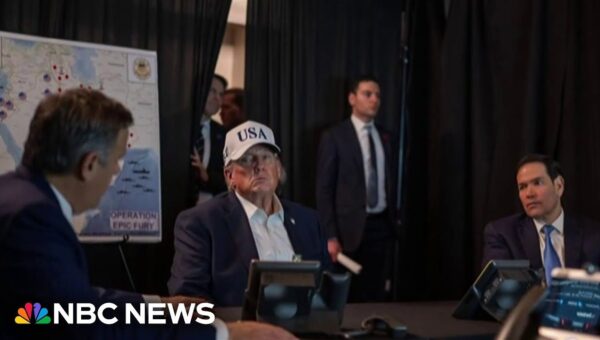
Trump: Iran Strikes Ahead of Schedule, Expects ‘Great Deal for World’
Three U.S. service members have been killed amid escalating conflict with Iran, President Trump confirmed. He stated that strikes are ahead of schedule, with senior Iranian leaders killed, and expressed optimism for a "great deal for the world" despite ongoing talks with Iranian officials.

Trump’s Putin Stance: US Strategy and Global Implications
Analysis suggests Donald Trump's approach to the Ukraine war involves pressuring Kyiv, but US involvement is crucial for resolution. China's influence and the 'MAGA' agenda's geopolitical implications are key factors.


US Strikes Iran: Mounk and Fukuyama Discuss Unpredictable Conflict
Leading political scientists Yascha Mounk and Francis Fukuyama analyze the recent US strikes on Iran, warning of unpredictable outcomes and internal instability. They question the objectives of the "war of choice" and its potential to destabilize the region, while also discussing the shifting global perceptions of Israel.