US Launches Humans Back to Moon’s Orbit
NASA's Artemis II mission has launched four astronauts on a 10-day journey to the Moon's orbit, marking the first crewed trip since 1972. This historic mission tests crucial spacecraft systems and human endurance in deep space, paving the way for future lunar landings and potential Mars missions.

US Launches Humans Back to Moon’s Orbit
NASA’s Artemis II mission has successfully launched four astronauts into space, marking the first crewed trip to the Moon’s vicinity since 1972. This 10-day mission is a critical step in America’s ambitious plan to return humans to the lunar surface and eventually send astronauts to Mars.
A Historic Journey Begins
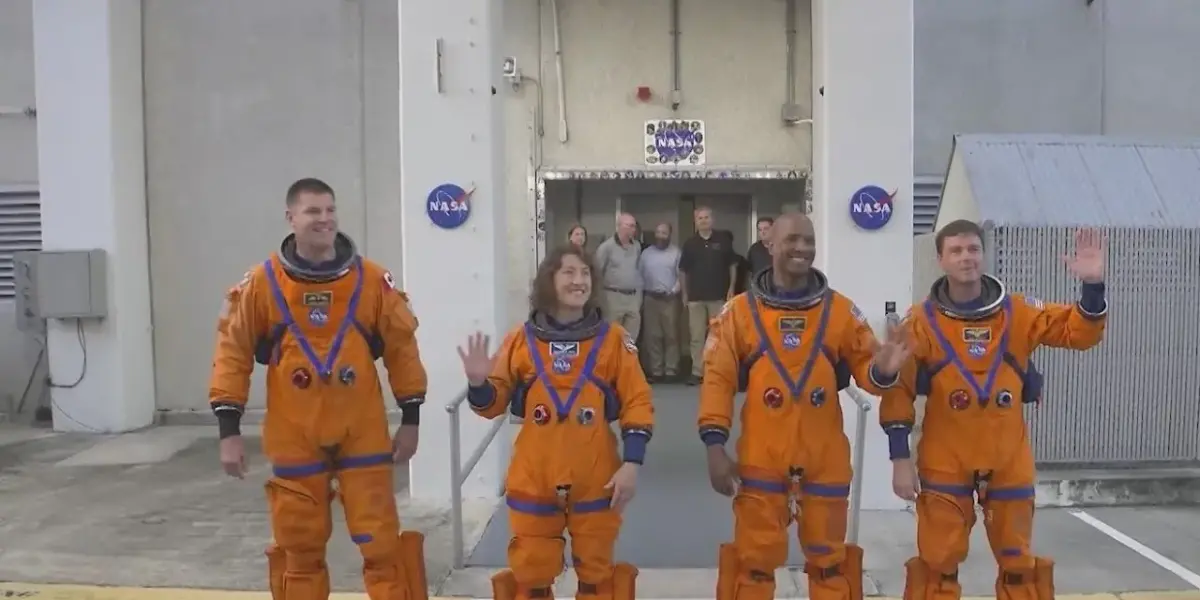
The Artemis II crew, including Commander Reid Wiseman, Victor Glover (the first person of color on a lunar mission), Christina Koch (the first woman), and Jeremy Hansen from Canada (the first Canadian), blasted off last night. They are currently performing system checks and preparing for important engine burns as they travel towards the Moon. This journey revives a tradition from the Apollo era, with astronauts waking up to music, continuing the legacy of past space exploration.
Mission Objectives and High Stakes
The primary goal of Artemis II is to test the Orion spacecraft’s systems in deep space. The astronauts will orbit the Moon, traveling over 250,000 miles away, and perform a flyby. They will conduct crucial checks on navigation and life support, pushing the boundaries of human spaceflight further than ever before. NASA is also closely monitoring how the human body responds to the conditions of deep space, an area not studied in detail since the Apollo missions.
The success of Artemis II is vital for future missions. NASA aims to land humans on the Moon with Artemis III and establish a permanent lunar base. This lunar presence is seen as a stepping stone for even more complex missions, including sending humans to Mars.
Navigating Deep Space Challenges
The mission is not without risks. Deep space travel exposes astronauts to intense radiation. Furthermore, re-entering Earth’s atmosphere at speeds of around 25,000 miles per hour presents significant challenges. Every detail of the 9-day mission, including the astronauts’ wake-up songs, has been meticulously planned.
The Road Ahead
The crew is scheduled to splash down off the coast of California on April 10th. Their journey represents a major leap forward in space exploration, building on decades of scientific advancement and human endeavor. The data gathered from Artemis II will be crucial for planning future crewed missions to the Moon and beyond.
Global Impact
This mission signifies a renewed commitment by the United States to human space exploration. It aims to inspire a new generation and foster international cooperation in space. The technologies developed and tested during the Artemis program could have far-reaching benefits for life on Earth, from advancements in medicine to new materials and communication systems. It also sets the stage for a new era of space competition and collaboration among global powers.
Historical Context
The Artemis program directly follows the legacy of the Apollo program, which saw the first human steps on the Moon in the late 1960s and early 1970s. This return to lunar exploration is not just about revisiting past achievements but about establishing a sustainable presence. It echoes the spirit of discovery that drove the space race, but with a different focus: long-term scientific research and preparation for interplanetary travel.
Economic and Technological Drivers
While not explicitly detailed in the transcript, the Artemis program relies on significant investment in cutting-edge technology. The Orion spacecraft and its systems represent a massive undertaking by NASA and its commercial partners. The ability to operate in deep space and return safely is a testament to advancements in engineering, life support, and propulsion. Future lunar bases could also unlock economic opportunities related to resource extraction and scientific research.
Future Scenarios
The success of Artemis II will pave the way for Artemis III, which aims for a lunar landing. A successful landing could lead to the establishment of a long-term lunar base, creating a staging point for Mars missions. However, any setbacks could delay these ambitious timelines. The international nature of the crew suggests a future where space exploration is a collaborative effort, though national interests will undoubtedly play a significant role.
Source: Artemis II: 4 astronauts launch for 10-day moon mission | Morning in America (YouTube)

Related Articles


Artemis II Crew Faces Space Weather Threats to Moon Mission
NASA's Artemis II mission is underway, with astronauts embarking on the first lunar trip in over 50 years. The crew faces potential space weather threats, including solar flares and radiation, but NASA has implemented advanced shielding and monitoring systems for their protection. This mission marks a significant leap in safety and knowledge compared to the Apollo era, paving the way for future endeavors like Mars exploration.


Artemis II Mission: Humans Loop Moon After 50 Years
The Artemis II mission has launched four astronauts on a historic 10-day journey around the Moon, the first crewed lunar mission in over 50 years. This flight tests NASA's powerful SLS rocket and Orion spacecraft, paving the way for future lunar landings and deeper space exploration.


Artemis II Astronauts Fly Past Moon on Historic Deep Space Test
Artemis II has launched, sending four astronauts on a historic 10-day mission around the moon, marking humanity's first crewed journey beyond Earth orbit in over half a century. The mission tests the Orion spacecraft and life support systems, paving the way for future lunar landings.