US Keeps Venezuelan Oil Grip as Maduro’s Successor Faces Uncertainty
The U.S. is maintaining control over Venezuelan oil as acting president Delcy Rodríguez's tenure exceeds a legal limit. Former Ambassador Patrick Duddy explains the U.S. strategy involves stabilization before democracy, citing economic collapse and a regional refugee crisis as key concerns beyond just oil interests. Tensions with Iran also remain high.

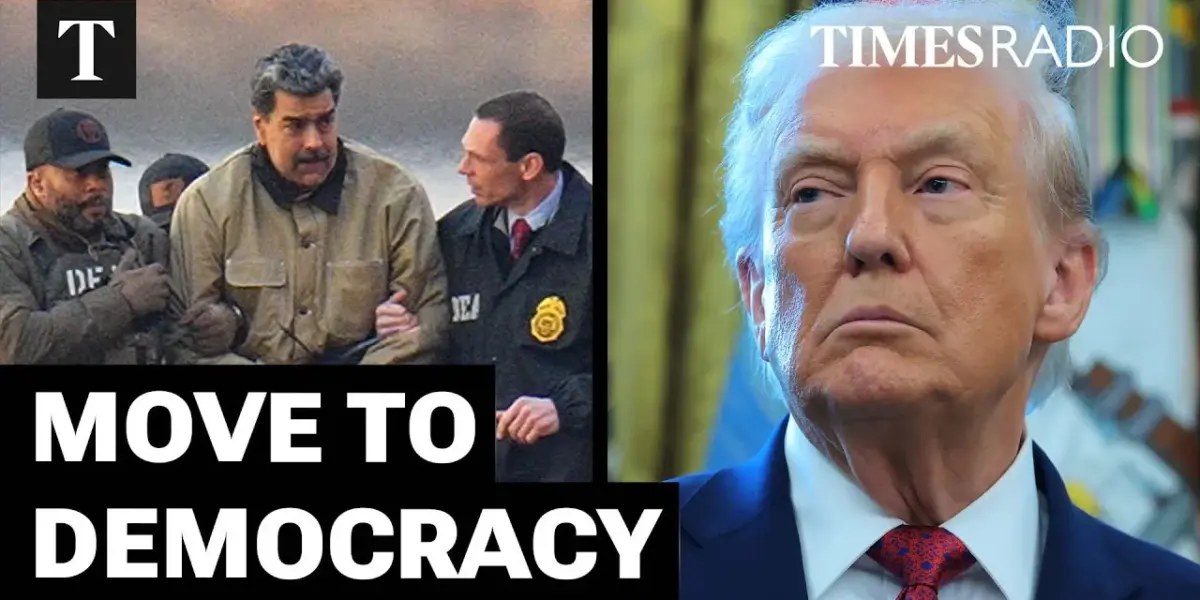
US Holds Key to Venezuelan Oil Amid Leadership Vacuum
Washington is maintaining its control over Venezuela’s oil resources as the nation grapples with an uncertain leadership transition following the ousting of Nicolás Maduro. Delcy Rodríguez, serving as Venezuela’s acting president, has exceeded the 90-day limit for her temporary role, a deadline set by the country’s high court. The future of her position remains unclear, with the National Assembly, controlled by Rodríguez’s party, holding the power to call for early elections by declaring the post vacant.
This situation raises significant questions about the future of democracy in Venezuela and the broader implications of U.S. policy in the region. Patrick Duddy, a former U.S. ambassador to Venezuela under both George W. Bush and Barack Obama, and now a senior lecturer at Duke University, shared his insights on these complex developments.
Iran Tensions and U.S. Strategy
The discussion also touched upon heightened tensions with Iran, following a post by Donald Trump on Truth Social. Trump suggested that a significant event, potentially leading to the demise of a civilization, was imminent regarding Iran, stating, “I don’t want that to happen, but it probably will.” Duddy described the post as “extraordinary” and noted that based on past actions, “President Trump is planning to do something if his own demands are not met.”
Regarding the effectiveness of such public threats, Duddy questioned the wisdom of the language used, suggesting it had not achieved Trump’s apparent goals, such as resolving issues or reopening the Strait of Hormuz. He speculated that Trump might be attempting to pressure the Iranian military into capitulation. However, early indications suggested Iran was prepared for a strong defensive response rather than immediate surrender, even at the risk of substantial U.S. attacks on its infrastructure.
Venezuela Policy: Stabilization Over Immediate Democracy
The Trump administration’s decision to engage with Rodríguez after Maduro’s removal, rather than with the country’s political opposition, has surprised many Venezuelans. The U.S. had ceased recognizing Maduro as Venezuela’s legitimate leader in 2019, after his re-election in a vote widely seen as flawed due to the exclusion of opposition candidates.
Duddy explained that the administration’s approach to Venezuela is structured in three stages: achieving stabilization and security, working to rebuild the economy, and finally, orchestrating a return to democracy. He stated, “The initial decision to work with Deli Rodriguez… derived in part from the widely held view that things did not go well in Iraq after the fall of Saddam Hussein.” The U.S. aimed to avoid similar mistakes made in Iraq following Saddam’s overthrow.
Venezuelan Perspectives and Economic Realities
When asked if ousting Maduro was the correct course of action, Duddy acknowledged initial uncertainty. However, he shared that many Venezuelans themselves expressed that the democratic opposition, despite its size, was not in a position to govern effectively. Therefore, they understood, even if disappointed, the decision to work with existing elements of the regime.
A significant factor in diminishing the regime’s power has been the U.S. control over oil revenues. Duddy highlighted that the damage to Venezuela’s economy largely predates U.S. sectoral sanctions on the oil sector, which were imposed in 2019. He pointed to stark economic figures: oil production had fallen by two-thirds, eight million people had fled the country, and the economy had shrunk by 70% between 2013 and 2023. The situation was expected to worsen as the regime, facing electoral defeat in July 2024, became more repressive.
U.S. Interests Beyond Oil
Addressing concerns that the U.S. intervention was solely about profiting from Venezuelan oil, particularly with plans to refine and sell up to 50 million barrels held under U.S. blockade, Duddy emphasized broader U.S. interests. He argued that the massive refugee crisis, with millions fleeing Venezuela and placing significant burdens on neighboring countries like Colombia, Ecuador, and Peru, as well as about 600,000 in the United States, directly impacted regional stability.
This crisis created substantial challenges for a region that is critically important to the U.S., with approximately 42-43% of American manufacturing exports sold into the Western Hemisphere. Therefore, while oil was a component, the overall economic and humanitarian situation, and its regional implications, were key drivers of U.S. policy.
Looking Ahead
The coming weeks will be crucial in determining Delcy Rodríguez’s future as acting president and the potential for snap elections in Venezuela. Additionally, ongoing diplomatic and military posturing between the U.S. and Iran will continue to be closely watched for any signs of de-escalation or further confrontation.
Source: US Retains Control Of Venezuelan Oil As Leadership Post-Maduro Hangs In Balance (YouTube)

Related Articles
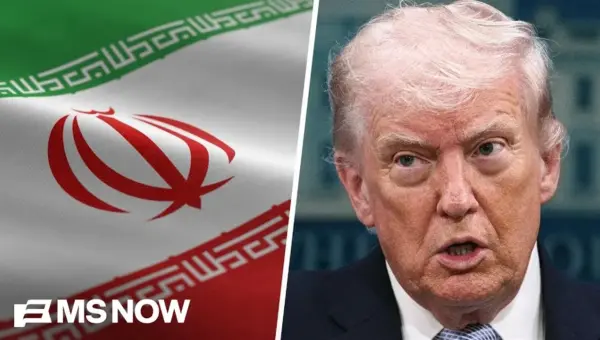
General: “Not been in a predicament like this” amid nuclear threats
A retired U.S. Army Lieutenant General expressed unprecedented concern over the President's threats of potential "annihilation" against Iran. As diplomatic efforts stall and a deadline looms, experts question the legality of targeting civilian infrastructure and the damage to U.S. credibility. Allies are reportedly frustrated, calling for a unified diplomatic approach.
Iran Deadline Looms: Key Decisions Ahead
Iran faces a critical 8:00 PM Eastern Time deadline to strike a deal with the U.S. or risk severe consequences. Meanwhile, discussions highlight U.S. defense budget needs and the complex alliances of global adversaries.
Global Allies Reject US War Plans, Shun Trump’s Aggression
Key global allies are rejecting U.S. requests to use their bases and airspace for potential military actions against Iran, citing concerns over war crimes. This widespread defiance signals a major shift in international relations and a potential weakening of traditional alliances like NATO.