US Job Losses Mount: February Report Shocks Economists
The U.S. economy saw a surprising downturn in February with the loss of 92,000 jobs, exceeding economists' expectations and signaling potential weakness. This development complicates the Federal Reserve's efforts to manage inflation and interest rates amid rising energy costs and global uncertainties.


US Economy Stumbles as 92,000 Jobs Lost in February
The United States experienced a significant economic setback in February, with a surprising loss of 92,000 jobs. This figure, revealed in a recently released jobs report, far exceeded expectations and signals a potential downturn in the nation’s economic momentum. The report’s findings have sent ripples through financial markets and are poised to complicate the Federal Reserve’s efforts to manage inflation and interest rates.
A Bleak Economic Outlook
Andrew Ross Sorkin, a columnist for The New York Times, described the report as unequivocally “bad,” noting that the market’s reaction underscores the severity of the news. “This was a bad report. The markets are reflecting this was a bad report,” Sorkin stated on CNBC’s Squawk Box. The data suggests a weakening labor market, challenging the optimistic projections of robust economic growth that many had anticipated.
The cumulative job losses over the past ten months paint a concerning picture of an economy that may not be as resilient as previously thought. “The economy doesn’t seem to be holding up. It doesn’t mean that it’s going to get materially worse next month, but it does suggest that the idea that there’s going to be, you know, massive growth ahead of us, I think is a lot harder to believe in this particular moment,” Sorkin elaborated.
Fed Faces Difficult Choices Amidst Inflationary Pressures
The disappointing jobs report introduces a complex dilemma for the Federal Reserve. With inflation concerns already high, exacerbated by rising oil prices and the ongoing geopolitical conflict, the central bank faces a challenging environment for monetary policy. The prospect of lowering interest rates, a move often aimed at stimulating economic activity, becomes more difficult when the economy is showing signs of weakness rather than overheating.
“It’s going to make the Fed’s job that much harder,” Sorkin observed. The Fed must now balance the need to control inflation with the risk of further stifling economic growth by maintaining higher interest rates for an extended period. This delicate balancing act is further complicated by a confluence of factors, including uncertainty surrounding trade policies and the impact of global events on domestic markets.
Rising Gas Prices Pose Political and Economic Hurdles
Adding to the economic headwinds are rising gas prices, a development directly linked to the ongoing international conflict. This surge at the pump is not only a financial burden for consumers but also a significant political issue for the current administration. The visibility of fluctuating gas prices at every street corner serves as a constant reminder to the public of economic conditions and their personal financial well-being.
“You go to the corner, you see the gas prices, you know, on the corner of every street. It is a billboard, it’s a poster for where things are and how people feel about the economy. And you’re going to see gas prices rise materially.”
While the administration has publicly stated that the short-term costs associated with addressing the conflict are acceptable, the looming midterm elections present a potential political reckoning. The memory of Ron Klain, former Chief of Staff to President Biden, who reportedly began each day by checking gas prices, highlights the White House’s awareness of this critical issue. The rising cost of fuel is seen as a powerful indicator that can sway public opinion and impact electoral outcomes.
Looking Ahead: Uncertainty and Policy Adjustments
The confluence of a weakened job market, persistent inflation, and rising energy costs creates a landscape of considerable uncertainty. Economists and policymakers will be closely monitoring upcoming economic data for signs of stabilization or further deterioration. The Federal Reserve’s next moves regarding interest rates will be a key focus, as will the administration’s strategies for mitigating the economic impact of global events and addressing public concerns about the cost of living. The coming months will be critical in determining the trajectory of the U.S. economy and its political implications.
Source: 'This was a bad report': U.S. lost 92,000 jobs in February (YouTube)

Related Articles
Economy Cracks: Fox News Confronts Grim Jobs Report
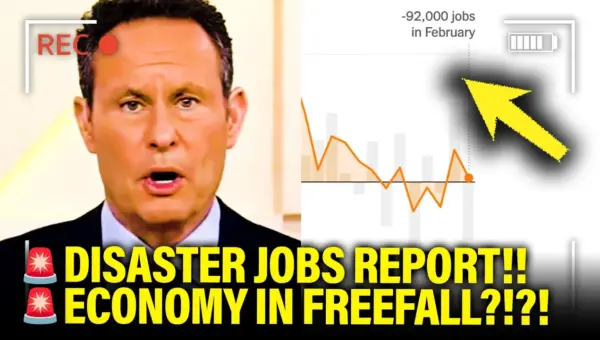
A disastrous February jobs report, showing a loss of 92,000 jobs and a rising unemployment rate, has forced a confrontation with economic reality. Even Fox News grappled with the grim data, highlighting a disconnect between political narratives and the lived experiences of Americans. This report underscores the critical role of economic sentiment in public opinion and political outcomes.

Economy Stumbles: Trump’s Job Promises Shattered by Stark Reality
Recent job reports reveal a stark economic downturn, with job losses and rising unemployment contradicting Donald Trump's campaign promises of economic prosperity. The analysis explores the implications of this performance and the administration's response.

Iran War Threatens US Economy, Congressman Warns
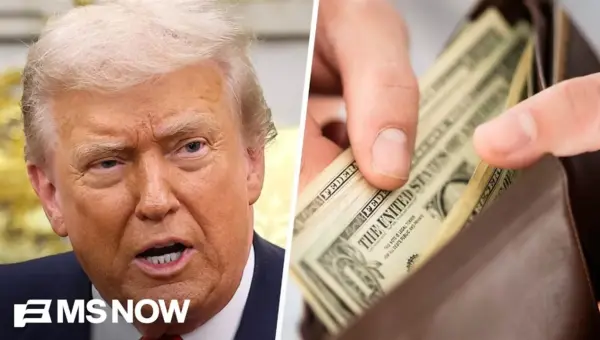
Congressman Jim Himes warns that a war with Iran poses a severe economic threat to the U.S., citing unsustainable military spending and rising energy prices. He criticizes the lack of diplomatic strategy and the potential for wider conflict.