US Jets Scramble as Russian Bombers Probe Alaskan Air Defenses Amid Heightened Global Tensions
NORAD fighter jets, including F-16s and F-35s, recently intercepted a formation of Russian strategic bombers, fighter jets, and an early warning aircraft near the Alaskan Air Defense Identification Zone. This calculated maneuver by Russia, which stayed in international airspace, is seen as a test of US response capabilities and a clear signal of ongoing geopolitical tensions, particularly in light of the conflict in Ukraine.

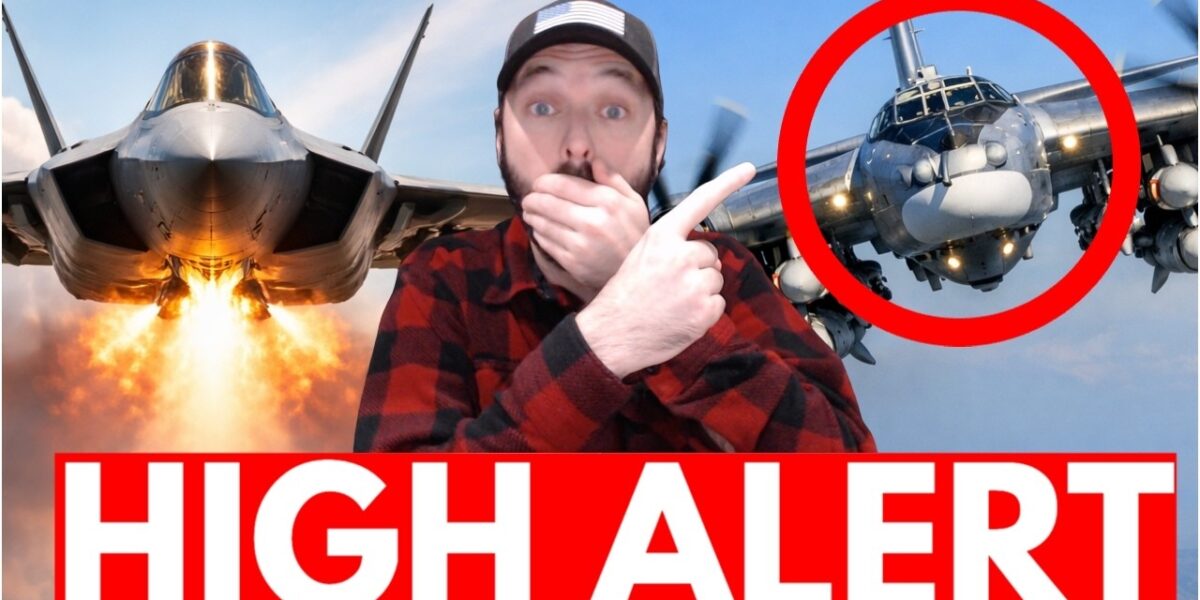
US Jets Scramble as Russian Bombers Probe Alaskan Air Defenses Amid Heightened Global Tensions
In a stark reminder of persistent geopolitical tensions, North American Aerospace Defense Command (NORAD) fighter jets were scrambled on February 19, 2026, to intercept multiple Russian military aircraft operating within the Alaskan Air Defense Identification Zone (ADIZ). The incident, which saw advanced US F-16 and F-35 fighters respond to the presence of Russian strategic bombers, fighter jets, and an early warning aircraft, underscores a calculated pattern of Russian probing tactics aimed at testing Western response capabilities amidst a volatile international landscape.
This latest encounter follows a well-established playbook of Russian military maneuvers near sovereign airspace, serving as both a data-gathering exercise and a potent political signal. While the Russian aircraft remained in international airspace and did not violate American or Canadian sovereign territory, the incident necessitated a robust and immediate response from NORAD, highlighting the continuous vigilance required to safeguard North American skies.
The Interception: A Detailed Account
According to a statement released by NORAD, the incident on February 19, 2026, involved the detection and tracking of a formation of Russian aircraft in the Alaskan ADIZ. The Russian contingent comprised two Tupolev Tu-95 ‘Bear’ strategic bombers, two Sukhoi Su-35 ‘Flanker-E’ fighter jets, and one Beriev A-50 ‘Mainstay’ airborne early warning and control (AEW&C) aircraft. This composition – a mix of long-range strike, air superiority, and intelligence assets – indicates a sophisticated and coordinated probing mission.
In response, NORAD swiftly launched a comprehensive intercept package. This included two F-16 Fighting Falcons and two F-35 Lightning IIs, representing the cutting edge of American air superiority and multirole fighter technology. Crucially, the intercept operation was supported by a Boeing E-3 Sentry (AWACS) for airborne command and control, and four KC-135 Stratotanker refueling aircraft, ensuring the sustained presence and operational reach of the fighter jets. The mission of these US and Canadian assets was clear: to intercept, positively identify, and escort the Russian aircraft until they departed the Alaskan ADIZ, adhering strictly to international protocols while demonstrating an unwavering commitment to national security.
Understanding the Air Defense Identification Zone (ADIZ)
The term ‘Air Defense Identification Zone’ (ADIZ) is often misunderstood, yet it is central to understanding such intercepts. An ADIZ is an area of international airspace adjacent to a country’s sovereign airspace, within which the ready identification, location, and control of all aircraft are required in the interest of national security. It is not sovereign airspace, meaning aircraft are legally permitted to operate there under international law without prior permission, provided they comply with international flight rules.
However, the establishment of an ADIZ allows nations like the United States and Canada to extend their air defense perimeter, providing precious minutes for identification and response to potentially hostile aircraft before they can pose a direct threat to sovereign territory. NORAD, a bi-national command of the United States and Canada, employs a sophisticated, layered network of satellites, ground-based and airborne radars, and fighter aircraft to detect and track all aircraft operating within and approaching the ADIZ. This multi-layered approach ensures comprehensive surveillance and the capability to employ a range of response options, from passive monitoring to active interception, depending on the nature of the detected aircraft and their intentions.
Russia’s Calculated Provocation: Testing and Signaling
The primary motivation behind such Russian incursions, as widely understood by defense analysts, is multi-faceted. At its core, these operations are designed to test the response times and readiness of North American air defenses. By flying right up to the edge of sovereign airspace, Russia aims to gather critical intelligence on how quickly US and Canadian forces can scramble fighter jets, the routes they take, their communication protocols, and the overall efficiency of the command and control structure.
This intelligence is invaluable in a hypothetical conflict scenario, allowing Russian planners to estimate the time window they might have to execute a strike before encountering significant opposition. Beyond mere data collection, these flights serve as a potent form of strategic communication. They are a display of power, a projection of military capability into a region considered vital to US and Canadian security, and a clear signal of Russia’s willingness to challenge Western dominance in the air.
Historically, such aerial probes were a common feature of the Cold War, a continuous cat-and-mouse game between NATO and Soviet forces. The resurgence of these activities in recent years signals a return to great power competition, with Russia leveraging its strategic bomber fleet as a tool of geopolitical influence. These actions also serve to tie up significant military resources, forcing the scramble of costly advanced aircraft and diverting attention from other operational theaters.
The Russian Aircraft: Symbols of Strategic Power
The specific aircraft deployed by Russia in this incident offer insights into the strategic nature of their mission:
Tupolev Tu-95 ‘Bear’ Strategic Bomber
The iconic Tu-95, a four-engine turboprop strategic bomber and missile platform, is a testament to Soviet-era engineering and enduring military utility. First flown in 1952 and entering service in 1956, the ‘Bear’ is unique for its turboprop engines in a strategic bomber role, giving it a distinctive acoustic signature. Crucially, the Tu-95 is nuclear-capable, designed to carry and deliver long-range cruise missiles and nuclear weapons. Its continued service, expected until at least 2040, highlights its strategic importance to the Russian Aerospace Forces, acting as a visible and potent symbol of Russia’s long-range strike capabilities. Its presence near the Alaskan coast sends an unmistakable message about Russia’s willingness to project strategic power.
Sukhoi Su-35 ‘Flanker-E’ Fighter Jet
The Su-35 is a highly advanced 4.5-generation air superiority fighter, an improved derivative of the legendary Su-27. Featuring thrust vectoring, advanced avionics, and a powerful radar, the Su-35 is considered one of Russia’s most capable operational fighters. Its deployment alongside the Tu-95 bombers indicates a defensive escort role, designed to protect the strategic assets from potential interception and to gather intelligence on the capabilities and tactics of opposing fighter aircraft. While the transcript suggests it’s ‘highly advanced by Russian standards,’ many analysts consider it a formidable opponent, bridging the gap between older Soviet designs and true fifth-generation stealth fighters.
Beriev A-50 ‘Mainstay’ Airborne Early Warning and Control (AEW&C) Aircraft
The A-50 ‘Mainstay,’ based on the Il-76 transport plane, is Russia’s equivalent of the American E-3 Sentry. This airborne early warning aircraft is critical for command and control, providing long-range radar surveillance, tracking airborne and maritime targets, and directing fighter aircraft. Its inclusion in the Russian formation underscores the intelligence-gathering aspect of the mission, allowing Russian commanders to gain a comprehensive picture of the air situation, identify the types of interceptors launched, and monitor their movements and electronic emissions. It’s designed to ‘figure out where our fighters are,’ providing real-time battle management information.
The US Interceptors: NORAD’s Cutting Edge
NORAD’s response package demonstrated the formidable capabilities of its air defense assets:
F-16 Fighting Falcon
A proven multirole fighter, the F-16 remains a workhorse for air forces worldwide. Known for its agility, speed, and versatility, the F-16 is an effective interceptor, capable of quickly reaching and identifying airborne threats.
F-35 Lightning II
The F-35 represents the pinnacle of modern fighter technology. As a fifth-generation stealth fighter, it provides unparalleled situational awareness, advanced sensor fusion, and low observability, making it exceptionally difficult for adversaries to detect and track. Its deployment in an intercept role highlights the high priority placed on these Russian incursions and the readiness to deploy the most advanced assets available.
E-3 Sentry (AWACS)
The Boeing E-3 Sentry is an airborne early warning and control aircraft, providing all-weather surveillance, command, control, and communications. Its distinctive rotating radome houses a powerful radar system that can detect aircraft hundreds of miles away, serving as the ‘eyes and ears’ of the intercept mission, coordinating the fighter response and ensuring comprehensive airspace awareness.
KC-135 Stratotanker
Crucial for extending the endurance and range of fighter jets, the KC-135 refueling tankers allow interceptors to remain on station for extended periods, ensuring continuous coverage and the ability to track the Russian aircraft until they depart the ADIZ. This logistical support is vital for long-duration intercepts over vast distances like those in the Arctic region.
Geopolitical Backdrop: The Shadow of Ukraine
This incident cannot be viewed in isolation from the ongoing conflict in Ukraine, which continues to be a major flashpoint in US-Russia relations. The war has significantly heightened global tensions, with Russia frequently employing aggressive posturing and military demonstrations to counter Western support for Kyiv. These aerial probes near Alaska can be interpreted as part of a broader strategy to divert attention, test Western resolve, and signal displeasure with the extensive military aid provided to Ukraine by the US and its allies.
The transcript also briefly touched upon recent developments in the Ukrainian conflict, which provide crucial context for the heightened state of alert:
Ukrainian Drone Strikes on Russian Oil Depots
Reports of Ukrainian attack drones striking Russian oil depots, such as the one in Pskov Oblast, highlight Ukraine’s evolving capability to conduct deep strikes into Russian territory. These attacks target critical infrastructure, aiming to disrupt Russia’s war economy and create psychological pressure. The ‘massive tower of flames’ described in the transcript signifies the effectiveness and strategic impact of these operations, pushing the conflict beyond the front lines.
Ukrainian Cruise Missile Salvos
The mention of ‘Flamingo cruise missile salvoes’ launched deep into Russian territory further illustrates Ukraine’s efforts to develop and deploy indigenous long-range strike capabilities. Such attacks demonstrate Ukraine’s resilience and its determination to inflict damage on Russia, even as it faces overwhelming military superiority.
F-16 Interception of Shahed Drone
The footage of an F-16 taking down a Shahed drone with a Sidewinder missile is particularly salient. It not only showcases the effectiveness of modern air defense systems against asymmetric drone threats but also draws a direct parallel to the ongoing debate about providing F-16s to Ukraine. Such intercepts demonstrate the decisive role advanced fighter jets can play in protecting airspace from persistent drone attacks, a challenge Ukraine faces daily.
These developments in Ukraine underscore the dynamic and dangerous nature of the current geopolitical climate, making incidents like the Russian bomber intercept near Alaska more than just routine exercises; they are manifestations of a deep-seated strategic rivalry.
NORAD’s Unwavering Vigilance and Arctic Security
NORAD’s mission extends far beyond simple intercepts. It represents a continuous, 24/7 commitment to the defense of North America, rooted in a binational agreement between the United States and Canada. The vastness of the Arctic, once considered a remote and unassailable frontier, is increasingly becoming a critical strategic domain. Climate change is opening new sea lanes and potentially new air routes, amplifying the strategic importance of the region.
NORAD’s layered defense network, integrating advanced radar systems, satellite surveillance, and rapid-response fighter squadrons, is constantly evolving to meet these challenges. The professionalism and readiness of the personnel involved in these intercepts are paramount. They operate under strict rules of engagement, ensuring that while national security is upheld, unnecessary escalation is avoided. The message from NORAD is clear: North American airspace is continuously monitored, and any unauthorized or threatening incursions will be met with a swift and capable response.
Broader Implications and the Path Forward
The repeated probing of North American air defenses by Russian military aircraft signifies a persistent challenge to regional stability and international norms. These incidents strain US-Russia relations, already at their lowest point in decades, and underscore the ongoing ‘Great Power Competition’ that defines much of contemporary geopolitics.
For the United States and its allies, maintaining a robust and modern air defense capability is not merely a technical requirement but a strategic imperative. It demonstrates resolve, deters potential aggression, and ensures the ability to respond effectively to any threat. The deployment of fifth-generation fighters like the F-35 in these intercepts signals a commitment to technological superiority and a readiness to defend national interests.
While such intercepts are often routine, their frequency and the advanced nature of the Russian aircraft involved demand continuous vigilance and strategic foresight. The international community watches closely, understanding that each such encounter is a delicate balance between deterrence and de-escalation, a stark reminder that the skies above remain a critical arena for geopolitical maneuvering.
Conclusion
The recent interception of Russian strategic aircraft near Alaskan airspace by NORAD forces is a salient example of the ongoing tensions that characterize modern international relations. It highlights Russia’s continued efforts to test Western defenses and project power, particularly against the backdrop of the protracted conflict in Ukraine. NORAD’s swift and professional response, utilizing its most advanced assets, unequivocally demonstrates the unwavering commitment of the United States and Canada to the defense of North American sovereign airspace and the maintenance of regional stability. As global geopolitical dynamics continue to shift, the skies over the Arctic will undoubtedly remain a crucial frontier for strategic competition and vigilance.
Source: BREAKING: U.S. Jets SCRAMBLE As Russian Bombers Approach America (YouTube)

Related Articles

Iran Launches Missiles; US Warplanes Strike Back
Iran has launched ballistic missiles across the Middle East, targeting Israel, Qatar, and Bahrain, with U.S. and allied air defenses intercepting many. Retaliatory strikes by the U.S. and Israel are reportedly hitting targets in Western Iran.

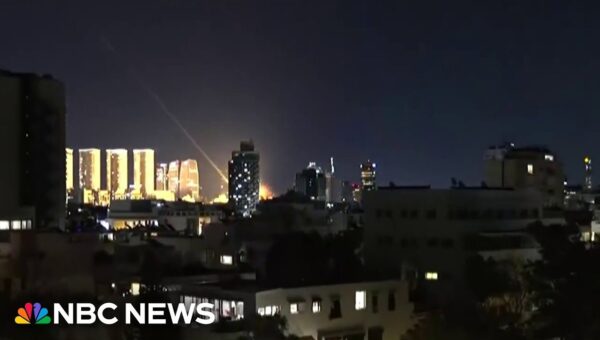
Missile Breaches Israel’s Air Defenses, Strikes Tel Aviv
A missile has seemingly bypassed Israel's advanced air defense systems, including the Iron Dome, striking Tel Aviv. Military analysts are examining the incident, referring to it as a potential 'leaker' and considering factors like missile sophistication and saturation tactics.


Iran Missile Site Blaze, GPS Jamming Spark Regional Alert
A fire has erupted at an Iranian missile site, coinciding with widespread GPS jamming across the country. Israel has mobilized its air defenses, while the U.S. and UK have moved military assets and personnel, signaling heightened regional tensions and potential conflict.