US Jets Clash With Iran, Sparking Mideast Airspace Tensions
U.S. aircraft engaged with Iranian air defenses, resulting in an F-15 jet being downed and a search for a missing airman. The operation faced further danger as two helicopters were hit, highlighting escalating regional tensions.

US Jets Clash With Iran, Sparking Mideast Airspace Tensions
A tense situation is unfolding in the Middle East after U.S. aircraft engaged with Iranian air defenses, leading to the downing of an F-15 fighter jet and a search for a missing airman. While the U.S. military has strong aerial capabilities, this incident highlights that flying over certain regions remains dangerous. The U.S. is now conducting a search and rescue operation deep inside Iranian airspace, a complex and risky mission.
F-15 Downed Over Iran
An American F-15 fighter jet was shot down more than 450 miles southwest of Tehran. One pilot from the jet was rescued after ejecting into Kuwaiti airspace. However, a second crew member remains missing. U.S. Air Force Black Hawk helicopters and another search and rescue helicopter are involved in the effort to find the missing airman. The U.S. has emphasized that it maintains aerial superiority, but this does not eliminate all risks.
Helicopters Hit During Rescue Mission
The search and rescue operation itself has faced danger. Reports indicate that two U.S. helicopters involved in the recovery effort were struck by enemy fire. Fortunately, both helicopters managed to escape the engagement and return safely. This shows the active resistance encountered during the mission.
Separate Incident: A-10 Warthog Hit
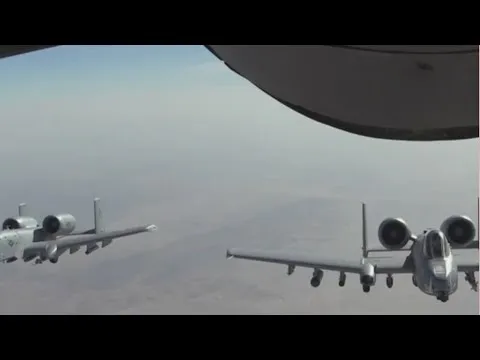
Adding to the escalating tensions, a separate U.S. aircraft, an A-10 Warthog, was hit by Iranian air defenses on Friday. This incident occurred near the Strait of Hormuz. The pilot of the A-10 was able to reach Kuwaiti airspace before ejecting and being rescued. The A-10 Warthog is known for its ground attack capabilities and sturdy design, making its being hit significant.
Evidence of U.S. Aircraft
Iranian state media released footage that appears to show American planes and helicopters flying low over Iranian territory. While the Pentagon has not confirmed the exact details, the images show a large-scale search operation. One piece of debris shown in the footage has markings that appear to read “United States Air Forces in Europe.” Another image shows a caution label written in English, common on U.S. military equipment. A third image seems to show an ejector seat, consistent with a pilot bailing out of a damaged aircraft.
Military Response and Secrecy
The Pentagon and U.S. Central Command have remained tight-lipped about the ongoing situation. They are prioritizing the safety of U.S. service members and are not releasing information that could put them at risk. The Israeli Defense Forces (IDF) have confirmed they will not be conducting strikes in that region of Iran for the time being, likely to avoid further escalation while the U.S. rescue mission is underway.
Global Impact
This series of events dramatically raises tensions in the Middle East. The downing of U.S. aircraft and the subsequent search operations in hostile territory signal a significant escalation of conflict. The involvement of Iranian air defenses suggests a willingness to confront U.S. military presence directly. This could lead to wider regional instability, affecting global trade routes, particularly those near the Strait of Hormuz, a vital passage for oil shipments. The international community will be closely watching how both the U.S. and Iran respond to prevent a broader conflict.
Historical Context
The U.S. military has a long history of operating in the Middle East, including numerous sorties involving F-15 and A-10 aircraft. However, direct engagement with Iranian air defenses over Iranian territory is a serious development. This echoes past confrontations in the region, but the current geopolitical climate, with complex alliances and ongoing regional rivalries, makes the situation particularly volatile. The U.S. has sought to maintain freedom of navigation and overflight, while Iran views such activities near its borders as a threat.
Economic Considerations
The Strait of Hormuz is a critical chokepoint for global energy supplies. Any disruption or heightened risk in this area can lead to significant fluctuations in oil prices. The U.S. has a vested interest in ensuring the free flow of commerce, while Iran has used its strategic location to exert influence and deter perceived threats. The potential for further economic disruption is a major concern for global markets.
Future Scenarios
Several outcomes are possible. The U.S. could successfully rescue the missing airman, leading to a tense but contained de-escalation. Alternatively, further clashes could occur, potentially drawing in regional allies and increasing the risk of a wider conflict. A diplomatic resolution, though challenging, remains a possibility, but requires careful navigation by all parties involved. The current situation demands extreme caution to avoid a miscalculation that could have devastating consequences.
Source: Search continues for missing US airman in Iran | Morning in America (YouTube)

Related Articles
China Maps Seabed, Eyes Hawaii in Naval Power Play
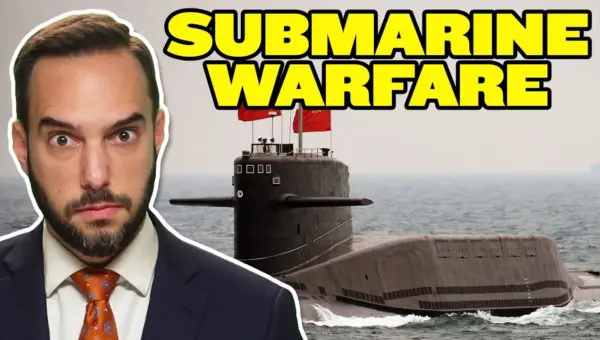
China's extensive seabed mapping in the Pacific, particularly around strategic areas like Guam and Hawaii, is raising concerns about its preparation for submarine warfare. This effort, often disguised as scientific research, aims to enhance China's naval capabilities and challenge US dominance in the region.
Russia Faces Last-Ditch Offensive, Internal Cracks
Russia may be launching a final major offensive in Ukraine as it faces mounting internal pressures. Analysts suggest this push is a last resort before significant manpower and financial issues arise. Meanwhile, increasing domestic information control and official criticism highlight growing cracks within the Russian establishment.


Trump Threatens Iran, Shaking Global Stability
Former President Trump's aggressive Easter Sunday warning to Iran has ignited global concerns, highlighting a volatile intersection of politics, religion, and foreign policy. The analysis explores the motivations behind such rhetoric, the deep divisions within American society, and the potential for severe economic and geopolitical repercussions worldwide.