US, Israel War with Iran: “Defies Logic,” Says Analyst
An analyst has critically assessed the escalating US and Israeli posture towards Iran, stating that the justifications for potential conflict "defy logic." The critique highlights contradictory claims regarding Iran's nuclear program and the rapid, seemingly inconsistent, shifts in perceived regional threats.

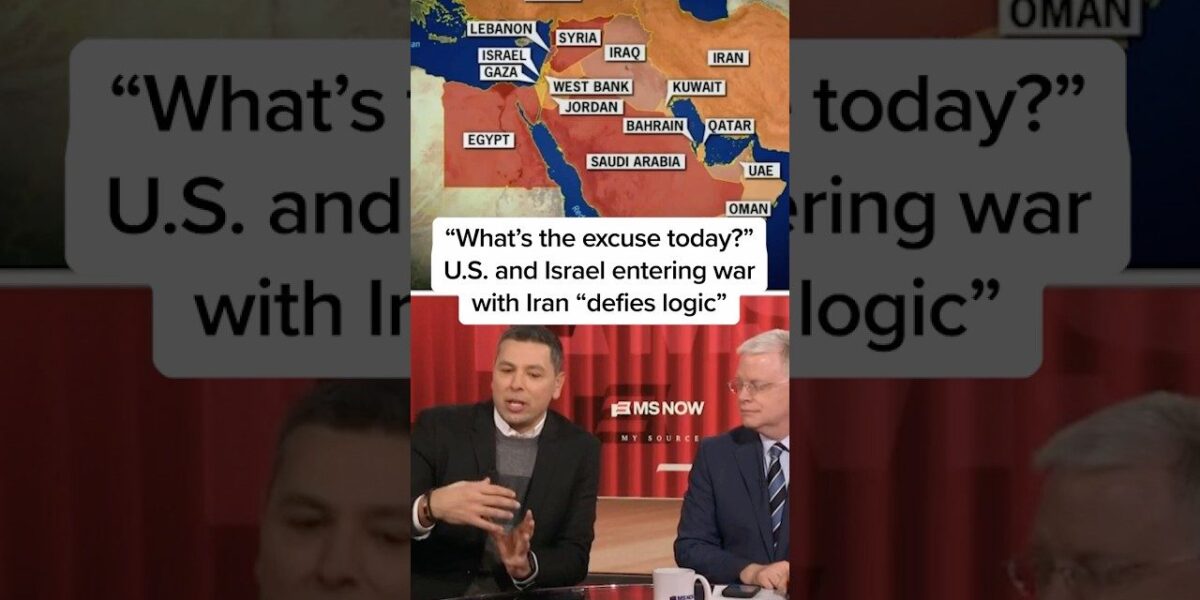
US and Israel on Collision Course with Iran, Analyst Claims
A prominent analyst has asserted that the escalating tensions and potential military engagement between the United States, Israel, and Iran are entering a phase that “defies logic.” The rapid shifts in perceived threats and the justifications offered for potential conflict have led to a situation where the rationale for war is increasingly unclear and contradictory, according to the assessment. This complex geopolitical scenario unfolds against a backdrop of shifting regional dynamics and persistent nuclear concerns.
Contradictory Claims on Iran’s Nuclear Program
The analyst highlighted significant inconsistencies in statements regarding Iran’s nuclear capabilities. Former President Donald Trump had previously declared that Iran’s nuclear program had been “obliterated” last year. However, more recently, statements attributed to Steve Witkoff suggested that Iran was merely “a week away from having bomb grade material.” This stark contrast in assessments raises questions about the accuracy and reliability of the intelligence being presented and the motivations behind the differing narratives.
“What is assessed to be a threat in the region is changing so quickly that it’s almost impossible to keep up with what the excuse is today,” the analyst stated, underscoring the perceived instability and lack of a clear, consistent justification for military action. The rapid evolution of threat perceptions and the shifting justifications for potential conflict create a volatile environment where strategic decisions may be based on ephemeral or conflicting information.
“Defies Logic”: The Rationale for Conflict
The core of the analyst’s critique centers on the apparent lack of logical coherence in the reasons cited for the United States and Israel entering into a state of conflict with Iran. The perceived disconnect between stated threats and the actions being contemplated or undertaken suggests a deeper, perhaps unarticulated, agenda or a miscalculation of the consequences. This perspective challenges the conventional understanding of geopolitical strategy, where actions are typically expected to align with clearly defined threats and achievable objectives.
The implications of such a conflict are vast, potentially destabilizing the entire Middle East region. A military confrontation could have devastating humanitarian consequences, disrupt global energy markets, and lead to prolonged instability. The analyst’s comments suggest a growing concern among observers that the path towards war is being paved with questionable justifications, increasing the risk of an unintended or unnecessary escalation.
Shifting Regional Threat Landscape
The Middle East continues to be a region characterized by complex alliances, proxy conflicts, and evolving security challenges. The relationship between Iran, the US, and Israel is a central axis of this geopolitical landscape, marked by decades of tension and mistrust. Recent events, including alleged attacks on shipping, cyber incidents, and regional political maneuvering, have further heightened these tensions.
The analyst’s observation about the speed at which perceived threats are changing points to the dynamic nature of regional security. What might be considered an immediate threat one day could be overshadowed by a different concern the next, making it difficult for policymakers and the public alike to maintain a clear understanding of the situation. This rapid flux can be exploited or may be a genuine reflection of an increasingly unpredictable environment.
Broader Implications and Future Outlook
The commentary from MS NOW serves as a critical voice in the discourse surrounding potential US and Israeli military action against Iran. By questioning the logic and consistency of the justifications, the analysis invites deeper scrutiny of the intelligence, the strategic objectives, and the potential ramifications of such a conflict. The lack of clear, unwavering reasoning for war could lead to international skepticism and potentially undermine diplomatic efforts aimed at de-escalation.
Looking ahead, the situation remains fraught with uncertainty. The effectiveness of diplomatic channels, the influence of internal political pressures within the involved nations, and the unpredictable nature of regional actors will all play a role in shaping future events. Continued analysis of the justifications presented and a close watch on the actions taken by all parties will be crucial in understanding the trajectory of this volatile geopolitical standoff. The international community will be closely observing whether a path towards de-escalation can be found or if the “logic” of conflict will prevail.
Source: 'What's the excuse today?" U.S. and Israel entering war with Iran "defies logic" (YouTube)

Related Articles


US Regime Change Efforts: A History of Tactical Wins, Strategic Losses
A comprehensive review of U.S. interventions reveals a consistent pattern: while the United States is adept at tactically removing foreign governments, achieving strategic success—the establishment of stable, legitimate political orders—has proven exceedingly difficult. Historical analysis points to unintended consequences and long-term instability as common outcomes.


Thousands Mourn Khamenei, Chant ‘Death to America’ in Iran
Thousands gathered in Yazd, Iran, to mourn Supreme Leader Ayatollah Ali Khamenei following reported U.S. and Israeli strikes. The mourning ceremony was marked by chants of "Death to America," highlighting deep-seated anti-American sentiment amid geopolitical tensions.


Middle East Crisis Triggers Global Chaos: Flights, Oil Prices Hit
A major global crisis has erupted following coordinated strikes on Iran, triggering a massive retaliatory response that has impacted multiple countries across the Middle East. The large-scale attacks have caused widespread aviation chaos and pose significant risks to global energy markets and financial stability.