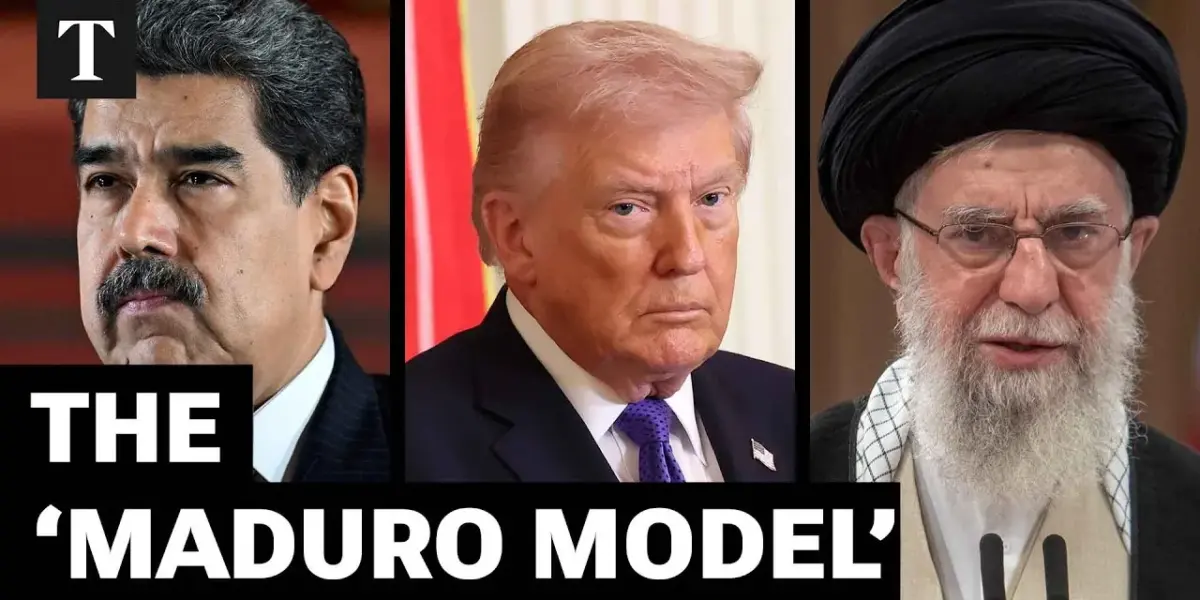
US-Israel Strike Iran’s Police State, Trump Eyes ‘Maduro Model’
The U.S. and Israel have launched a significant aerial assault targeting Iran's internal security forces, aiming to degrade the regime's capacity for repression. Amidst the strikes, President Trump has alluded to a potential "Maduro model" for leadership transition, while experts caution about the challenges of fostering internal dissent under duress.

US-Israel Launch Major Assault on Iran’s Security Apparatus
In a significant escalation of regional tensions, the United States and Israel have launched a multi-day aerial assault targeting Iran’s internal security forces and leadership. The operation, now in its fifth day, marks a strategic shift, with Israel taking a leading role in striking targets responsible for internal repression, including the Islamic Revolutionary Guard Corps (IRGC) and its affiliated paramilitary groups like the Basij. These entities have been identified as instrumental in the violent suppression of recent widespread protests across Iran.
Key Iranian Assets Targeted
The strikes are reportedly aimed at degrading the regime’s “head,” its “muscles,” and its “heart.” This includes direct attacks on the Supreme Leader’s leadership, the regime’s missile and drone capabilities, and munitions development. Specifically, the IRGC’s Thala Headquarters has been hit, resulting in the reported deaths of several top generals. Furthermore, the headquarters of the police special units, known as Faraja, responsible for riot control, has also been attacked, leading to the death of its intelligence chief. This coordinated effort aims to cripple the state’s capacity to enforce internal order and project power.
“The strategy seems to be Israel and the US will do the air strikes from above. The Iranian people would need to do the rest from below, but not yet.”
Awaiting Popular Uprising, Cautiously
While the aerial bombardment intensifies, the strategy appears contingent on a subsequent mobilization from within Iran. However, President Trump has cautioned potential protesters that it remains too dangerous to take to the streets, citing the ongoing and future air strikes. This suggests a phased approach, where the degradation of the regime’s coercive apparatus is intended to create an opening for popular dissent, but only when the risk to civilians is deemed manageable.
Expert Analysis: Can a Police State Be Broken from the Air?
Nasan Rafati, a senior analyst on Iran at the Crisis Group, discussed the feasibility of this strategy in an interview with Andrew Neil. Rafati acknowledged the significant discontent within Iran, as evidenced by widespread protests in January. He outlined three critical elements for the current strategy to succeed:
- Mobilization from below, which is challenging under active fire.
- Sufficient blunting of the state’s coercive apparatus, which still possesses significant firepower and personnel motivated by a fight for survival.
- A shift in the balance of power, which currently favors the state but could change over time as its capacity diminishes and desperation potentially increases.
Rafati noted that for the strategy to be effective, the “coercive apparatus” must be sufficiently “blunted.” He added, “For the moment the balance is still tipped in the state’s favor but over time it will lose capacity and perhaps increase desperation.”
Potential for Ground Operations and Intelligence Involvement
The possibility of clandestine operations extending beyond air strikes was also raised. Rafati suggested that as the aerial degradation continues, Mossad, the CIA, and potentially special forces could become involved on the ground to further destabilize the regime. He confirmed that intelligence penetration within Iran is significant, and while details are scarce, acknowledging the limitations of air power alone could lead to ground-level support for destabilization efforts.
“It’s entirely possible. As you said, these are things that will probably become clear over the course of time rather than in real time. We know that the Israelis certainly have a ground presence. We saw that in June, and we know that the Iranians have a lot of intelligence penetration across their system.”
The Search for an Alternative: The ‘Maduro Model’
A key question remains whether a coherent opposition is forming within Iran. Secretary of State Rubio’s testimony in January indicated uncertainty about what would follow the current regime. The primary focus for the Iranian system appears to be maintaining coherence at the top, especially after the loss of a long-standing leader. President Trump has floated the idea of a “Maduro model,” suggesting a willingness to work with individuals from within the Iranian system who are prepared to engage with the U.S.
However, for such a scenario to materialize, several conditions must be met:
- A critical mass within the Iranian system must decide to pursue a deal with the U.S.
- The Trump administration must identify and agree to work with specific individuals or factions.
- A mutually agreeable basis for an agreement must be found.
Rafati highlighted the clandestine nature of such potential negotiations, noting that indirect intelligence-to-intelligence contacts may have already occurred. He described the current Iranian system as likely being in a state of “paranoia” and “bunkered down,” making internal dynamics difficult to ascertain. The precedent set in Venezuela, where extensive preparatory work was conducted before operations against Maduro’s inner circle, suggests a similar level of pre-planning would be necessary for any “Maduro model” scenario in Iran.
The Kurdish Factor: A Double-Edged Sword
Reports have emerged of potential liaisons between U.S./Israeli intelligence and Kurdish groups in western Iran, raising concerns about a possible Kurdish uprising. Rafati described this as a potential “curse and in some strange ways a potential blessing” for Tehran.
The “curse” lies in the potential need for Iran to dispatch forces to the region, diverting resources from other fronts while dealing with aerial bombardment and potential internal unrest. However, the “blessing” could be the regime’s ability to leverage any signs of separatism or unrest to rally nationalistic sentiment. The narrative would shift to external forces attempting to destabilize Iran and compromise its territorial integrity, potentially uniting a population even if they are against the current regime.
Looking Ahead: Uncertainty and Strategic Calculations
The coming days and weeks will be crucial in determining the effectiveness of the U.S.-Israeli strategy. Key indicators to watch include the extent of further degradation of Iran’s security apparatus, any signs of internal dissent or organized opposition, and the potential for external actors, including Kurdish groups, to play a more significant role. The administration’s willingness to engage with elements within the Iranian system, as suggested by the “Maduro model,” will also be a critical factor in shaping the future political landscape of Iran.
Source: Trump Might Use The ‘Maduro Model’ To Find The Next Leader In Iran (YouTube)

Related Articles
Labour MPs Rally Behind Starmer’s Stance Against Trump
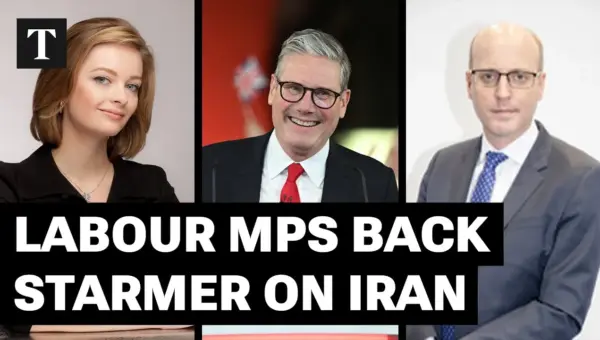
Labour MPs are reportedly backing Keir Starmer's critical stance on Donald Trump's Iran policy, a move that has drawn the former US President's ire. While this may strengthen Starmer's domestic position, concerns remain over potential economic repercussions and the UK's defense preparedness amidst escalating global tensions.


US Advises Americans to Flee Middle East Amid Iran Tensions
The White House has advised American citizens to leave the Middle East amid escalating tensions and a recent strike. The directive impacts hundreds of thousands of U.S. residents and travelers, raising questions about government preparedness for civilian evacuations. This comes as regional defense systems, bolstered by U.S. collaboration, remain a key element of security.


Trump’s Iran Strikes: A Fragile Ego Fuels Foreign Policy
A Reuters report suggests Donald Trump's decision to attack Iran was driven by a desire to appear strong, influenced by ally pressure and personal ego. This analysis explores the implications of ego-driven foreign policy.