US-Iran War Divides Allies, Strains NATO Ties
US allies, including Spain, France, and Italy, are refusing to support military operations in the Iran war, citing legal and political reasons. President Trump has responded with strong criticism and threats to withdraw US support from NATO, creating a significant rift within the alliance. Experts believe this marks a turning point, deepening existing tensions fueled by trade disputes and differing geopolitical priorities.

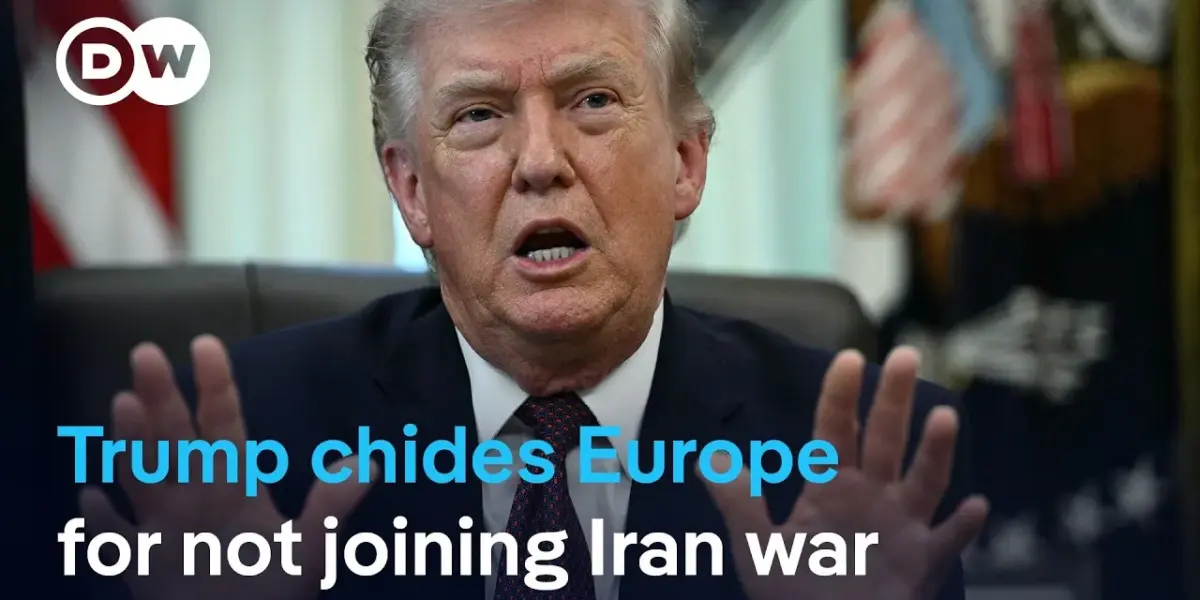
US Allies Resist Iran War Involvement
Tensions are escalating between the United States and its European allies over the ongoing conflict with Iran. While President Trump has urged allies to join the military action, several key European nations have refused, citing legal and political concerns. This disagreement is creating significant friction within the NATO alliance, a cornerstone of transatlantic security for decades.
European Nations Deny Support
Spain has explicitly denied the use of its airspace to support military operations against Iran. Reports indicate that France and Italy have also taken similar stances, refusing to grant access for war-related activities. The British Prime Minister has stated that the United Kingdom does not consider this conflict its own war. Similarly, the German Chancellor has expressed strong opposition to Germany’s involvement.
Trump’s Ultimatum to NATO
In response to the lack of support, President Trump issued a stern warning via social media, suggesting that European allies who do not assist in the Iran conflict will be left to defend themselves. He specifically mentioned the United Kingdom’s refusal to join the operation, stating, “You’ll have to start learning how to fight for yourself. The USA won’t be there to help you anymore, just like you weren’t there for us.” He further advised these nations to “Go get your own oil,” implying they must secure their own energy resources if they are unwilling to support US operations.
“All of those countries that can’t get jet fuel because of the Strait of Hormuz, like the United Kingdom, which refused to get involved in the decapitation of Iran, you’ll have to start learning how to fight for yourself. The USA won’t be there to help you anymore, just like you weren’t there for us. Iran has been essentially decimated. The hard part is done. Go get your own oil.”
President Donald Trump
Expert Analysis: A Turning Point
Dr. Leslie Vinjamuri, President and CEO of the Chicago Council on Global Affairs, described President Trump’s statements as marking a significant turning point in US-European relations. She noted that while challenges have existed for some time, Trump’s decision to launch strikes without consulting Europe, followed by demands for support and threats against NATO, represents an “extraordinary violation of the sanctity of that commitment” that has lasted for nearly eight decades.
Dr. Vinjamuri explained that President Trump’s strategy appears to be a deliberate attempt to apply pressure on Europe. His approach, she believes, stems from a conviction that previous US presidents have been too accommodating, giving away too much for too little. Trump’s actions are also aimed at energizing his domestic base by projecting an image of strength and prioritizing American interests above all else.
Deepening Rift Beyond Iran
The rift between the US and its European allies is not solely about the current Iran conflict. Dr. Vinjamuri highlighted that a growing divide has been evident for years, fueled by Trump’s use of tariffs to coerce allies on trade issues. Incidents like the threat to purchase Greenland from Denmark, and his alignment with Vladimir Putin over Ukrainian defense, have further unsettled the transatlantic partnership.
The war in Iran, however, has escalated these tensions to a new level. European nations view the conflict as illegal under international law, lacking clear objectives and public support. This stance puts European leaders in a difficult position, caught between managing relations with the US and addressing domestic public opinion, which is increasingly anti-American.
Legality and International Law Concerns
A primary reason for European reluctance is the perceived illegality of the war. The German Parliament has called the conflict a violation of international law, and the UK government has echoed this sentiment. European nations have historically prioritized international law and do not see a legal basis for engaging in the conflict, either under US domestic law or international statutes.
This commitment to international law is deeply ingrained in European foreign policy. For decades, Europe has championed norms like the “responsibility to protect,” advocating for the legitimate use of force in specific circumstances, such as preventing state-sponsored atrocities. This deep respect for legal frameworks makes them unwilling to support an action they deem unlawful and lacking clear justification.
European Strategic Autonomy
In the face of these challenges, European nations are increasingly focused on developing greater strategic autonomy. While they have increased defense spending and are working to coordinate procurement, achieving true independence from the US remains a long-term goal. Europe’s reliance on the US for technological advancements, particularly in areas like artificial intelligence, makes decoupling difficult.
The current geopolitical landscape, with threats from Russia and China, and instability in the Middle East, means that time is not on Europe’s side. Despite the current frustrations, Dr. Vinjamuri suggested that the possibility of a future rebuilding of the transatlantic partnership, albeit transformed, remains. She noted that many are reluctant to consider this due to current disillusionment with the US.
Military Implications and Future Concerns
Retired Air Force Major Glennazio offered a military perspective, emphasizing that while President Trump’s rhetoric has been harsh, historical actions suggest the US would still come to the aid of a NATO ally if attacked. However, the current discord over the Iran war could fundamentally weaken NATO’s collective defense principle, potentially emboldening adversaries like Russia.
The refusal of Spain and France to allow US military flights through their airspace is seen as a significant setback, reminiscent of past instances where such actions caused logistical difficulties and even loss of life for air crews. Italy’s constitutional limitations on supporting certain US operations also highlight the complex legal and political factors influencing allied support.
Prospects for the Iran Conflict
Looking at the Iran conflict itself, Glennazio outlined three potential outcomes: a utopian scenario with regime change and a free Iran; a scenario where hardline elements like the IRGC maintain control, potentially pursuing nuclear weapons; or a more moderate outcome with increased cooperation with the US. He cautioned that the conflict’s duration remains uncertain, especially given the global impact of disruptions to the Strait of Hormuz, which affects oil prices and shipping worldwide.
The security of Gulf states remains a concern. While the UAE, Saudi Arabia, and others have been impacted, their own defense strategies may not have anticipated direct Iranian attacks. The potential for Iran to exert greater control over the Strait of Hormuz if the conflict is not resolved effectively poses a significant long-term risk to regional stability and global trade routes.
Source: Is the Iran war dividing the US and its European allies? | DW News (YouTube)

Related Articles

GOP Lawmaker Slams Dems’ ‘Word Games’ on Iran Threat
A GOP lawmaker criticizes Democrats for perceived hypocrisy on the Iran threat, accusing them of "word games" and downplaying danger while the White House provides financial aid. The congresswoman highlights past warnings about Iran's nuclear program and contrasts them with current Democratic stances.

Trump’s Iran Announcement: Markets Brace for Impact
Former President Donald Trump is set to announce his strategy on Iran, leaving markets on edge. Analysts foresee potential escalation scenarios, with a 60% chance of increased regional tension impacting oil prices. A 'nothing burger' announcement is also possible, though less likely.
Europe Faces NATO Doubt as Trump Hints at Pullback
Former President Trump's suggestions of withdrawing NATO protection raise concerns for European security. This could weaken the alliance's deterrent power and alter global dynamics. Meanwhile, Europe is increasing its support for Ukraine as U.S. aid shifts.